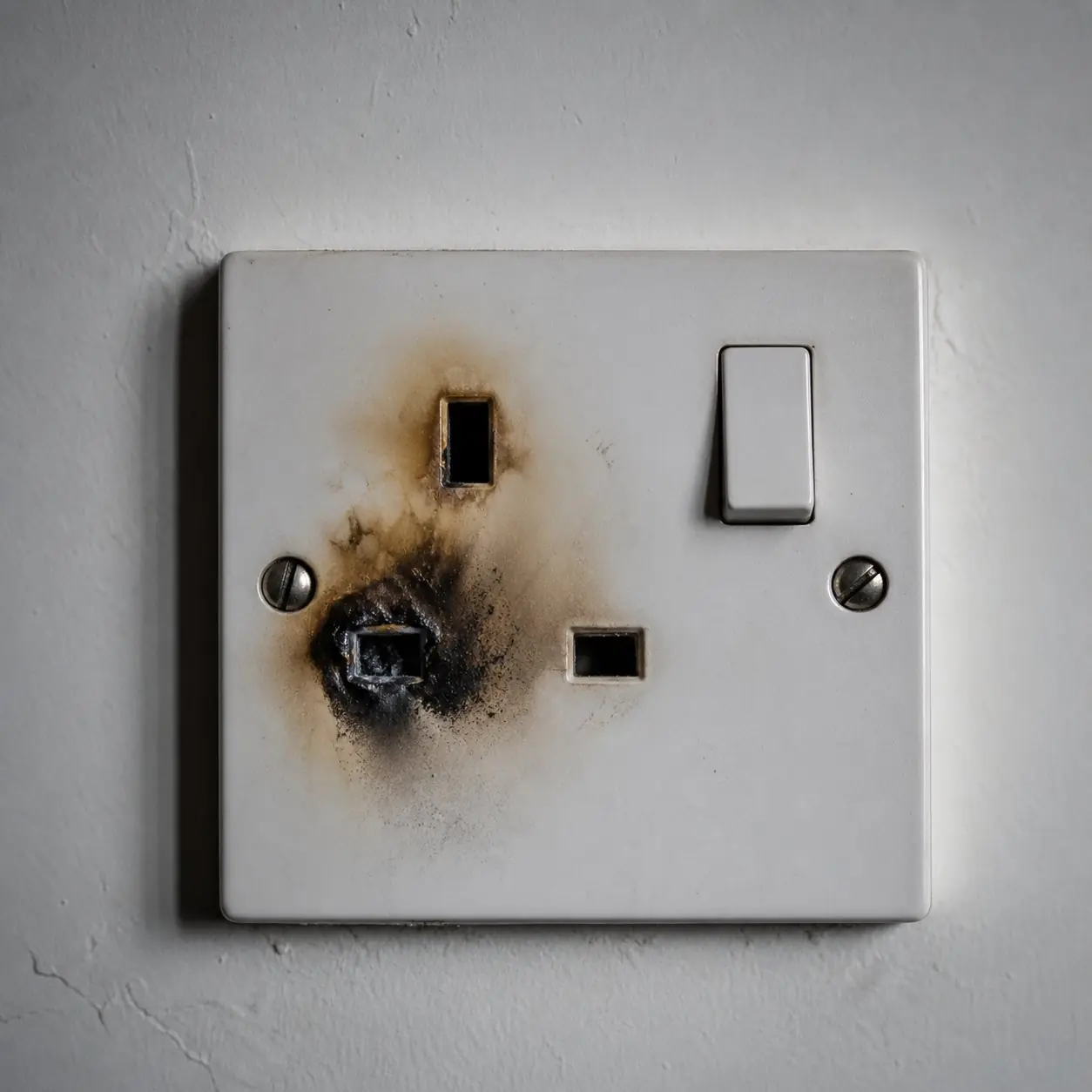
Here's the frustrating thing about electrical faults: your house is almost always trying to tell you something is wrong. A flicker. A smell that's "probably nothing." A breaker that trips on Tuesdays for reasons no-one can explain. We learn to live around them — flip the breaker, swap the bulb, unplug the offending lamp — until one day the annoyance turns into a real problem.
Talking to the electricians in Seven's network, the same five warning signs come up again and again. None of them are subtle, once you know what you're looking at. This is that list — what each one usually means, and the simple rule for when "I'll deal with it later" needs to become "switch it off and call now."
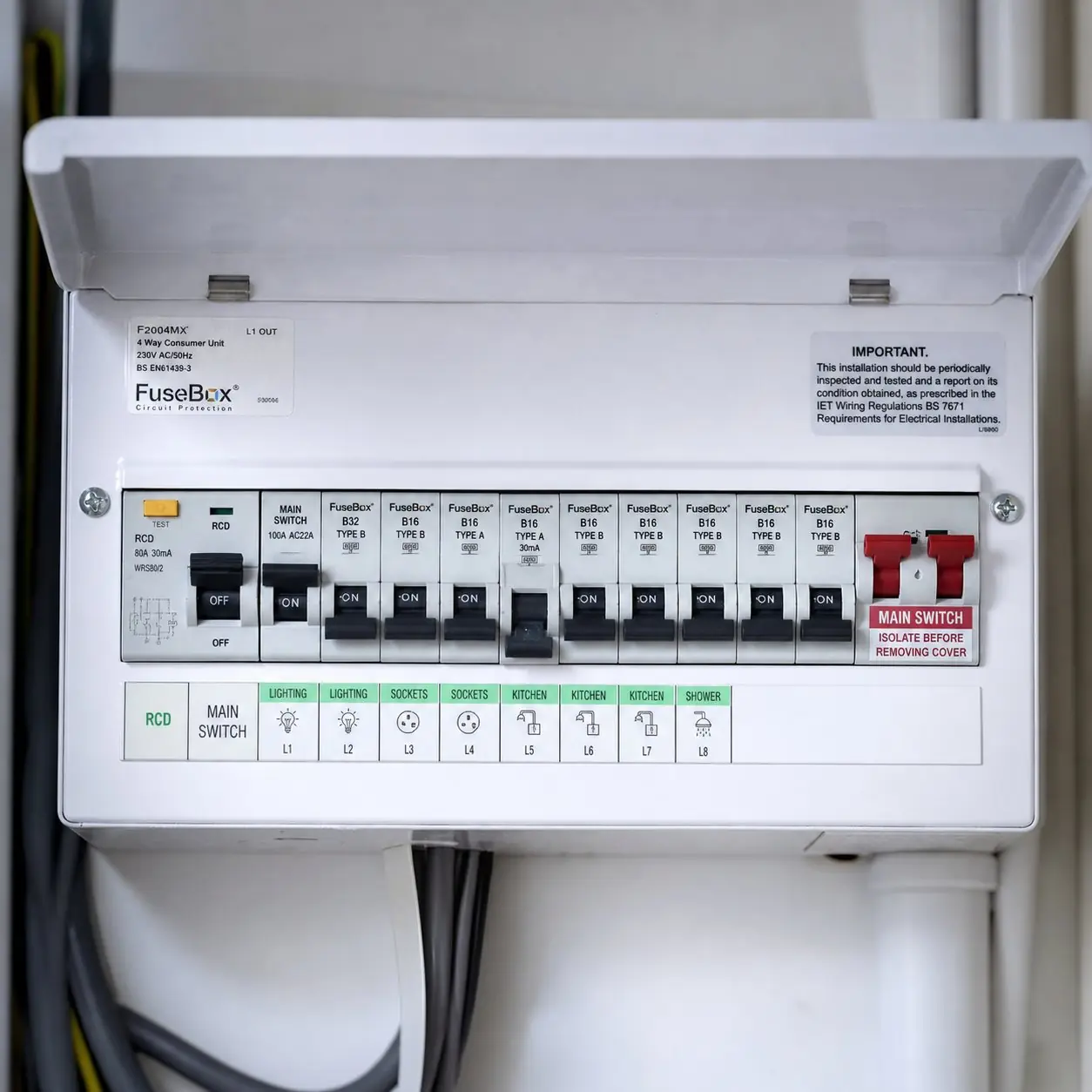
1. Circuit Breakers That Keep Tripping
Your consumer unit (the modern replacement for the old fuse box) uses two devices to cut power when something's gone wrong: Miniature Circuit Breakers (MCBs) handle straightforward overloads, Residual Current Device (RCDs) catch dangerous earth faults. They're meant to trip. That's the whole job. Storm rolls in and a breaker flips? Fine. Kettle, microwave and toaster all going at once on the same ring main, and one circuit gives up? Annoying, but normal.
What's not normal is the same circuit tripping every couple of days during ordinary use. That tells you one of three things:
- The circuit is overloaded — usually too many always-on devices on a single ring
- An appliance has developed a fault, often a heating element, a motor, or a chewed-up flex
- There's damage or a loose connection somewhere along the wiring itself
The temptation is to keep flipping the breaker back. Don't. Each trip is the system stopping a potential fire, and a faulty appliance left plugged in will trip it again and again — until one day the breaker doesn't catch it, and the protection you were relying on isn't there anymore.
2. Burning Smells, Scorch Marks or Discoloured Sockets
This is the most urgent sign on the list, and the one homeowners most often dismiss — partly because the smell often fades when nothing is drawing power. A burning, fishy or "hot plastic" smell from a socket, switch or your consumer unit means something behind the faceplate is overheating. Either from arcing (sparks jumping across a loose connection) or from insulation that's already started to melt.
Visual signs are even clearer. Brown or yellow staining around the pins of a socket. Soot marks on the wall above a switch. A faceplate that looks slightly warped. If you can see any of those, the damage has already happened — and whatever caused it is still there.
Treat any burning electrical smell as a same-day emergency. Switch off the affected circuit at the consumer unit, stop using the socket, and call an electrician. If you can see scorch marks, smoke or sparks, call the fire brigade first.
Switch off the circuit and book an emergency electrician
3. Switches or Sockets That Feel Warm
Quick test: touch the faceplate of a socket or switch with the back of your hand. If it feels distinctly warm — not just at room temperature — there's something to look into. The most common cause is a loose terminal connection inside the fitting, where the cable meets the screw. Current crossing that small gap builds up resistance, and resistance generates heat. Over months, that heat scorches the back of the faceplate or melts the wire insulation.
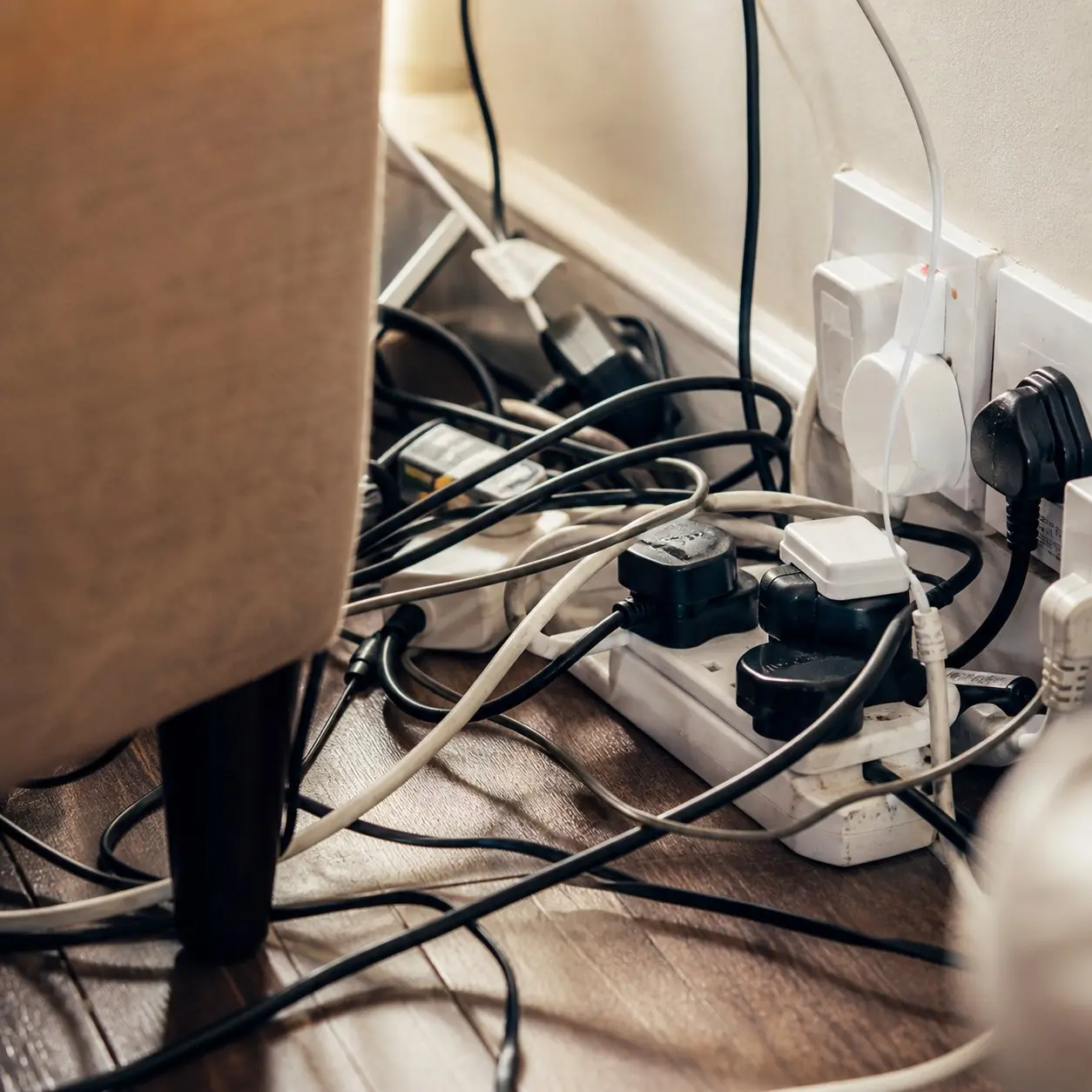
The other usual suspect is a chronically overloaded circuit. Two places we see this most often: behind a TV unit, where five things have ended up daisy-chained off one extension lead; and in home offices, where a single desk has somehow accumulated two monitors, a small heater, a laptop charger and a coffee machine all running off the same wall socket. The socket is rated for a maximum draw. Going over it consistently is what kills it.
One exception: dimmer switches do run a little warm by design, especially with halogen bulbs. But a dimmer that's uncomfortable to touch usually means it's underrated for the wattage on the circuit, or it's struggling with an LED load it wasn't built for.
4. Lights That Flicker, Dim or Brighten on Their Own
Honestly? Most of the time, the answer is just the bulb. A loose LED in its socket. An old halogen on its way out. A non-dimmable bulb sitting in a dimmer circuit. Rule those out first — they're the boring, usually-correct explanations and they cost you nothing to check.
What's worth taking seriously is a pattern. If the lights in one room dim every time the fridge motor kicks in, that points to an overloaded circuit or undersized cable feeding that area. If lights across the whole house flicker or surge in brightness, it's almost always one of two things, both of which need attention:
- A loose neutral connection at your consumer unit or main service head — dangerous because it can cause voltage spikes that damage every electronic device in the house at the same time.
- A fault on your incoming supply, which is your distribution network operator's responsibility (UK Power Networks across most of London — you can report it on 105).
Always worth ruling out the inside-the-house causes first, because if it's actually a loose neutral and you call UKPN, they'll come out, find nothing wrong on their side, and you'll still need an electrician afterwards. The fix is usually quick once someone competent is in front of it.
5. Buzzing, Crackling or Mild Shocks
A quiet hum from a transformer, doorbell or fluorescent tube is normally ignored. A buzz or crackle coming from a socket, switch, or your consumer unit? That's arcing — electricity literally jumping a gap inside the fitting — and it's one of the leading causes of domestic electrical fires in the UK. Don't let it run.
Mild tingles or shocks from an appliance casing, a kitchen tap, or a metal lampshade are an even brighter red flag. They mean current is flowing where it shouldn't, almost always because the earth path has failed somewhere. In a properly wired modern home, the earth should trip the RCD long before you ever feel anything. If you're feeling shocks, the protection isn't doing its job.
Stop using whatever's giving you the shock. Don't try to find the fault by trial and error — water in a kitchen and a compromised earth is exactly the combination that hurts people every year in the UK. This is a same-day call to a qualified electrician, full stop.
When It's an Emergency vs. When It Can Wait
A simple decision tree, based on what you're actually seeing:
The honest test, if you're not sure which side something falls on: would you be comfortable leaving the house for a weekend with that thing happening? If the answer is no, treat it as urgent.
A Note on UK Wiring Regulations
Most electrical work in UK homes is governed by BS 7671 (the IET Wiring Regulations), and certain higher-risk work — kitchens, bathrooms, anything outdoors — falls under Part P of the Building Regulations. In practice: anything beyond replacing a like-for-like light fitting really should be done or signed off by a registered electrician (NICEIC, NAPIT or an equivalent body).
There's also an insurance angle that doesn't get talked about enough. Claims for fire damage are routinely declined when the underlying electrical work was done by an unregistered person. That's not a hypothetical — it's something that happens to homeowners in the UK every year. Every electrician on Seven is registered and insured, which makes the whole thing simpler.
How Seven Can Help
If you've spotted any of the warning signs above, our London electrician service connects you with a vetted, registered professional fast. You can submit a request in under 30 seconds — we call you back to confirm the job and the price before anyone is dispatched. New to the app? Our step-by-step how-to guide walks through every screen.
Book a Vetted London Electrician
Upfront estimates. Every electrician background-checked, insured and registered.