"Should I renovate or refresh?" is one of the most common questions we hear from London homeowners looking at their bathroom, and the honest answer depends entirely on what's actually wrong — or not wrong — with the room. Choosing the wrong option is expensive in both directions: renovating a bathroom that only needed a refresh wastes money and causes unnecessary disruption, while refreshing a bathroom with an underlying functional problem just delays the proper fix and adds cost overall.
If you're genuinely unsure which category applies, a free video consultation with a vetted professional can assess your bathroom and give you an honest recommendation before you commit to either option.
The Core Distinction
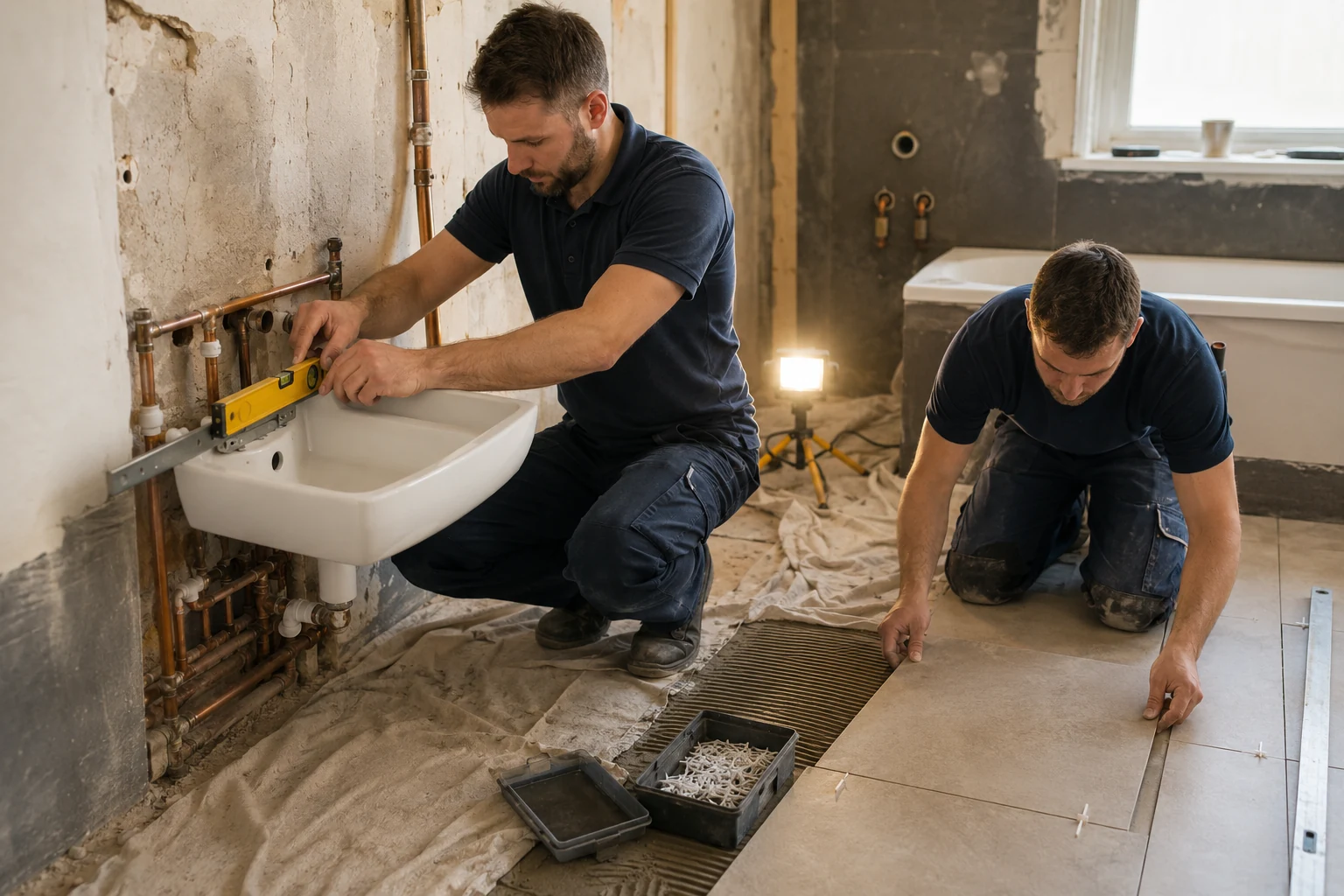
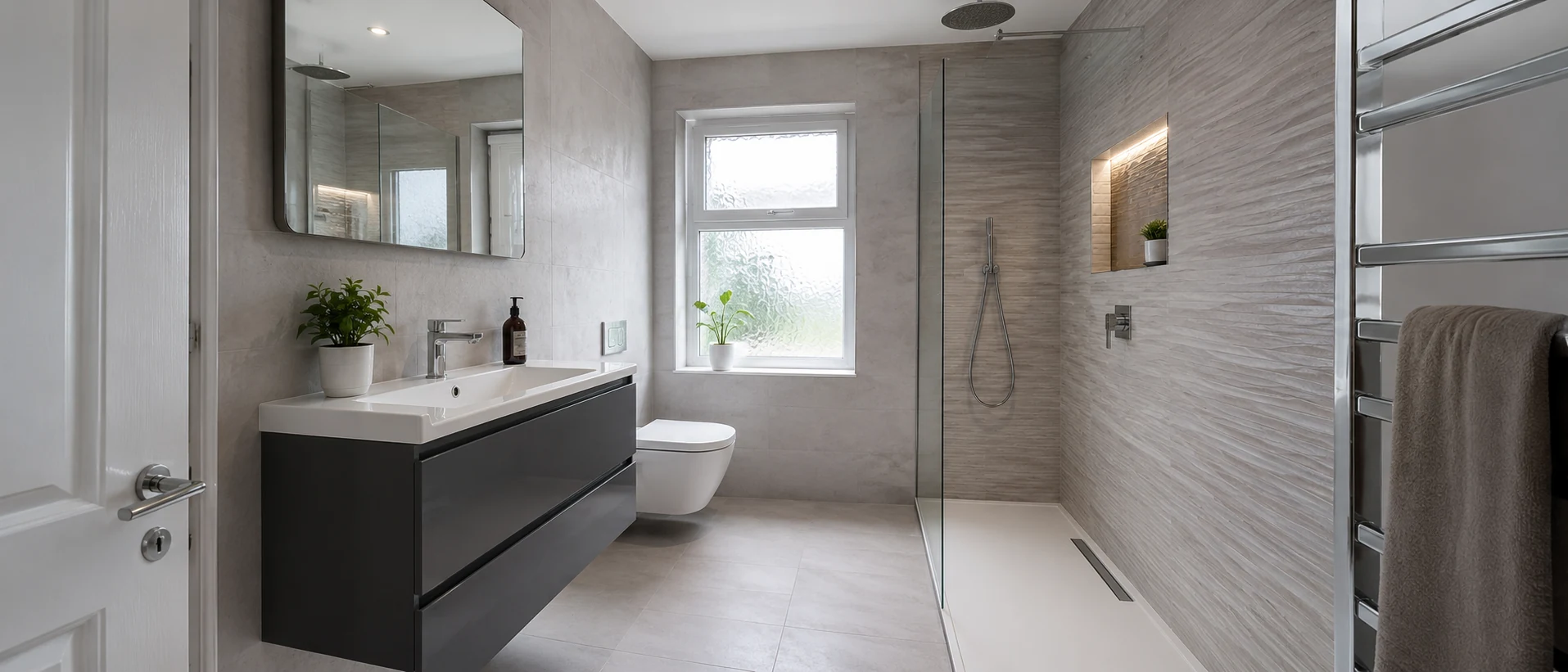
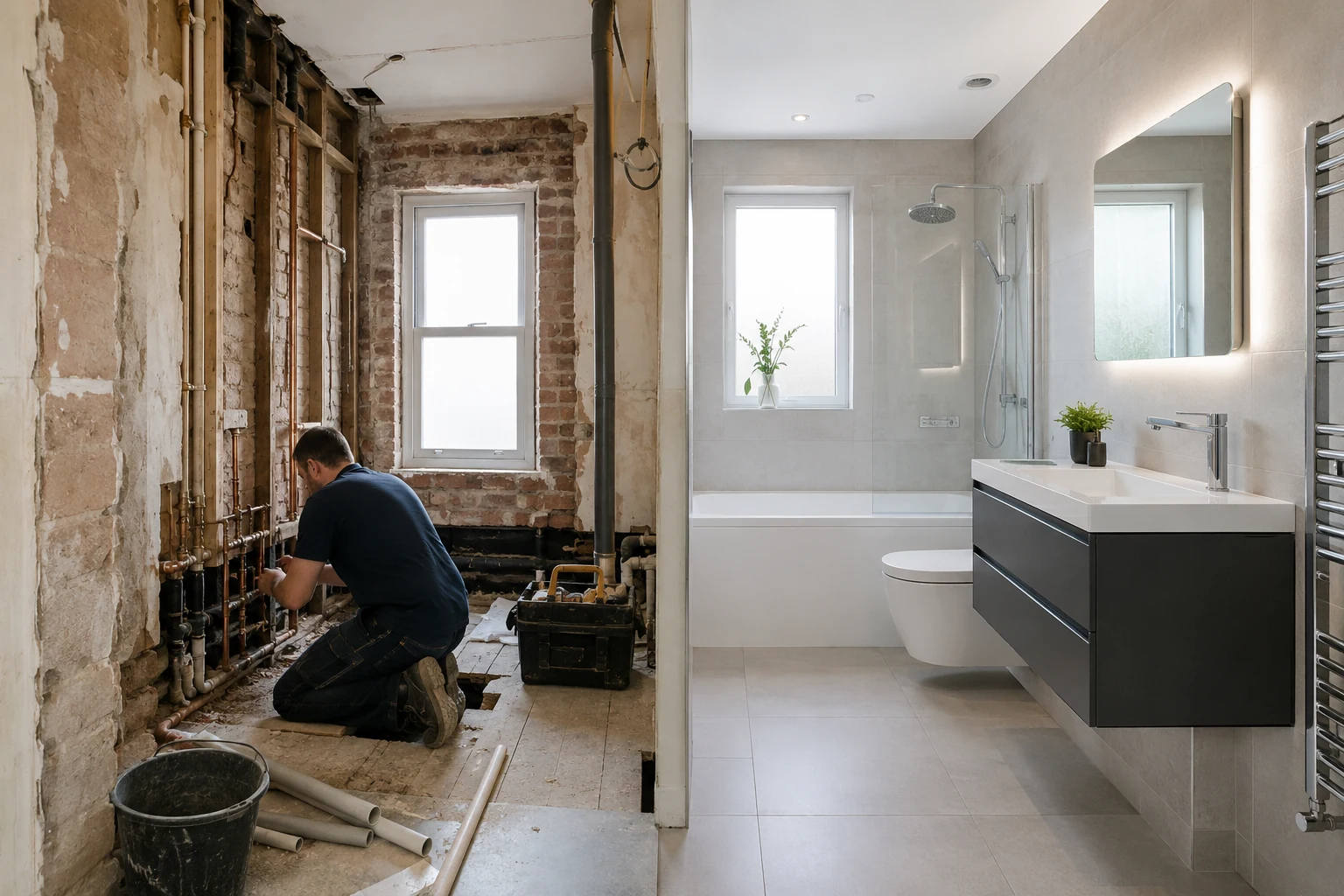
A refresh keeps existing pipework, drainage, and layout entirely in place, focusing on retiling, reglazing, and fixture swaps. It's fundamentally a cosmetic and finishes-level project. A full renovation involves a complete strip-out, potentially moving pipework and changing the layout, entirely new waterproofing, and coordinated plumbing, electrical and tiling work. It addresses both appearance and function.
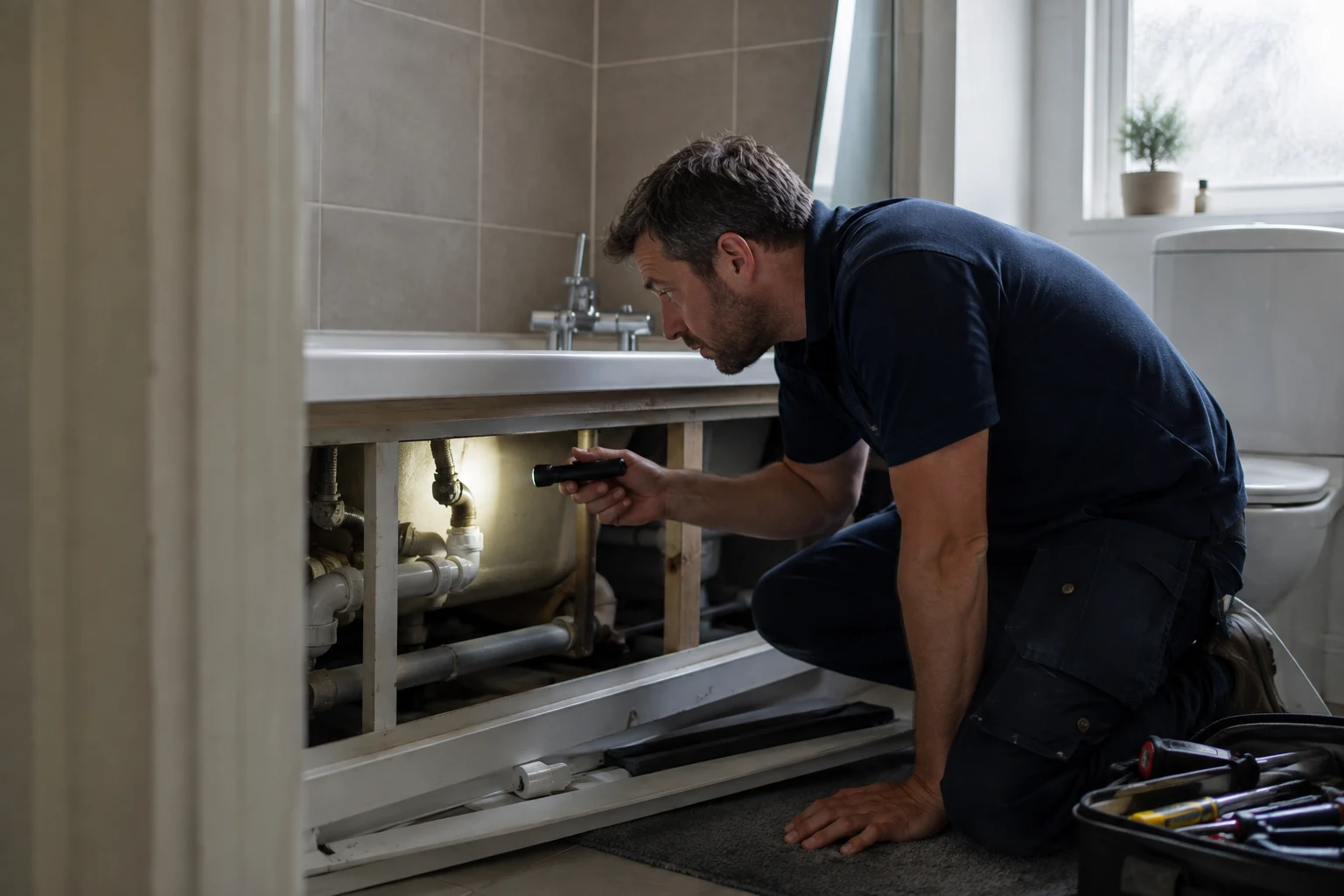
The distinction matters because a refresh genuinely cannot fix an underlying functional problem. If your bathroom has a drainage issue, a waterproofing failure, or electrics that don't comply with current Part P zoning standards, retiling over the top addresses none of these — and in the case of waterproofing, can actually make the underlying problem harder to diagnose later, since the new tiles hide what's happening beneath them.
Choose a Refresh If
- Plumbing works reliably, no leaks
- Drainage falls correctly with no pooling
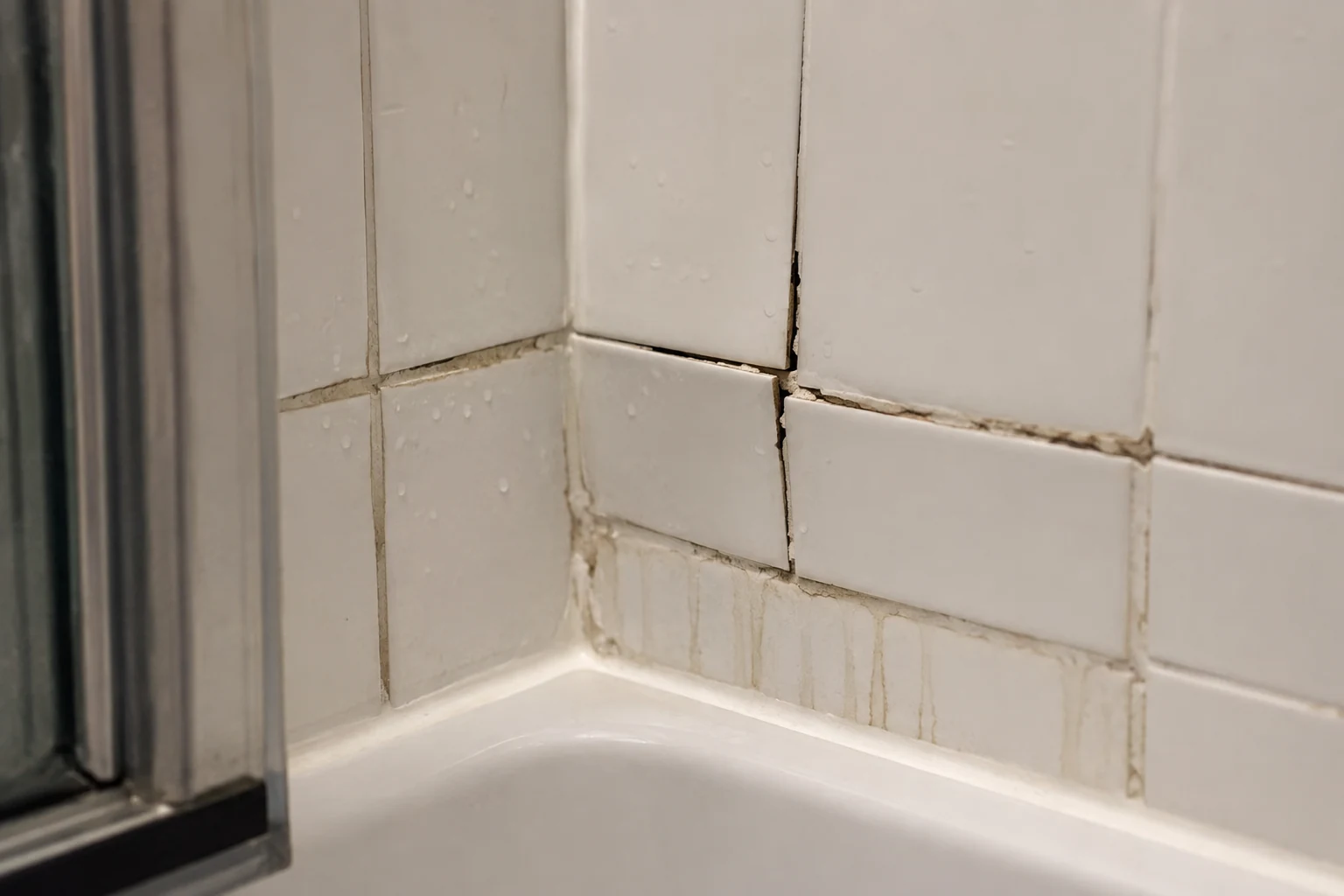
- Waterproofing intact — no hollow or cracked tiles
- Electrics already Part P compliant
- Layout works fine, just looks dated
- Budget or timeline is limited
Choose a Full Renovation If
- Active leak or water staining nearby
- Drainage pools or drains slowly
- Hollow, cracked, or loose tiles
- Non-compliant or ageing electrics
- Layout genuinely doesn't work for use
- Multiple fixtures reaching end-of-life

Cost and Disruption Compared
The cost gap between the two options is substantial. A refresh in London typically costs £2,000–£4,000 and takes 5–8 days. A full renovation ranges from £4,500 at the budget end to £25,000+ for a premium project, and typically takes 2–3 weeks. This isn't just a difference in scale — it reflects genuinely different scopes of work, with a full renovation involving trades and processes (waterproofing cure times, pipework relocation, building control notification for certain elements) that a refresh simply doesn't touch.
Disruption follows a similar pattern. A refresh generally leaves the bathroom partially usable for longer stretches of the project, and the shorter overall timeline means less time without full facilities. A full renovation typically means the bathroom is out of action for most of the project — a significant consideration in properties with only one bathroom, where timing around the renovation needs proper planning.
A free video consultation with a vetted professional can assess your specific situation and give you an honest recommendation.
The Middle Option: Partial Renovation
Not every bathroom fits neatly into "refresh" or "full renovation" — sometimes the problem is isolated to one part of the room. A shower enclosure with a waterproofing issue can often be addressed with a partial renovation focused specifically on re-tanking and retiling that area, while the rest of the bathroom (basin, WC, general finishes) is treated as a refresh. This targeted approach avoids the cost and disruption of a full strip-out when the underlying problem doesn't actually extend to the whole room.
The key is accurately identifying the extent of the problem before committing to a scope — which is exactly where a proper assessment, whether in person or via video consultation, adds genuine value over guessing based on visible symptoms alone.
Browse vetted plumbers and electricians with verified credentials and real ratings, and book a free video consultation directly from the app — 15% off your first request.
A Simple Decision Framework
If you're still unsure after reading this, a practical way to think it through:
- Start with function, not appearance. List any active problems — leaks, drainage, electrics, structural signs — separately from cosmetic complaints. Function problems point toward renovation regardless of how the room looks.
- If the function list is empty, a refresh addressing the cosmetic list is almost certainly the right call, and the cheaper, faster option.
- If the function list has one isolated item, ask whether a partial renovation targeting just that area makes sense, rather than assuming you need to redo the whole room.
- If the function list has multiple items, or the layout itself is a problem, a full renovation is generally the more sensible route, since addressing issues piecemeal over time often costs more in total than one coordinated project.
Frequently Asked Questions
How do I know if my bathroom needs a full renovation or just a refresh?
If your bathroom's plumbing, drainage and waterproofing are all sound and your only complaint is dated finishes, a refresh is likely sufficient. If you have leaks, drainage problems, non-compliant electrics, structural movement, or a layout that genuinely doesn't work, a full renovation is the more appropriate route, since a refresh won't resolve underlying functional issues.
How much cheaper is a refresh than a full renovation?
A bathroom refresh in London typically costs £2,000–£4,000, compared to £4,500–£25,000+ for a full renovation depending on tier. The exact saving depends on the scope of the full renovation being compared against, but a refresh is generally a fraction of the cost of even a budget full renovation.
Can I do a partial renovation instead of choosing between the two?
Yes — a partial renovation, addressing one specific problem area (such as re-tanking and retiling just the shower enclosure) while leaving the rest of the bathroom as a refresh, is a legitimate middle option. This works well when the functional issue is isolated to one part of the room rather than affecting the whole bathroom.
Does a refresh add as much value as a full renovation when selling a property?
This varies by property and buyer expectations, and isn't something we can quantify reliably. A well-executed refresh can meaningfully improve a bathroom's presentation for a fraction of the cost of a full renovation, though it won't resolve underlying functional issues that a survey might flag. If the bathroom has a genuine functional problem, buyers or their surveyors are likely to identify it regardless of how fresh the finishes look.
How disruptive is a refresh compared to a full renovation?
Considerably less disruptive. A refresh typically takes 5–8 days and doesn't require moving pipework, so the bathroom is often usable again much sooner. A full renovation typically takes 2–3 weeks and the bathroom is generally unusable for most of that period, which matters particularly in properties with only one bathroom.
What: A decision framework for London homeowners choosing between a full bathroom renovation and a cosmetic refresh.
Cost and disruption: a refresh costs £2,000–£4,000, takes 5–8 days, and involves no pipework moves. A full renovation costs £4,500–£25,000+, takes 2–3 weeks, and can involve a layout change.
The key limitation: a refresh cannot fix functional problems — leaks, drainage issues, or non-compliant electrics — it only addresses cosmetic wear. A middle option, partial renovation, is also covered.
Who needs it: homeowners unsure whether their bathroom's problems are cosmetic (refresh-fixable) or functional (renovation-required).
Seven Services: a free video consultation with a vetted London tradesperson can identify which category a bathroom falls into before any spend is committed.
Free video consultation with a vetted professional. Find out whether you need a refresh, a partial fix, or a full renovation.