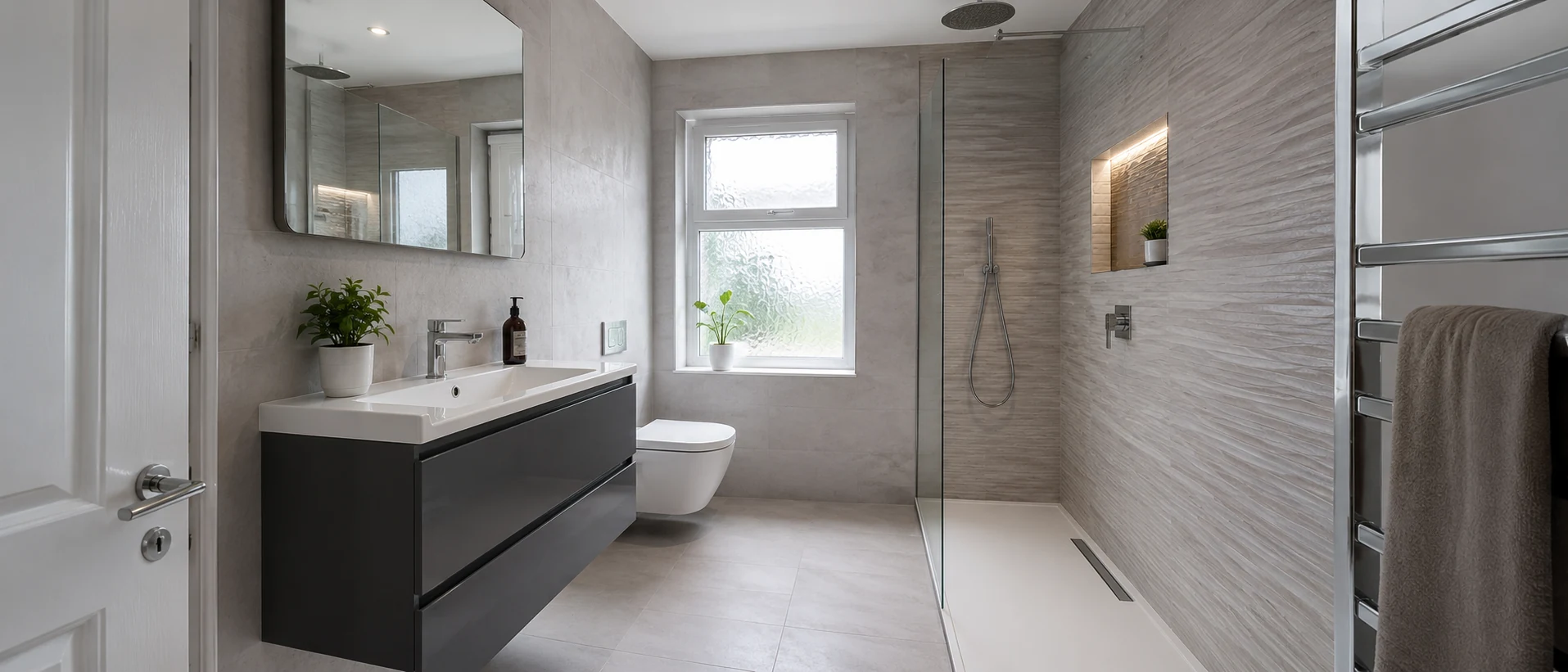
Freshly renovated London bathroom with large-format tiling, walk-in shower and vanity unit, natural light from a frosted window
Verified Professionals

London Bathroom Renovations, Managed Properly From Day One

Vetted plumbers and electricians working to Part P and Part G, coordinated for you across the full project — from a quick refresh to a complete renovation. Free video consultation before any callout.

Part P & Part G compliant
Free video consultation
Fully insured
4.8 rating · 112 reviews
All 32 London boroughs
15%
Off your first job
New customers · Limited offer

Book your bathroom renovation through the app

Get a free video consultation with a vetted plumber and Part P electrician before any callout is confirmed — and 15% off the job.

Part P & Part G compliant Fully insured 4.8 · 112 reviews All 32 London boroughs

What do I need to know before renovating a bathroom in London?

A bathroom renovation is a multi-trade project — plumbing, electrics, tiling, and waterproofing all need to happen in the right order, by the right people. Electrical work in a bathroom is governed by Building Regulations Part P, which classifies bathrooms into risk zones around water sources and requires specific IP-rated fixtures and protective devices, so anything beyond basic fixture swaps needs a registered electrician. Sanitary pipework, water efficiency, and unvented hot water systems fall under Part G, and new unvented systems require building control notification.

Most internal bathroom work doesn't need planning permission, but leasehold flat owners should check their lease for consent requirements around shared pipework, and anyone in a listed building should check before altering original layouts. A free video consultation before booking can map out the right trade sequence and flag any compliance steps — before you've committed to a start date.

At a glance

Bathroom Installation — Key Facts

Coverage
All 32 London Boroughs
Certification
Registered Plumber + Part P Electrician
Key regulations
Building Regs Part P & Part G
Budget renovation from
£4,500 fixed price
Mid-range renovation from
£7,000 fixed price
Bathroom refresh from
£2,000 fixed price
Booking
App or Web
Video consultation
Free, before any callout

Why Seven Services

What makes our bathroom renovations different

Multi-trade projects fail most often at the coordination stage, not the individual trades. A free video call up front sorts the sequencing before it becomes your problem.

Free video consultation first

A vetted professional walks through your bathroom, scope, and budget on a live video call before anyone travels to the property — surfacing sequencing, compliance and access questions early.

Plumber and electrician, properly coordinated

Full renovations need both a registered plumber and a Part P registered electrician working in the right sequence. We coordinate this for you rather than leaving you to manage separate bookings.

Fully insured on every job

All professionals carry public liability insurance, covering the plumbing, electrical, tiling and waterproofing work involved in a typical renovation.

Written quotes before any work begins

Scope, fixture specification, trade sequence, and total price are agreed during the video consultation — before anyone travels. No ambiguity about what's included once work starts.

All 32 London boroughs covered

From Barnet to Bromley, Hillingdon to Havering — our network covers every borough, with consistent pricing and availability regardless of location.

Compliance built into the process

Part P electrical zoning, Part G sanitation and water efficiency, and building control notification for unvented hot water systems are handled as standard, not as an afterthought.


What we cover

Bathroom services available in London

From a quick refresh to a full multi-trade renovation — here's what vetted professionals on the platform cover.

Not sure whether your bathroom needs a full renovation or just a refresh? A free video call with a vetted professional can confirm the right approach before anyone visits.

Full Bathroom Renovation

Complete strip-out and rebuild — new pipework, fixtures, tiling, waterproofing and electrics, coordinated across plumber, electrician and tiler. The most involved option, and the one most likely to need trade sequencing done properly.

2–3 weeks £4,500–£25,000+ Part P & Part G

Ensuite Installation

Creating a new ensuite from scratch, typically off a bedroom — new pipework runs, drainage, waterproofing, and electrics for a compact, self-contained bathroom.

1.5–2.5 weeks £6,000–£12,000 Part P & Part G

Wetroom Conversion

Level-access, fully tanked wetroom conversion — the most waterproofing-intensive option, requiring careful attention to falls, drainage and tanking cure times before tiling.

2–3 weeks £8,000–£15,000 Part P & Part G

Small Cloakroom / WC Installation

Compact WC and basin installation in an existing small space — the most straightforward new-bathroom project, but still requires correct drainage falls and Part P compliant electrics if lighting or extraction is added.

3–5 days £2,500–£4,500 Part P & Part G

Bathroom Refresh

Retiling, reglazing, and fixture swaps without moving pipework — a faster, lower-cost way to modernise a bathroom that's structurally sound but visually dated.

5–8 days £2,000–£4,000 Part P where electrics touched

Tiling & Waterproofing (Tanking)

Standalone tiling and tanking work — correct waterproofing behind tiles is what actually prevents leaks into the room or floor below, and it's the step most commonly rushed or skipped in budget renovations.

3–6 days £1,200–£2,500 BS 5385 tanking standard

Accessible & Mobility Bathroom Adaptation

Level-access showers, grab rails, raised WCs and non-slip flooring for accessibility needs. Some adaptations may be eligible for a Disabled Facilities Grant depending on individual circumstances — worth checking with your local authority.

1–2 weeks £5,000–£10,000 Part M guidance

Bathroom Repairs & Fault Diagnosis

Leaks, failing waterproofing, cracked tiles, poor extraction, or fixtures that need replacing without a full renovation. A video consultation can often narrow down the cause before booking a visit.

1–2 hours £70–£220 Registered plumber

Common issues

Bathroom problems London homeowners report

Most of these point to either a genuine renovation need or a smaller fix — a video call helps tell the difference.

Not sure if you need a full renovation or a repair?

A free video call with a vetted professional can assess the issue before booking a visit.

Get a free assessment

Water leaking through the ceiling below

Usually points to a waterproofing (tanking) failure, a cracked grout line, or a failed seal around the bath or shower tray — needs investigating promptly since ceiling damage below compounds the longer it's left.

Persistent mould or poor ventilation

Often caused by an underperforming or missing extractor fan, or condensation with nowhere to escape. Left unaddressed, this affects both the bathroom's finishes and air quality.

Cracked or loose tiles

Can indicate movement in the substrate, a failed adhesive bond, or — more seriously — water getting behind the tiles and compromising the waterproofing layer beneath.

Low water pressure at the shower or taps

Can be a supply-side issue, a scaled shower head, or in older properties, undersized pipework that a renovation is a natural opportunity to correct.

Non-compliant electrics in wet zones

Older bathrooms often have light switches, sockets or fittings positioned or rated incorrectly for their Part P zone — a common finding when a renovation opens up the room.

Awkward layout wasting space

Particularly common in London flats where the bathroom was fitted into whatever space was left over — a renovation is the point at which layout can actually be reconsidered.

Dated finishes with no functional problem

Sound plumbing and waterproofing but tired tiling and fixtures — this is squarely a refresh candidate rather than a full renovation, and considerably cheaper to resolve.


Pricing guide

How much does a bathroom renovation cost in London?

Costs scale with bathroom size, whether pipework is being moved, tiling extent, and fixture quality.

Unsure which tier fits your bathroom?

A free video consultation produces a realistic scope and cost estimate before any visit.

Get a free estimate
Project Minimum Typical Maximum Key factors
Budget full renovation£4,500£5,800£7,000Standard fixtures, no pipework moves
Mid-range full renovation£7,000£9,500£12,000Better fixtures, some layout change
Premium full renovation£12,000£17,000£25,000+High-end fixtures, bespoke tiling, layout change
Ensuite installation (new)£6,000£8,500£12,000New pipework run, drainage access
Wetroom conversion£8,000£11,000£15,000Tanking extent, floor build-up, drainage falls
Small cloakroom / WC install£2,500£3,400£4,500Drainage access, existing plumbing proximity
Bathroom refresh (no pipework moves)£2,000£2,900£4,000Tiling area, fixture swap count
Tiling & waterproofing only£1,200£1,800£2,500Room size, tile format, tanking extent
Accessible bathroom adaptation£5,000£7,200£10,000Adaptation type, may be partly grant-funded

Why bathroom costs vary so much between quotes

Three factors drive most of the price variation between quotes for what sounds like a similar project:

  • Whether pipework is moving. Keeping the bath, shower, WC and basin in their existing positions keeps costs down considerably. Relocating any of these means new pipe runs, potentially lifting floors, and more disruption.
  • Waterproofing and tiling extent. Full tanking to current standards, larger tile formats, and floor-to-ceiling tiling all add cost over a partial-height, budget tiling scheme — but waterproofing corners are the most consequential place to cut.
  • Fixture quality and specification. A budget suite versus a premium brand sanitaryware and tap specification can double the fixtures line item alone, independent of labour costs.

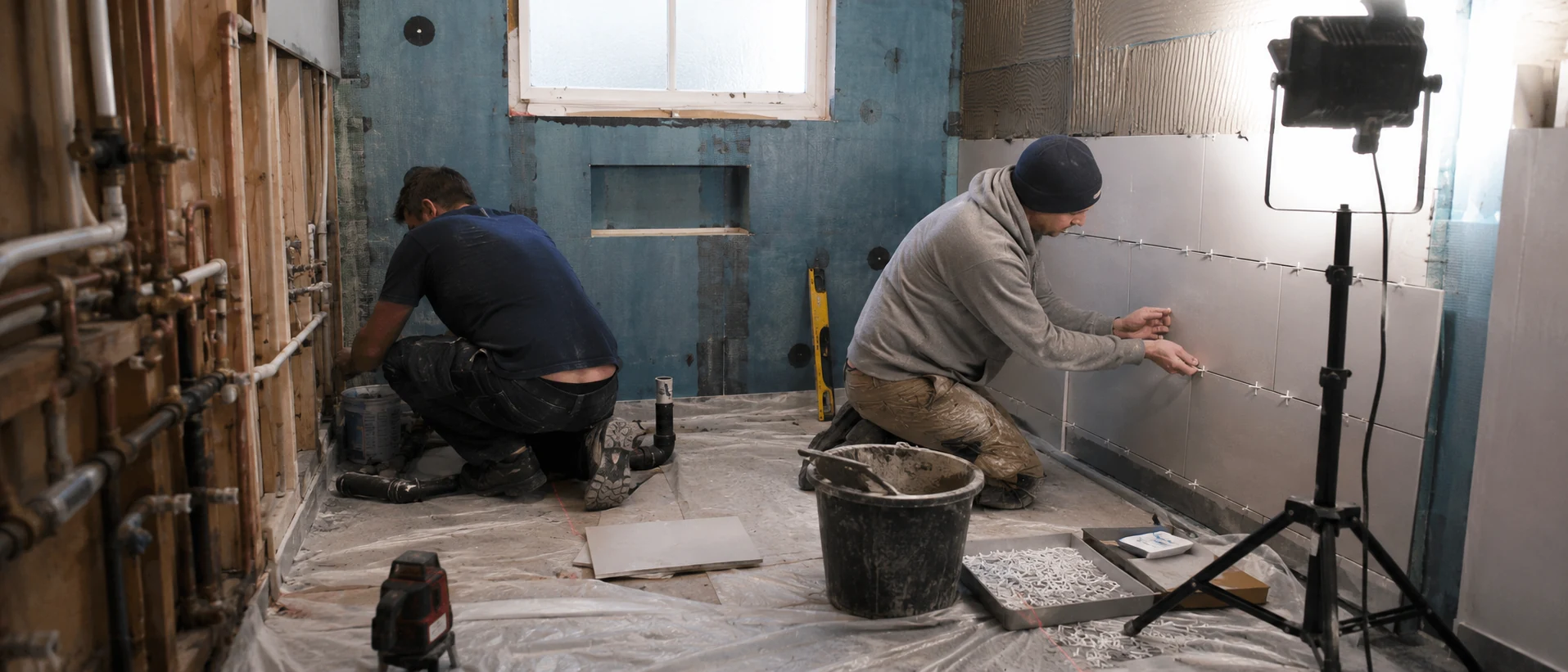
Plumber and tiler working together mid-renovation in a London bathroom, exposed pipework and tanking membrane visible before tiling
Plumbing, waterproofing and tiling sequenced properly — the same trades you spoke to on the video call

The process

How booking a bathroom renovation through Seven works

Designed to get the trade sequencing right from the start.

1

Submit your request

Describe your bathroom, current condition, and what you're hoping to achieve — full renovation, refresh, or a specific repair. Photos of the current space help.

2

Free video consultation

A vetted professional joins a live video call to assess scope, recommend an approach, and flag any compliance or access considerations before anyone travels.

3

Agree scope, sequence and price

Fixture specification, trade sequence (plumber, electrician, tiler), and total price are confirmed in writing before work starts.

4

Renovation completed

Trades work in the agreed sequence. Electrical work is Part P compliant; sanitation and hot water work follows Part G, with building control notification where required.

5

Rate and review

After completion, you rate the professionals through the platform. All reviews are verified against completed bookings.


Get instant quotes on your phone

Browse vetted plumbers and electricians with real ratings and verified credentials. Book a free video consultation directly from the app.

Browse professionals

View verified credentials, real ratings, and completed job history before you choose.

Free video consultation

Book a video call directly from the app — no phone tag or email chains.

Real-time job tracking

Follow your renovation from quote to completion with status updates.

Instant quotes

Describe your bathroom and receive transparent pricing from multiple professionals.

Available on iOS & Android

Prefer not to install an app? Submit a request on our website — same professionals, same free video consultation.


Coverage

Bathroom renovation professionals across all 32 London boroughs

Vetted plumbers and electricians available across the whole of Greater London.

Dedicated borough page — click to view Covered · page coming soon
Barking & DagenhamBarnet BexleyBrent BromleyCamden City of LondonCroydon EalingEnfield GreenwichHackney Hammersmith & FulhamHaringey HarrowHavering HillingdonHounslow IslingtonKensington & Chelsea Kingston upon ThamesLambeth LewishamMerton NewhamRedbridge Richmond upon ThamesSouthwark SuttonTower Hamlets Waltham ForestWandsworth Westminster

Where renovation complexity varies most

Inner-London boroughs with a high concentration of period conversion flats — Islington, Hackney, Camden among them — see more renovations complicated by shared drainage, older pipework, and leasehold consent requirements for work affecting communal systems. Outer-borough houses in areas like Bromley, Havering and Sutton more commonly have straightforward, unshared plumbing runs, which tends to simplify both scoping and pricing.


Due diligence

What to check before hiring for a bathroom renovation in London

These checks matter given the multi-trade nature and compliance requirements of bathroom work.

Confirm the electrician is Part P registered before any electrical work in wet zones begins.
Ask for proof of public liability insurance covering both plumbing and electrical trades.
Get a written quote itemising plumbing, electrical, tiling and waterproofing separately.
If you live in a leasehold flat, check your lease for consent requirements before altering shared pipework.
Ask what waterproofing standard (tanking) will be used and how long it needs to cure before tiling.
Confirm whether a new unvented hot water system will need building control notification.
Ask how the plumber, electrician and tiler will be sequenced, and who is coordinating that sequence.
Confirm what warranty applies to both fixtures and workmanship, particularly waterproofing.

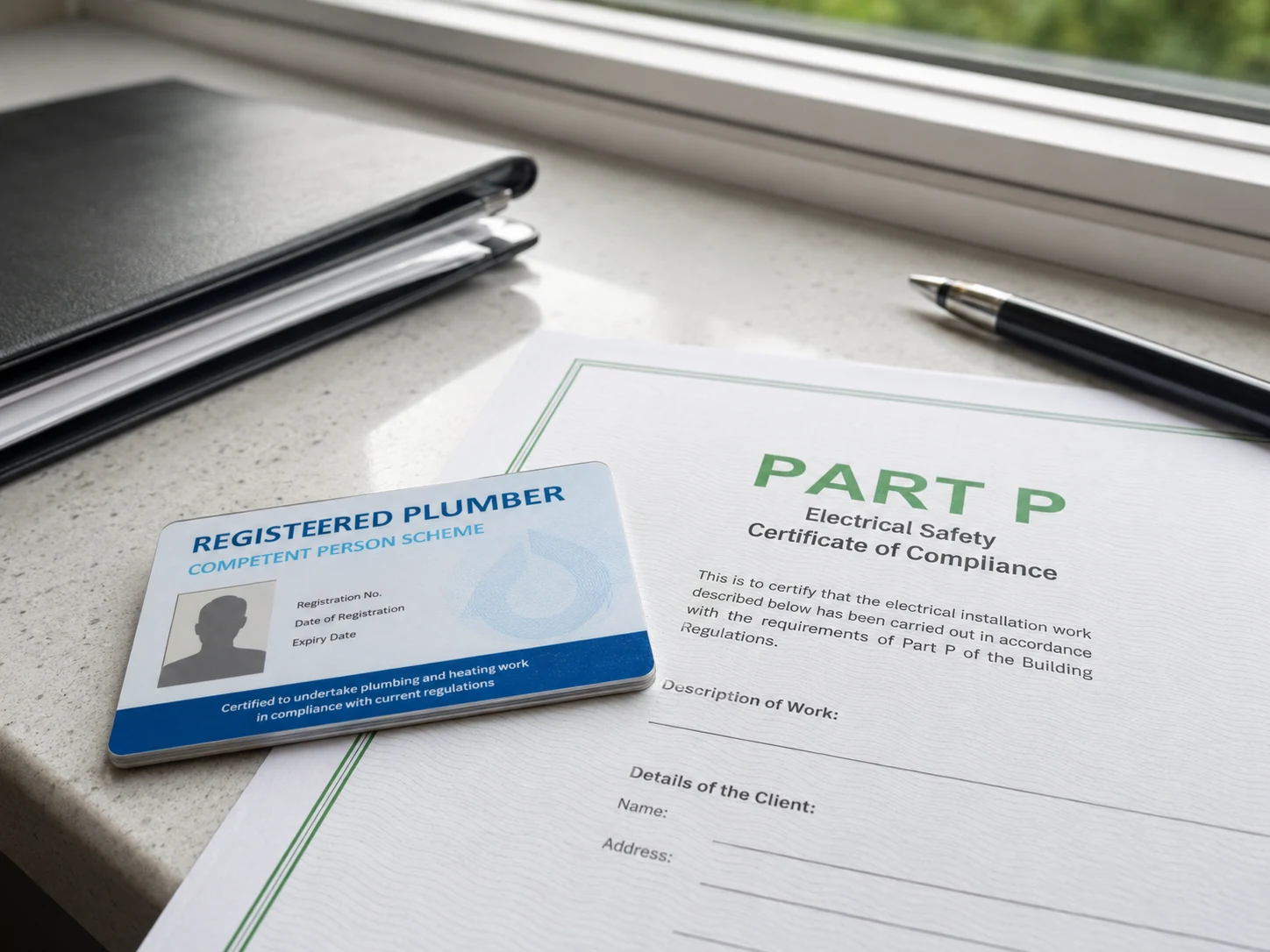
Registered plumber's ID card and Part P electrical compliance certificate for a London bathroom renovation
Always check credentials before work begins — every Seven Services professional carries ID
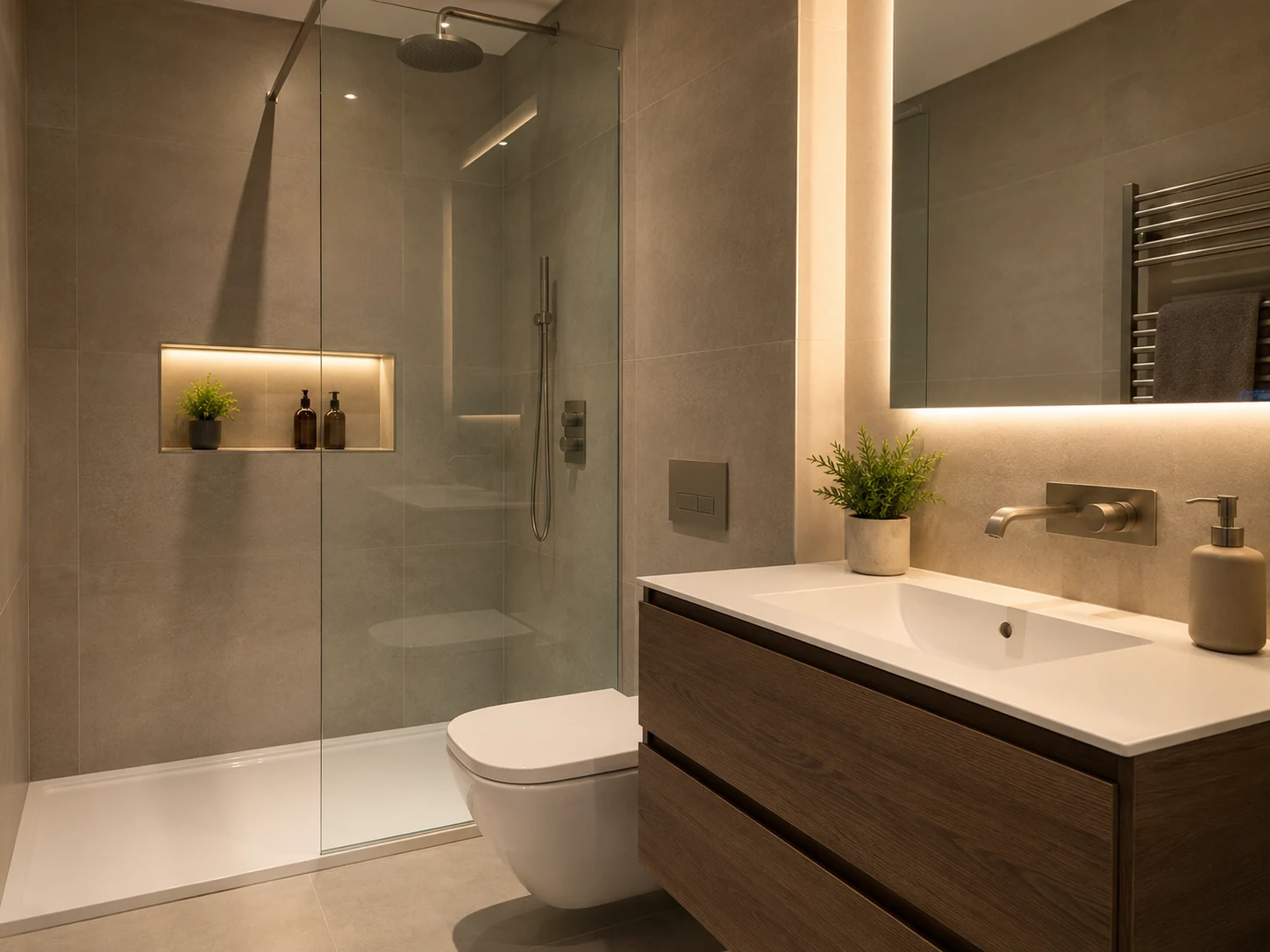
Completed London bathroom renovation with large-format tiling, walk-in shower and vanity unit finished and ready to use
Fixed price agreed up front, sequence confirmed in writing — no surprises

Expert guidance

Practical bathroom advice for London homeowners

Waterproofing is the step to never cut corners on

Tiles are cosmetic; the waterproofing (tanking) layer behind them is what actually keeps water out of your subfloor and the ceiling below. A renovation that looks identical on the surface can have very different long-term outcomes depending on whether tanking was done properly and given time to cure before tiling began.

Trade sequencing is where DIY-managed projects usually go wrong

Plumbing first-fix, electrical first-fix, waterproofing, tiling, then second-fix plumbing and electrics — get this order wrong and you risk having to rip out finished work to fix something underneath. Coordinating this sequence is one of the most valuable things a managed renovation adds over self-managing separate tradespeople.

Bathroom electrics have specific zoning rules

Building Regulations Part P classifies areas of a bathroom into zones based on proximity to water, each with different requirements for IP-rated fixtures and protective devices. This is why bathroom light fittings and sockets look and are positioned differently from the rest of the house — and why this work needs a registered electrician, not a general handyman.

A refresh can be the right call, not a compromise

If your bathroom's plumbing and waterproofing are sound but the finishes are dated, a refresh — retiling and fixture swaps without moving pipework — delivers most of the visual impact of a full renovation for a fraction of the cost and disruption.

Small London bathrooms benefit from layout rethinking

Many London flat bathrooms were fitted into leftover space rather than designed properly. A renovation is the point at which it's worth reconsidering the layout entirely — sometimes a different fixture arrangement makes a small room feel considerably larger without any extra square footage.

Accessible adaptations may be partly grant-funded

Depending on individual circumstances, some accessible bathroom adaptations may be eligible for support through a Disabled Facilities Grant via your local authority. Eligibility and funding levels vary, so it's worth checking with your council before finalising a private quote.


Talk to a vetted London bathroom renovation team — for free

Free video consultation before any callout. Get a realistic scope and price, understand the trade sequence, and agree everything in writing — before anyone travels to your property.

Download the App Request a Bathroom Quote Online
Part P & Part G compliant
Free video call
Fixed price agreed upfront
Fully insured
All 32 boroughs

Common questions

Bathroom Installation FAQ — London

Answers to the questions London homeowners ask most about bathroom renovations.

In most cases, no — installing or renovating a bathroom within an existing room typically counts as internal work and doesn't require planning permission. Converting a new room into a bathroom, adding an extension, or altering a listed building's layout can require permission or listed building consent. Leasehold flat owners should also check their lease for any requirement to notify the freeholder or managing agent before work affecting shared pipework or drainage.
Two parts are most relevant. Part P (Electrical Safety) governs any electrical work in a bathroom, since bathrooms are classified into risk zones around water sources and require specific IP-rated fixtures and protective devices — this work must be carried out or certified by a registered electrician. Part G (Sanitation, Hot Water Safety and Water Efficiency) covers sanitary pipework, water efficiency standards, and unvented hot water systems, which require building control notification if being newly installed.
A budget full bathroom renovation typically costs £4,500–£7,000, a mid-range renovation £7,000–£12,000, and a premium renovation with high-end fixtures and bespoke tiling £12,000–£25,000 or more. Costs vary with bathroom size, whether pipework is being moved, tiling extent, and fixture quality.
A full bathroom renovation typically takes 2–3 weeks from strip-out to completion, depending on scope. A bathroom refresh (retiling and fixture swap without moving pipework) can often be completed in 5–8 days. Wetroom conversions and layouts requiring pipework relocation tend to sit at the longer end, particularly where waterproofing (tanking) needs time to cure properly between stages.
For a full renovation, yes — a plumber handles pipework, fixture installation and waterproofing coordination, while a registered electrician handles lighting, extractor fans, shaver sockets and underfloor heating wiring, all of which must comply with Part P's bathroom zoning rules. A tiler is also typically involved for anything beyond a basic refresh. Coordinating these trades in the right sequence is one of the most common sources of delay in DIY-managed renovations.
A refresh keeps existing pipework in place and focuses on retiling, reglazing, and fixture swaps — faster, cheaper, and less disruptive. A full renovation involves a complete strip-out, potentially moving pipework and changing the layout, new waterproofing throughout, and coordinated plumbing, electrical and tiling work. A refresh suits a bathroom with sound plumbing but dated finishes; a full renovation suits one with functional problems or a layout that no longer works.
Tanking is the waterproof membrane applied to walls and floors before tiling, and it's what actually prevents water penetrating into the subfloor or the room below — the tiles themselves are not fully waterproof on their own. Proper tanking needs time to cure before tiling begins. This is one of the most consequential steps to get right, and one of the easiest for a budget renovation to rush or skip.
Generally yes, but check your lease first — many leases require freeholder or managing agent notification or consent for work affecting shared pipework, drainage, or structural elements, even for internal bathroom renovations. This is worth confirming before booking work, since retrospective consent issues can be considerably more disruptive to resolve.
Yes — installing a new unvented hot water system (a pressurised system without a header tank) requires building control notification under Part G, and must be installed by a competent, registered installer. This is a common addition in bathroom renovations aiming for better water pressure, so it's worth confirming with your installer whether it applies to your project.
Wetrooms work in a wide range of sizes, but drainage falls and floor build-up need enough depth to achieve correct drainage gradients — this is a technical assessment best done on site or via video consultation rather than assumed from room dimensions alone. Smaller rooms can still work well as wetrooms with the right design approach.
Layout is usually more impactful than any single fixture choice — moving away from a layout that was simply fitted into leftover space, using larger format tiles to reduce grout lines, wall-hung fixtures to keep the floor visually clear, and good lighting all help. A renovation is the natural point to reconsider layout, since it's far more disruptive to do later.
Some adaptations may be eligible for support through a Disabled Facilities Grant via your local authority, depending on individual circumstances and a means-tested assessment. Eligibility and funding levels vary by borough and situation, so it's worth checking directly with your local authority before finalising a private quote.
Most commonly a failed seal around a bath or shower tray, a crack in the grout or tanking layer, or a slow pipework leak beneath the floor. This needs investigating promptly, since the damage to the ceiling below compounds the longer it continues, and the underlying cause is often a smaller, more affordable fix than the visible damage suggests.
Relocating fixtures means new pipe runs, potentially lifting floors, and additional waterproofing work — this is one of the main reasons a mid-range or premium renovation costs more than a budget one. The exact cost depends on how far the fixture is moving and whether floor levels need adjusting for correct drainage falls.
Building Regulations require adequate ventilation for bathrooms, typically via an extractor fan where there's no openable window, or additional extraction even where one exists in some cases. This isn't just a comfort consideration — inadequate ventilation contributes directly to mould and damage to finishes over time.
For a full renovation, generally no — the bathroom will be out of use for most of the project. This is worth planning for in advance, particularly in properties with only one bathroom. Discuss timeline and any temporary facility options with your professional during the video consultation so there are no surprises once work begins.
Workmanship warranties vary by professional, but waterproofing and tiling warranties are particularly important to confirm given how consequential a failure can be. Fixtures typically carry separate manufacturer warranties. Always get warranty terms in writing before work begins, not as an afterthought once the job is complete.
If you're already lifting the floor for a renovation, adding electric underfloor heating is a relatively modest incremental cost compared to retrofitting it later, and it's a popular addition for the comfort of tiled floors. It requires Part P compliant electrical installation, which your electrician will factor into the project.
Yes, most professionals are happy to work with customer-supplied fixtures and tiles — just confirm this during the video consultation so quantities, dimensions and delivery timing can be planned into the project schedule. Be aware that labour-only quotes typically don't include liability for supplied materials being faulty or insufficient in quantity.
This varies by property and buyer preference, and isn't something we can quantify reliably. A well-executed renovation with sound waterproofing and a sensible layout is generally viewed as a genuine improvement rather than a cosmetic one, particularly where the existing bathroom had functional problems rather than just dated finishes.

What customers say

London homeowner reviews

Reviews from verified Seven Services bookings — bathroom renovation jobs across London.

"Full renovation of our only bathroom, so timing mattered a lot. The video call laid out the whole trade sequence upfront and it genuinely ran to that plan — no surprise gaps between plumber and tiler."

Sarah M.
Full renovation · Wandsworth

"Ensuite built from scratch off our loft bedroom. Getting the pipework run planned properly before anyone started meant no nasty surprises when the floor came up."

James R.
Ensuite installation · Richmond

"Refresh rather than full renovation since our plumbing was fine, just dated tiles. Considerably cheaper than I expected and the room looks completely different."

Priya K.
Bathroom refresh · Ealing

"Wetroom conversion in a small flat — wasn't sure it would work in the space we had, but the drainage falls were designed properly and it works better than expected."

Daniel F.
Wetroom conversion · Islington

"Had a leak into the flat below from a failed seal around the bath. Fixed properly with new tanking rather than just resealing the visible gap — hasn't come back."

Amelia T.
Repair & waterproofing · Hackney

"Accessible adaptation for my mother's bathroom — level access shower and grab rails fitted properly, and they pointed us toward the Disabled Facilities Grant application before we'd even asked."

Michael O.
Accessible adaptation · Bromley

Also on Seven

Related services


Learn more

Helpful guides for London homeowners


Summary — Bathroom Installation in London

What: Bathroom renovation, ensuite and wetroom installation across Greater London — from a quick refresh to a full multi-trade renovation, coordinated between plumber, electrician and tiler.

Who needs it: Homeowners renovating a dated or non-functional bathroom, building a new ensuite, converting to a wetroom, or making accessibility adaptations.

Key compliance points: Electrical work in bathrooms must comply with Building Regulations Part P zoning rules and be carried out by a registered electrician. Sanitation and hot water work falls under Part G, and new unvented hot water systems require building control notification. Most internal work doesn't need planning permission, but leasehold flats may need freeholder consent for shared pipework.

Typical London costs: Budget renovation £4,500–£7,000; mid-range £7,000–£12,000; premium £12,000–£25,000+; refresh £2,000–£4,000; ensuite £6,000–£12,000; wetroom £8,000–£15,000.

Seven Services: Marketplace platform connecting London homeowners with vetted plumbers and electricians across all 32 boroughs. Includes a free video consultation before any callout — useful for scoping the project and getting trade sequencing right before committing.
This page is intended for general informational purposes. Electrical work in bathrooms must comply with Building Regulations Part P and be carried out by a registered electrician. Sanitation and hot water work must comply with Part G, and new unvented hot water systems require building control notification. Planning permission and leasehold consent requirements vary by property and local authority; always check before undertaking work. Prices are indicative market ranges and will vary depending on property specifics, scope of work, and contractor. Seven Services connects customers with independent tradespeople and does not carry out work directly.

WhatsApp 020 3542 2902