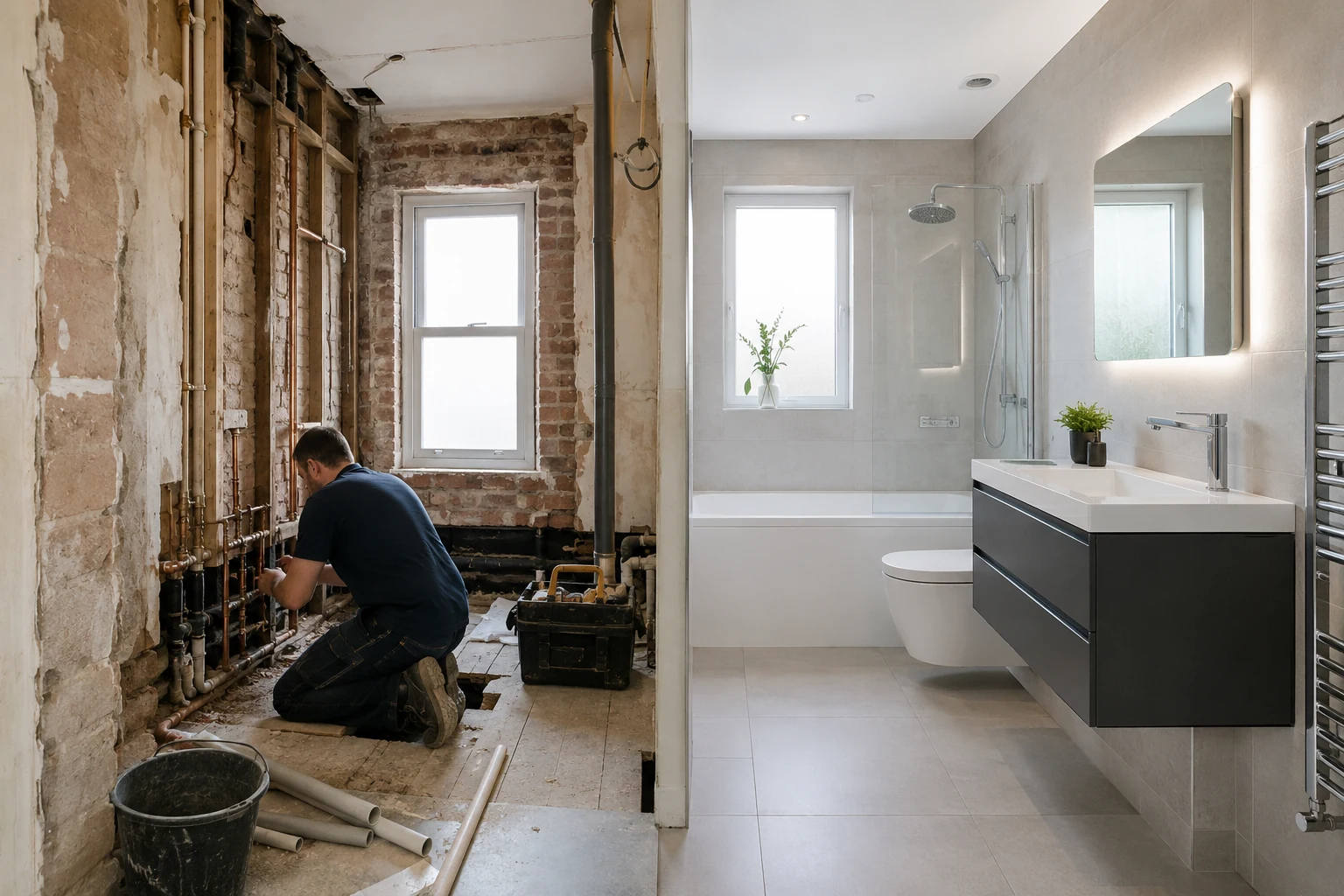
It's easy to mistake a bathroom that needs a genuine renovation for one that just needs freshening up — the two can look surprisingly similar from a quick glance. The distinction matters because cosmetic fixes applied over an underlying functional problem tend to mask it temporarily rather than solve it, often making the eventual proper fix more expensive. This guide sets out eight signs that point toward a genuine renovation need, distinct from ordinary wear that redecorating can address.
If you're not sure which category your bathroom falls into, a free video consultation with a vetted professional can assess it remotely and give you an honest recommendation before you spend on either option.
1–3. The Water Damage Signs
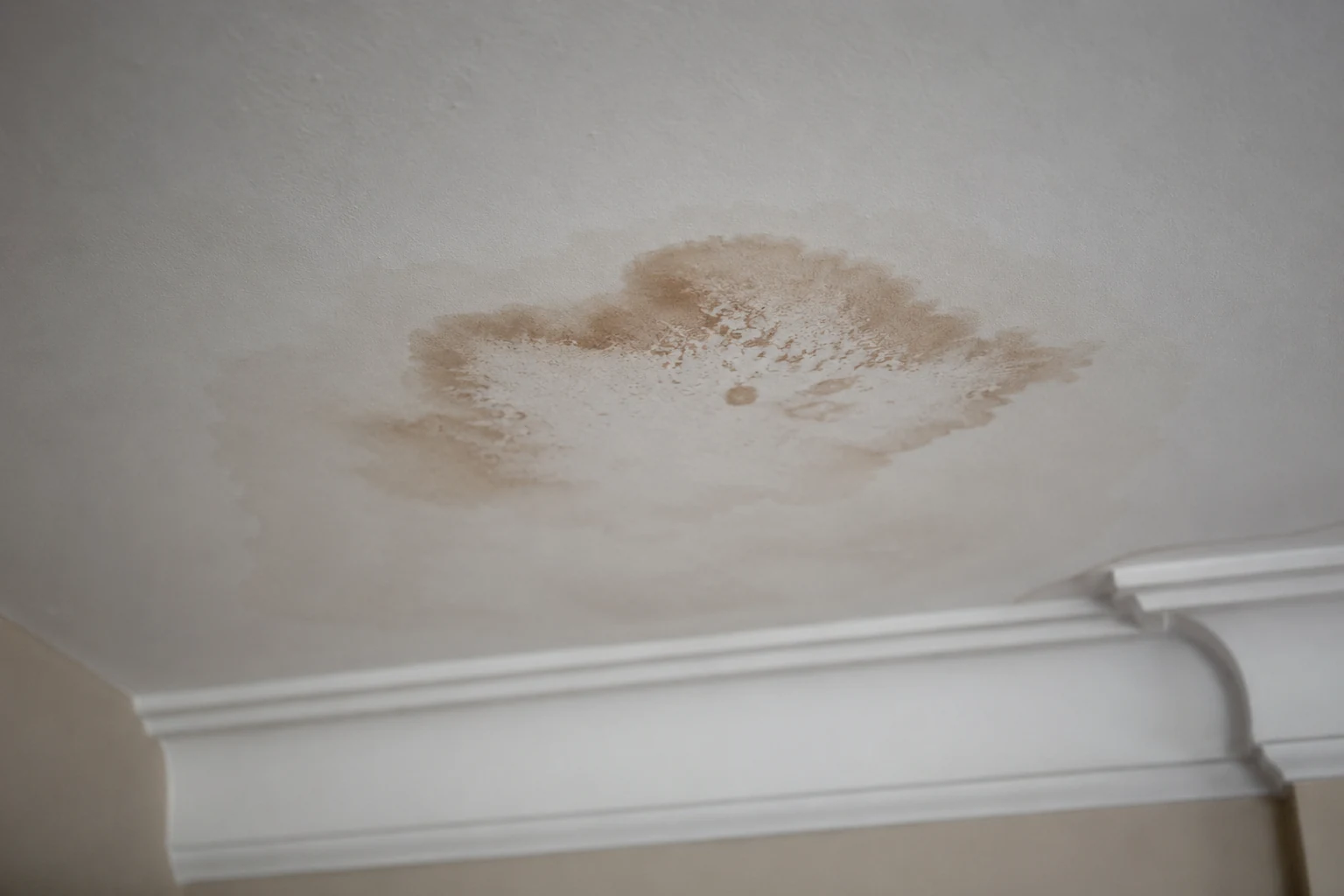
1. Water staining on the ceiling or wall below the bathroom. Even a small, faint stain deserves investigation. It typically indicates a slow leak from a failed seal around a bath or shower tray, a cracked grout line, or a compromised waterproofing (tanking) layer. These leaks tend to worsen gradually rather than resolve on their own, and catching the cause early is considerably less disruptive and costly than waiting until the damage becomes obvious.
Repainting addresses the visible symptom but not the source. If the underlying leak continues, the stain will return, often accompanied by worsening damage to the ceiling structure. Identify and fix the source before addressing the cosmetic damage.
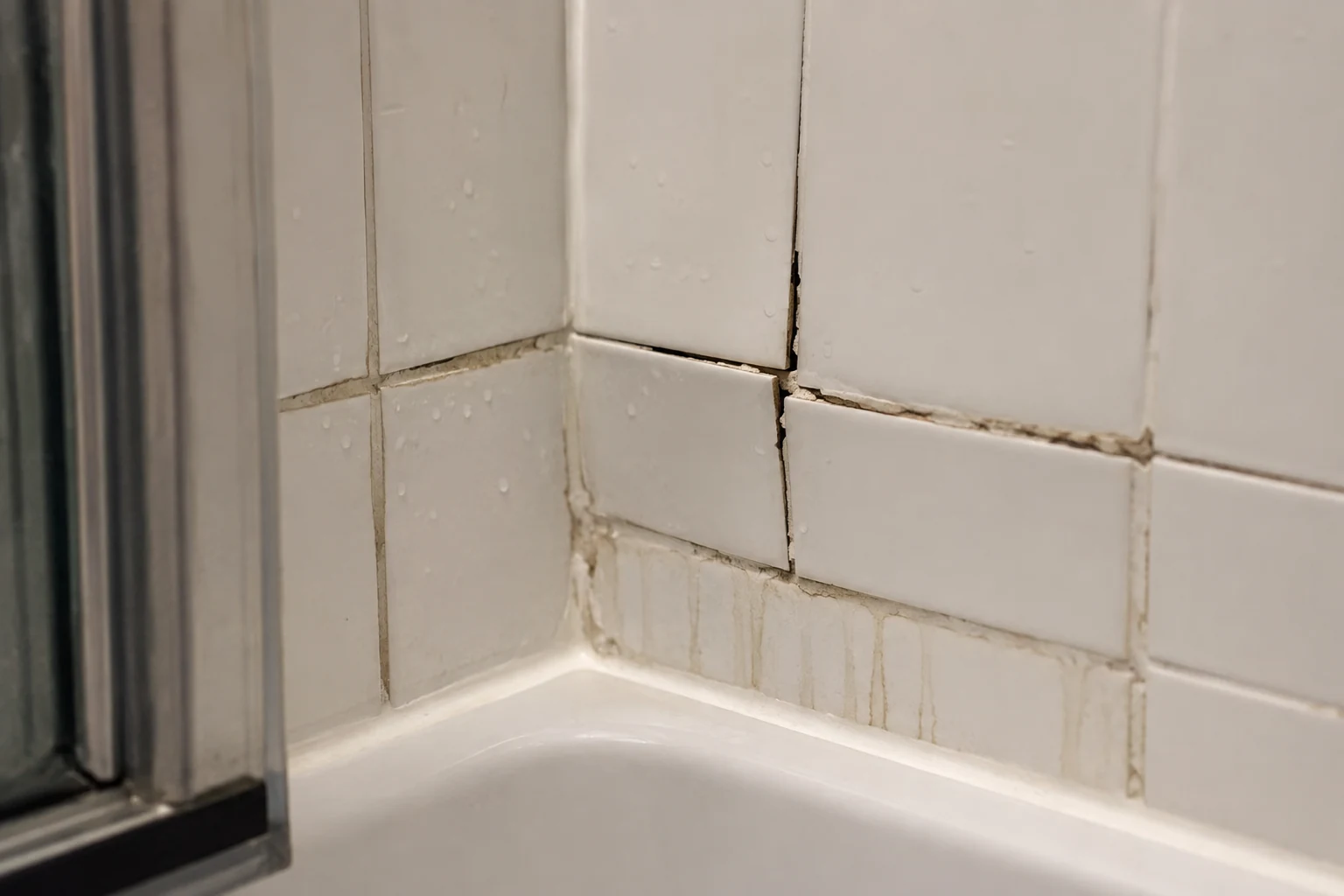
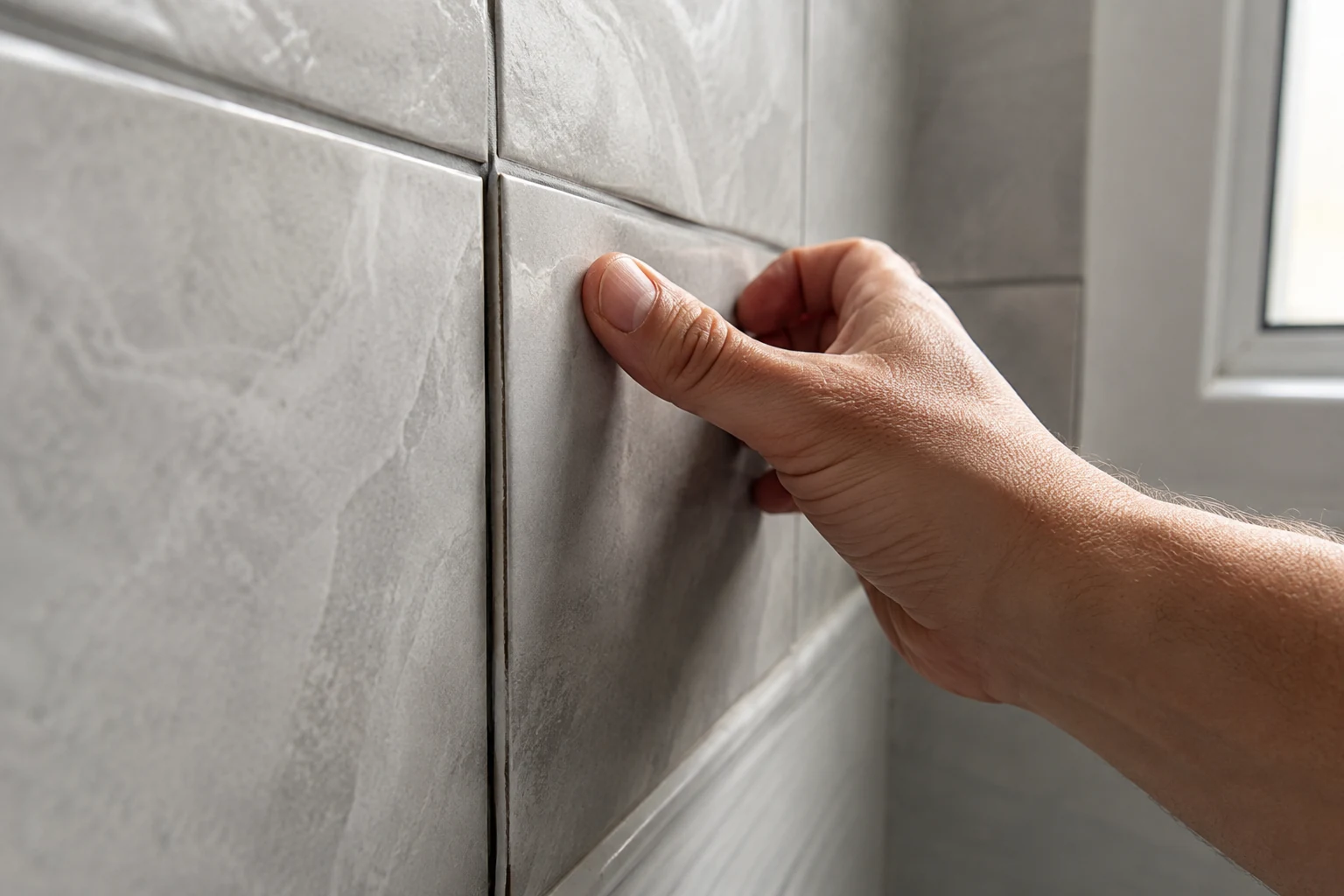
2. Hollow-sounding or loose tiles. Tap a few tiles gently — a solid, dull thud suggests good adhesion, while a hollow, higher-pitched sound suggests the tile has come away from its substrate. This can indicate water has got behind the tile and compromised the waterproofing layer, or simply a failed adhesive bond. Either way, it's worth investigating rather than ignoring, since worsening tile detachment near a shower area often signals an active moisture problem.
3. Persistent mould that returns despite regular cleaning. Surface mould that responds to cleaning and stays away is usually a ventilation issue — addressing it might be as simple as improving extraction. Mould that returns quickly and persistently, particularly around grout lines, sealant, or in less-ventilated corners, more often points to an ongoing moisture source that needs identifying rather than a cleaning routine adjustment.
A free video call with a vetted professional can help assess the issue before you decide on redecorating vs renovating.
4–6. The Functional and Structural Signs
4. Poor or worsening drainage. Water pooling in the shower tray, a bath that drains slowly, or standing water anywhere on the floor after use can indicate a drainage fall problem — the floor or tray isn't sloped correctly toward the drain. This is a functional issue that redecorating cannot fix, and it's a common finding in older bathrooms where original installation quality varied considerably.
5. Non-compliant or ageing electrics in wet zones. Older bathrooms sometimes have light switches, sockets, or fittings positioned or rated incorrectly for their zone under Building Regulations Part P — a standard that has tightened considerably since many London bathrooms were originally fitted. If you notice a standard (non-bathroom-rated) light fitting, a switch positioned too close to a water source, or exposed wiring near wet areas, this is a genuine safety consideration worth addressing as part of a renovation rather than leaving in place.
6. Visible movement, cracking in the substrate, or a spongy floor. A floor that feels slightly soft underfoot near the bath or shower, visible cracks in the wall substrate beyond surface tile cracking, or any sign of movement points to a more serious underlying issue — potentially water damage to the subfloor structure itself. This needs a proper structural assessment, not a cosmetic fix.
Browse vetted plumbers and electricians with verified credentials and real ratings, and book a free video consultation directly from the app — 15% off your first request.
7–8. The Layout and Age Signs
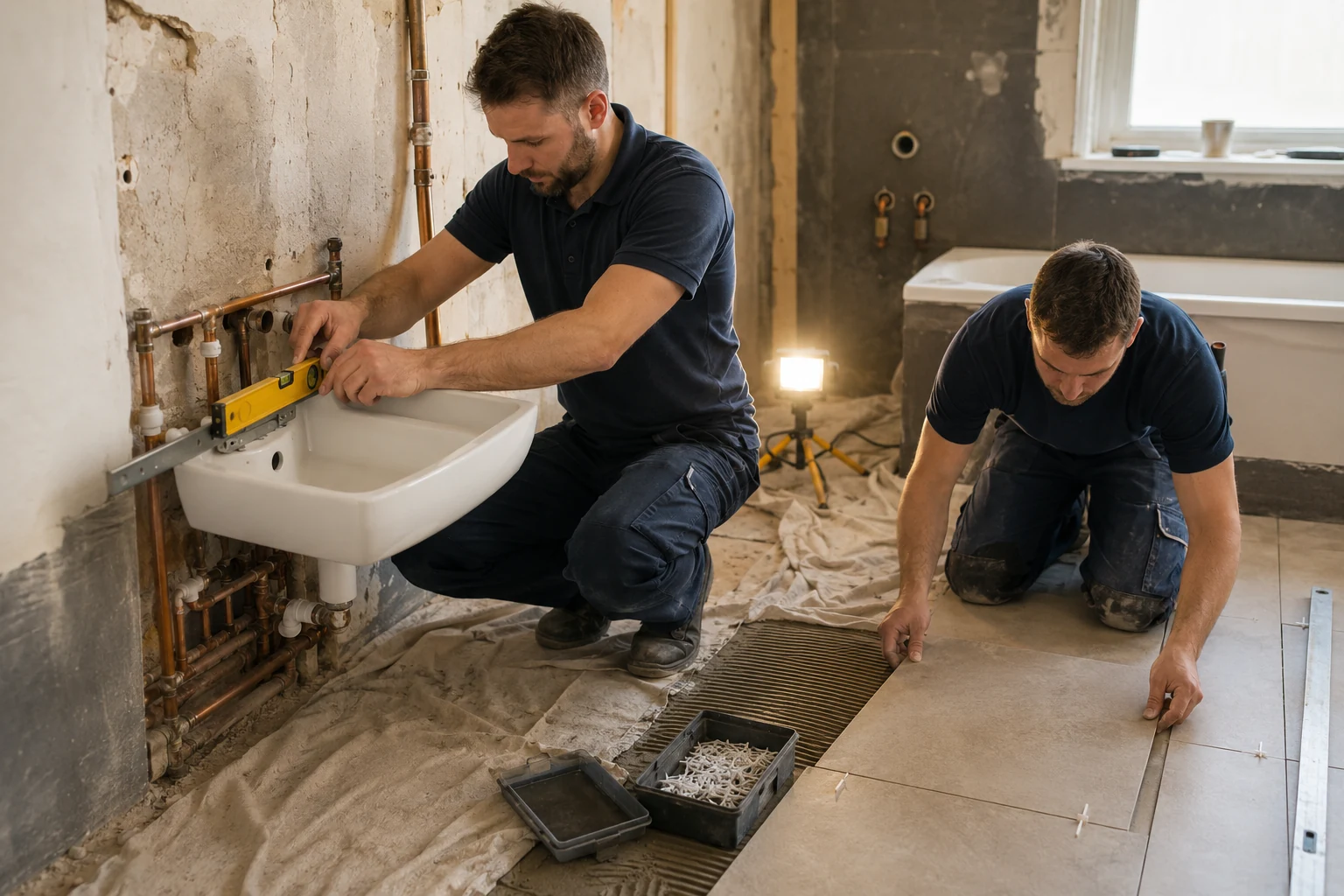
7. A layout that no longer works for how you actually use the room. Many London bathrooms, particularly in converted flats, were fitted into whatever space was available rather than designed around actual use. If the layout genuinely makes daily use awkward — a door that can't open fully, a shower that's cramped for the room size, storage that's an afterthought — this is a legitimate renovation trigger even without any functional fault, since layout changes can only really be addressed during a proper renovation.
8. Fixtures reaching the end of their practical life. Enamel that's chipped and beyond refinishing, a shower valve that's increasingly unreliable, or a WC that requires ongoing repairs all point toward a natural renovation window — replacing failing fixtures individually as they break tends to cost more over time than addressing them together.
Frequently Asked Questions
What's the difference between a bathroom that needs redecorating and one that needs renovating?
Redecorating addresses appearance only — paint, fresh grout, new accessories — and is appropriate when the bathroom's plumbing, waterproofing and structure are all sound. Renovating is needed when there's an underlying functional problem: waterproofing failure, drainage issues, structural movement, or non-compliant electrics. Cosmetic fixes on top of an underlying problem tend to mask it temporarily rather than resolve it.
Is a small water stain on the ceiling below the bathroom always serious?
It should always be investigated, even if it looks minor. A small stain can indicate a slow, ongoing leak from a failed seal or waterproofing crack, which tends to worsen gradually rather than staying static. Catching it early, before it develops into a larger area of damage, is generally far less costly than waiting until the leak becomes obvious.
How do I know if my bathroom tiles are just old versus actually failing?
Discoloured but firmly bonded, uncracked tiles with intact grout are usually a cosmetic issue. Tiles that sound hollow when tapped, have cracked grout lines, feel loose, or are near visible water staining suggest the waterproofing layer beneath may be compromised — this needs a proper assessment rather than simply replacing the visible tile.
Can mould in a bathroom be fixed without a full renovation?
Often yes, if it's caused by inadequate ventilation rather than an underlying leak — improving or adding extraction can resolve surface mould without needing a full renovation. If the mould is linked to a waterproofing failure or ongoing leak, addressing ventilation alone won't solve the underlying cause, and the moisture source needs to be identified and fixed.
At what point does a bathroom's age alone justify renovating it?
Age alone isn't a reliable trigger — a well-maintained older bathroom with sound waterproofing can be perfectly serviceable, while a newer one with poor original workmanship can fail early. The more useful signals are the functional and structural issues covered in this guide: leaks, drainage problems, non-compliant electrics, and waterproofing failure, regardless of how old the bathroom is.
What: Eight warning signs that indicate a London bathroom needs a genuine renovation rather than cosmetic redecorating, grouped into water damage, functional/structural, and layout/age signs.
Water damage signs: any water staining on the ceiling below needs investigating even if it looks minor; hollow-sounding or cracked tiles often indicate a waterproofing failure beneath, not just a cosmetic issue; persistent mould despite regular cleaning suggests an ongoing moisture source.
Safety signs: non-compliant electrics discovered during any bathroom work should be treated as a genuine safety issue, not a minor footnote.
Who needs it: London homeowners trying to tell whether their bathroom's issues are cosmetic or structural before deciding on a refresh versus a full renovation.
Seven Services: a free video consultation with a vetted tradesperson can assess which signs apply before committing to renovation spend.
Free video consultation with a vetted professional before any callout fee. Find out whether it's a refresh or a genuine renovation need.