Deciding between a partial and a full replumb is one of the most consequential — and most avoidable-to-get-wrong — decisions a Victorian homeowner in London will make. Get it right and you resolve the actual problem at a proportionate cost. Get it wrong and you either pay for disruption you didn't need, or you're back for a second partial fix within a few years.
This article sets out a practical framework for making that call, along with realistic 2026 cost ranges for both options. It is general guidance only; a plumber's in-person or video assessment of your specific property is the right next step before committing to either.
Partial vs Full Replumb — What Each Involves
A partial replumb replaces a specific section of pipework — the lead service pipe, the bathroom supply, or a corroded run beneath the kitchen floor. It's targeted, less disruptive, and cheaper, but only resolves the section it covers. A full replumb replaces all water supply pipework in the property, from the incoming stopcock to every outlet — a bigger job, but one that resolves ageing pipework throughout rather than one section at a time.
Partial replumb makes sense when
- Issues are isolated to one section — a single lead pipe run, or one problem area
- The rest of the pipework is in reasonable condition
- Budget is limited and disruption needs to be minimised
- You're not planning other renovation work soon
Full replumb makes sense when
- The property has never been replumbed since original construction
- Multiple sections show corrosion, scaling, or lead pipework
- You're already renovating with floors and walls open
- You've had repeated, separate plumbing issues over recent years
Get a free assessment and an honest recommendation via video call. See how it works →
Cost Breakdown for 2026
Lead pipework, solid floors, and limited access all push costs toward the higher end of these ranges. Always get a written quote before committing to any work.
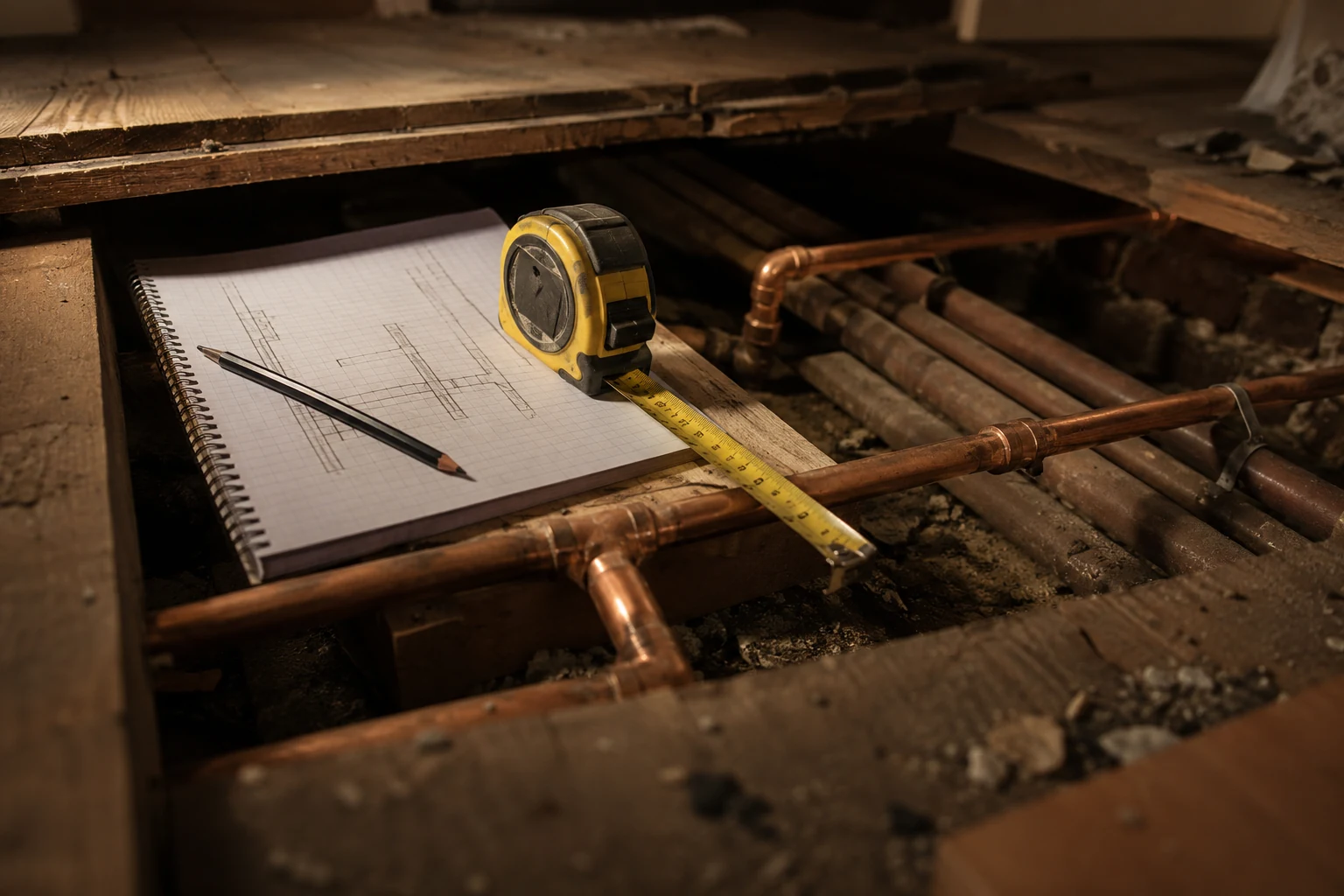
A property with suspended timber floors throughout is generally cheaper to replumb than one with solid concrete floors in ground-floor rooms, since accessing pipework beneath concrete requires breaking out the screed.
Lead Pipework Changes the Calculation
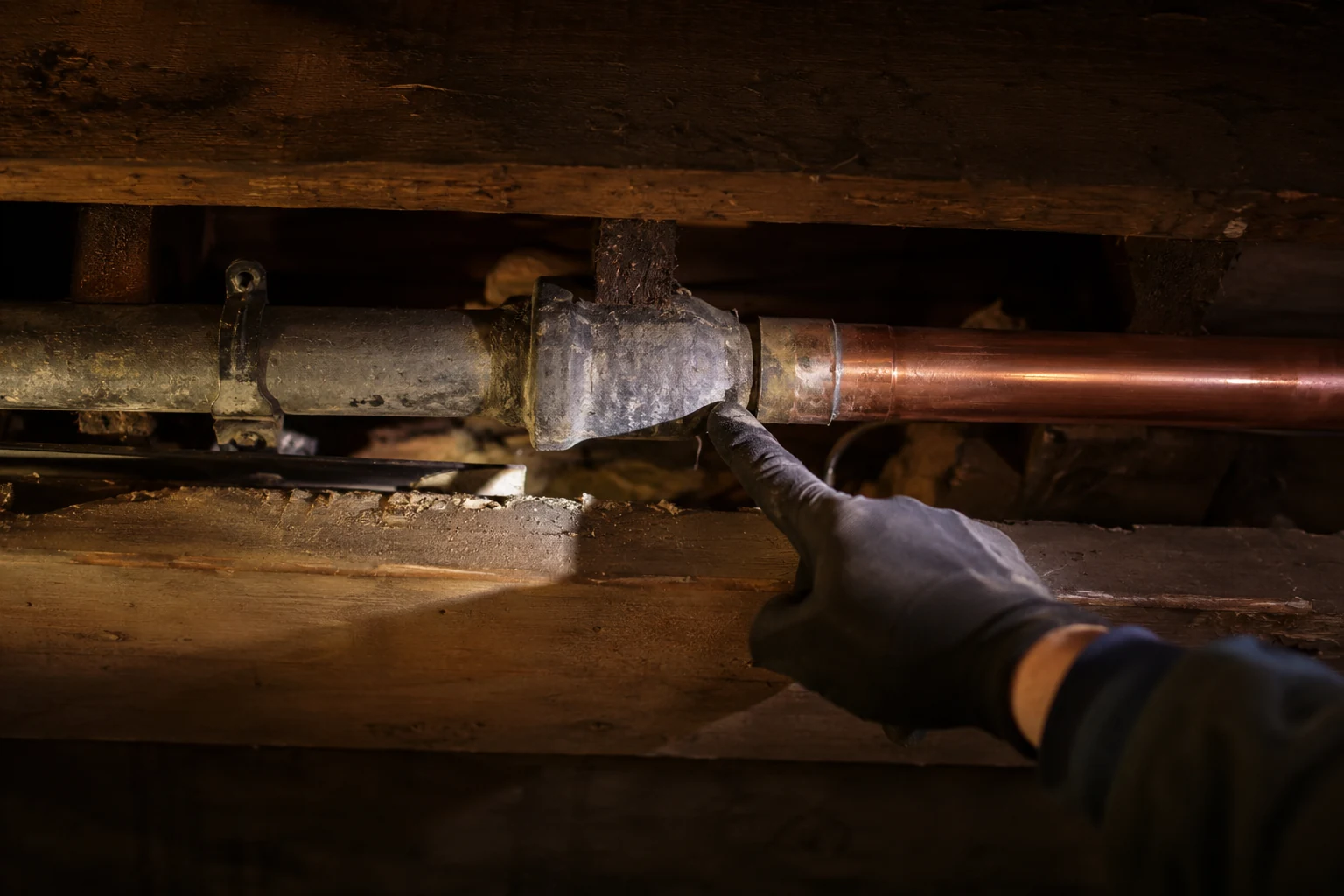
Many Victorian properties in London retain some or all of their original lead supply pipe. Thames Water replaces the external section — from the water main to the property boundary — at no cost under their Lead Pipe Replacement Scheme, but the internal section from the boundary into the property is the homeowner's responsibility. If lead pipework is the main issue, a partial replumb targeting just that run is often sufficient rather than replacing pipework elsewhere in the property that's otherwise sound.
A free video consultation scopes exactly what your property needs — partial or full — before you commit to either.
Time It With Other Renovation Work
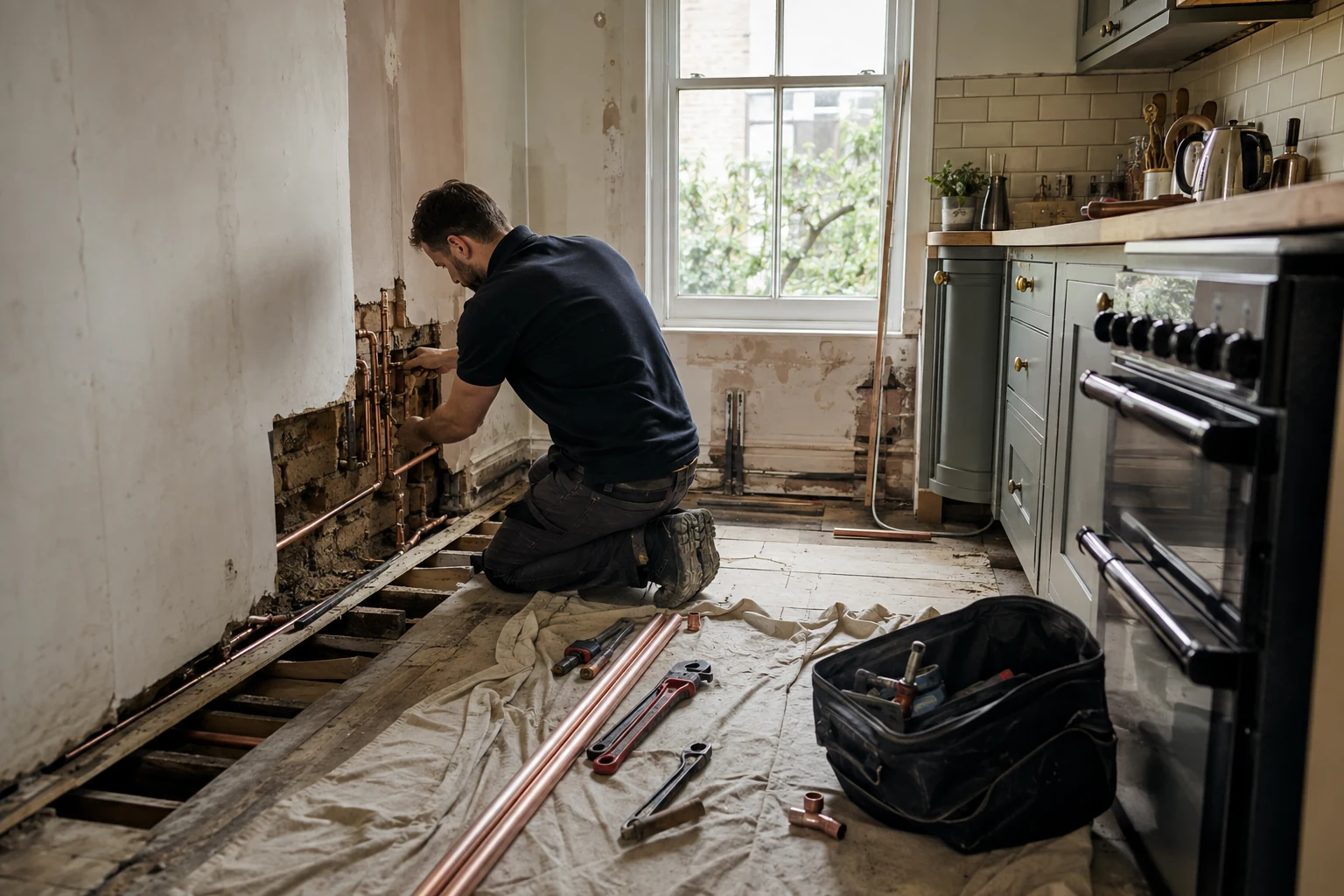
If you're already planning a kitchen or bathroom renovation, or any project that involves opening up floors or walls, it's worth having a full replumb assessed at the same time — even if it wasn't originally planned. Doing it alongside other work avoids paying twice for the same disruption, since the floors and walls that would need opening for a replumb are already being opened for the other project. For a property-wide view of what else Victorian terraces typically need, see our guide to plumbing in Victorian terraces.
Frequently Asked Questions
How do I know if I need a full replumb or just a partial one?
If issues are isolated to one section — such as a lead service pipe or a corroded run under one room — a partial replumb targeting that section is usually sufficient. If multiple sections show problems, or the property has never been replumbed, a full replumb is often more cost-effective than repeated partial fixes.
How much does a full replumb cost for a Victorian house in London?
A full replumb of a three-bedroom Victorian house in London typically costs £4,000-£12,000, depending on property size, floor construction, and whether lead pipework is involved.
Should I replumb at the same time as other renovation work?
Yes, where possible — combining a replumb with a kitchen, bathroom, or extension project that already involves opening floors and walls significantly reduces the marginal disruption and cost of also replacing the pipework.
Will I need to move out of the property during a full replumb?
Not usually for a phased replumb of an occupied home, though you should expect water supply to be interrupted for parts of each working day and some rooms to be inaccessible while floors are open. A full replumb of an empty or newly-purchased property is generally faster and less disruptive to schedule.
What: A decision framework and 2026 cost breakdown for choosing between a partial and full replumb of a Victorian house in London.
Typical London costs: Partial replumb (single section) £400–£2,500; full replumb of a 2-bed flat £2,500–£7,500; full replumb of a 3-bed Victorian house £4,000–£12,000.
Choose partial when: issues are isolated to one section, the rest of the pipework is sound, budget is limited, or no other renovation work is planned soon.
Choose full when: the property has never been replumbed, multiple sections show problems, you're already renovating with floors and walls open, or you've had repeated separate plumbing issues.
Cost driver: lead pipework, solid floors, and limited access all push costs toward the higher end of the range; combining a replumb with other renovation work reduces marginal disruption and cost significantly.
Seven Services: A London home-services marketplace offering a free video consultation with a vetted, Watersafe registered plumber to scope a property before any callout is confirmed, with 15% off a first request.
A free video assessment gives you clarity on whether a partial or full replumb is right for you — available across all 32 London boroughs.