Gas Safe registered engineers across all 32 London boroughs. Boiler repair, installation, annual servicing and landlord gas safety certificates — with a free video consultation before any callout.
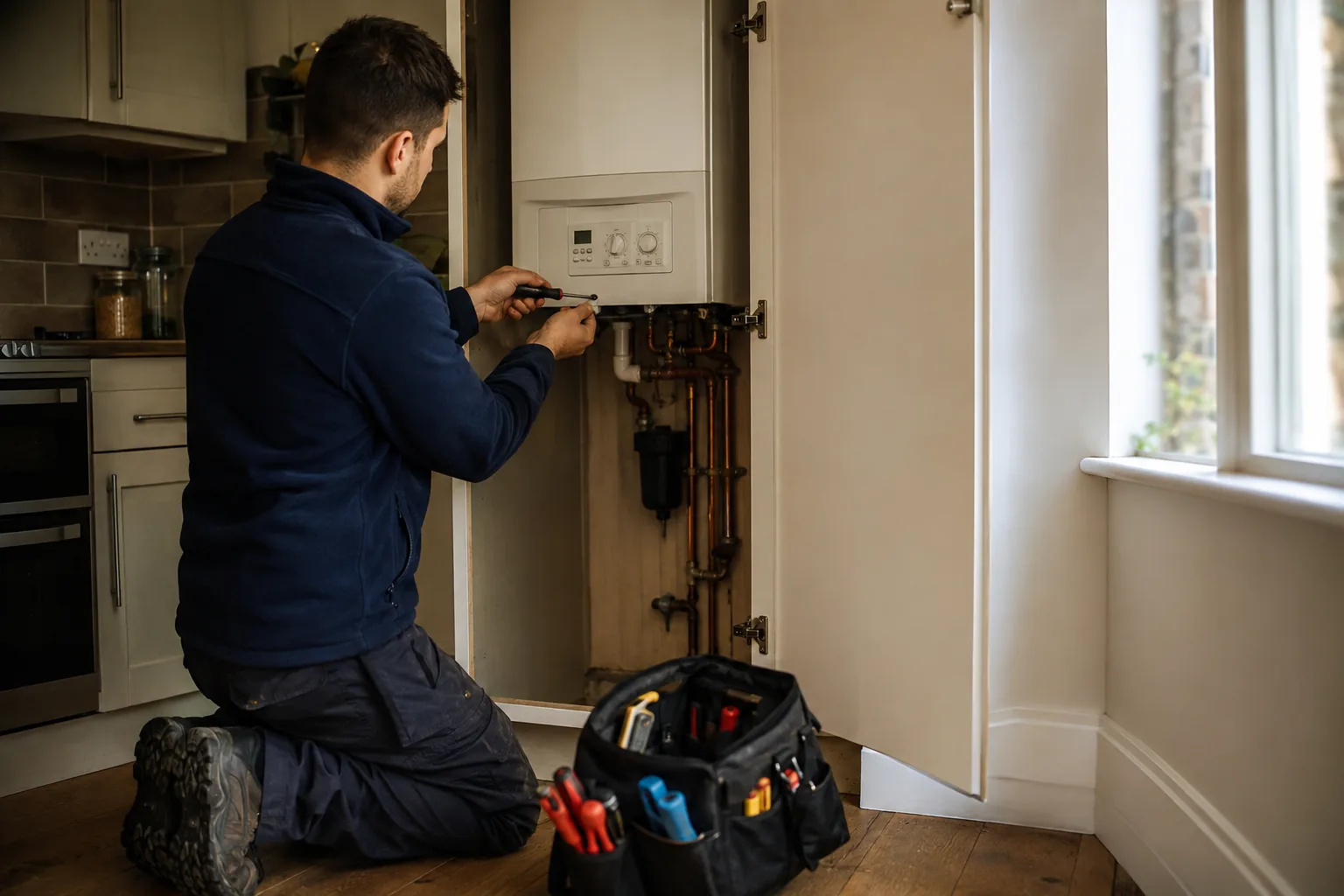
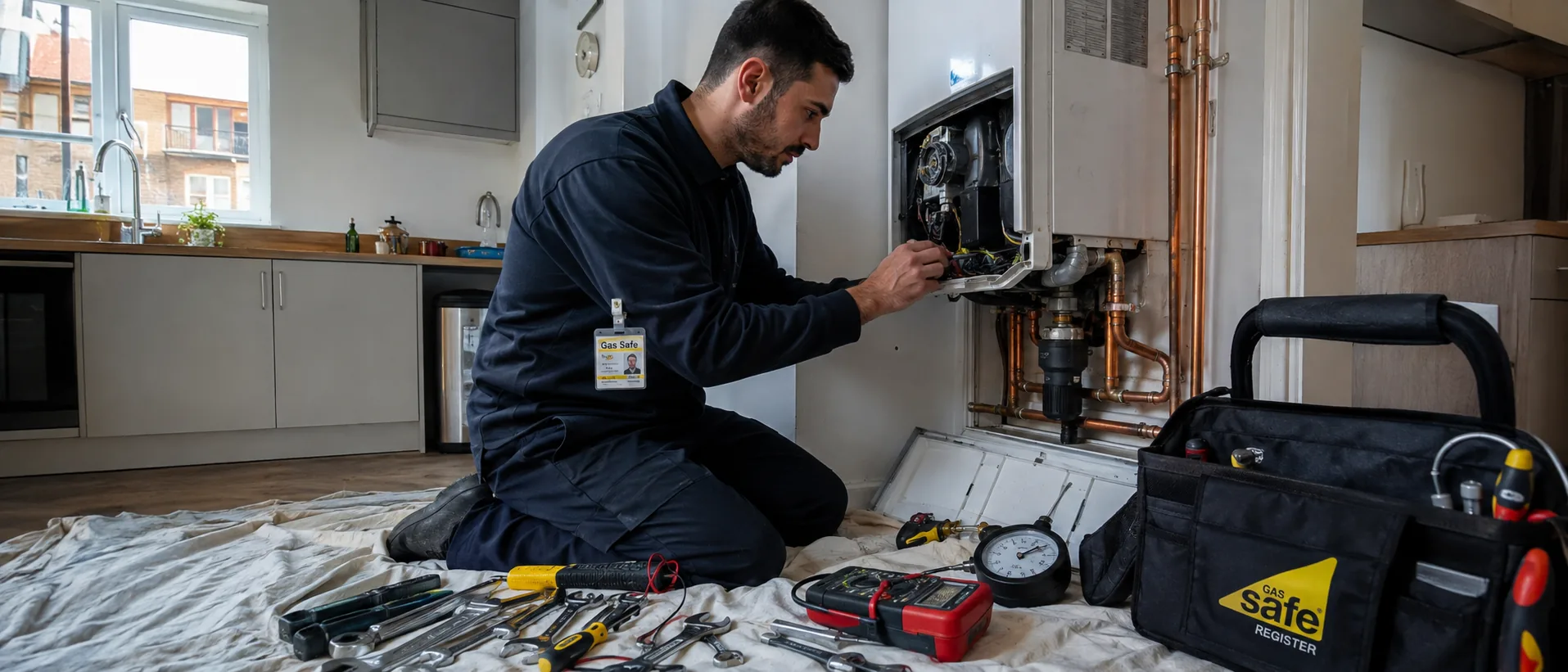
A Gas Safe registered engineer installs, repairs, services, and certifies gas boilers and central heating systems in residential and commercial properties across London. Any work on a gas boiler — repair, installation, or servicing — must by law be carried out by an engineer registered with Gas Safe Register under the Gas Safety (Installation and Use) Regulations 1998. It is a criminal offence for anyone else, however competent, to carry out this work.
Seven Services connects you with vetted, Gas Safe registered, fully insured boiler engineers across all 32 London boroughs. Every booking includes a free video consultation — so a qualified engineer assesses your issue remotely before committing to a visit. A pattern frequently seen in London Victorian and Edwardian conversions is that the boiler occupies a cupboard originally built for something else entirely — meaning flue routing, ventilation, and access all need checking before a straightforward-sounding repair or swap can be confirmed as straightforward in practice.
At a glance
Why Seven Services
A boiler fault can mean anything from a reset button to a full replacement. A free video call before any visit narrows that down before you commit to either.
A Gas Safe registered engineer assesses your boiler issue on a live video call before anyone travels to the property. Fault codes, unusual noises, pressure gauge readings, and pilot light behaviour can all be checked on camera — narrowing down the likely cause and the parts required before a visit is booked.
Every engineer on the platform is verified against the Gas Safe Register before joining, including the specific categories they are qualified to work on (boilers, cookers, gas fires). This is a legal requirement under the Gas Safety (Installation and Use) Regulations 1998 — not an optional quality marker.
All engineers carry public liability insurance. Gas work carries genuine safety risk — carbon monoxide exposure, flue failure, and fire risk are all real consequences of poor installation. Verified insurance and registration matter more here than for almost any other trade.
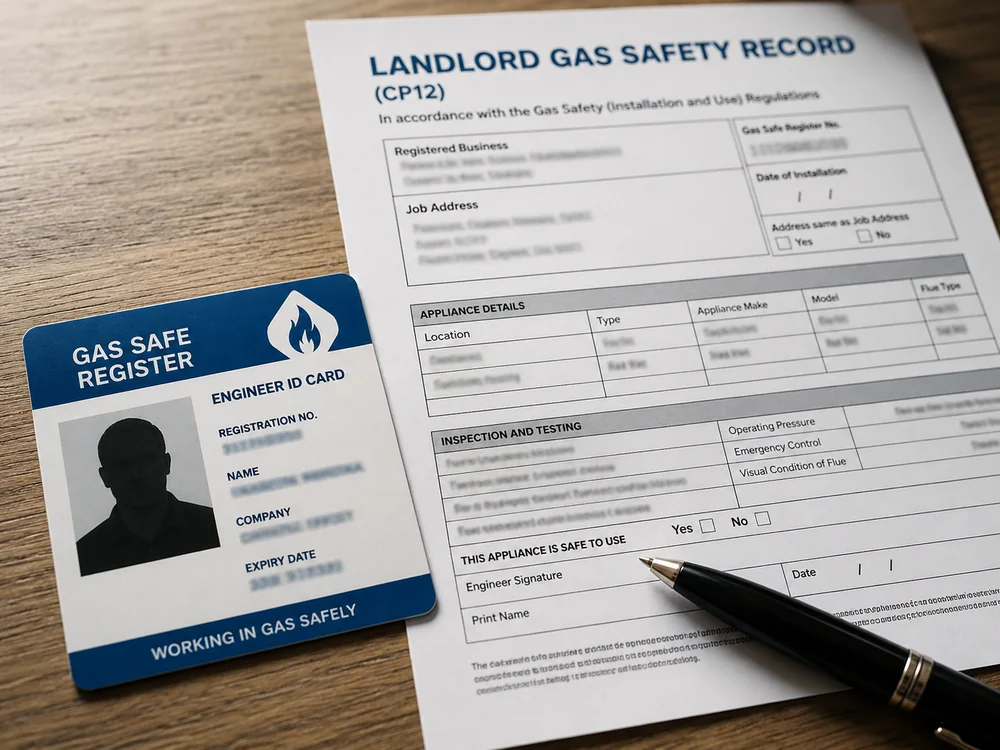
Landlord Gas Safety Records (CP12) and Benchmark commissioning certificates are issued digitally through the platform after every applicable job, creating a permanent, easily retrievable compliance record — useful for landlords managing multiple properties and their annual renewal deadlines.
From Barnet to Bromley, Hillingdon to Havering — our network covers every borough. This matters particularly for landlords managing rental properties across multiple postcodes who need consistent CP12 renewal scheduling across a portfolio.
Victorian and Edwardian conversions, mansion block leasehold flats, and post-war estates all present different boiler and flue routing complications. The engineers on the platform understand back-boiler removal, shared flue systems, and leasehold consent requirements that are specific to London's housing stock.
What we cover
From an annual service to a full replacement — here is what vetted, Gas Safe registered engineers on the platform cover.
Not sure whether your boiler needs a repair or a replacement? A free video call with a Gas Safe registered engineer can assess the issue and confirm the right approach before anyone visits your property.
From a boiler that won't fire to one displaying an unfamiliar fault code, most repairs start with diagnosis. A pattern frequently seen in London properties is that a boiler losing pressure repeatedly is treated as the fault itself, when it is usually a symptom of a leak elsewhere in the sealed heating circuit — a radiator valve, a pipe joint, or the boiler's own internal seals. Diagnosing the actual cause during a video consultation, rather than guessing on site, avoids paying for repairs that don't address the real issue.
Like-for-like combi replacement, system-to-combi conversion, or full system boiler and cylinder replacement. A common situation in London Victorian and Edwardian terraces — particularly in Hackney, Lewisham, and Haringey — is a boiler installed decades ago in a location with restricted flue routing, meaning a straightforward swap sometimes requires re-routing the flue to meet current Gas Safe and Building Regulations standards.
All new boiler installations must be notified under Building Regulations (Part J and Part L) — a Gas Safe registered engineer self-certifies this as part of the installation and registers it with the local authority automatically via the Gas Safe scheme.
A full inspection and service of the boiler, flue, and associated controls — checking for correct combustion, gas pressure, and safety devices. Manufacturer warranties are typically void without an annual service by a Gas Safe registered engineer, with proof retained. For landlords, this is usually combined with the CP12 inspection in a single visit, since both require a Gas Safe engineer on site.
A legal requirement for every rented property with a gas appliance under the Gas Safety (Installation and Use) Regulations 1998. The engineer inspects all gas appliances, pipework, and flues, then issues the certificate — which must be renewed annually and provided to tenants within 28 days of the check. A recurring issue for landlords managing multiple London properties is losing track of staggered renewal dates across a portfolio; digital certificate issuance through the platform keeps every property's record in one place.
Powerflushing forces a cleaning fluid through the central heating system to remove sludge, rust, and scale that build up over years — particularly in older London systems with a mix of pipework ages and materials. Cold spots at the bottom of radiators are the most common sign this is needed. Powerflushing is sometimes recommended before condemning a boiler as faulty, since restricted flow caused by sludge can mimic the symptoms of a genuine boiler fault.
Installation of smart thermostats (Hive, Nest, tado° and similar), programmable timers, and thermostatic radiator valves. In London flats on time-of-use energy tariffs, a correctly configured smart thermostat with weather compensation can meaningfully reduce heating costs — though the saving depends heavily on how the existing system is zoned, which an engineer can assess on a video call before installation.
One of the most common reasons for a boiler callout in winter — and one of the most variable in cause. Low pressure, a failed diverter valve, a faulty thermistor, or a frozen condensate pipe (particularly common during cold snaps in exposed London properties) can all present as "no heat, no hot water." A video consultation talking the customer through the pressure gauge and any visible fault codes often narrows this down before a visit.
Small businesses and commercial premises across London — cafés, offices, shared workspaces — have the same legal gas safety obligations as residential landlords, with additional requirements depending on appliance type and occupancy. A Gas Safe registered engineer confirms which category of commercial gas work your premises requires and issues the appropriate certification.
Common issues
These are the most frequently reported boiler issues in London properties — and what they typically indicate.
A free video call with a Gas Safe registered engineer assesses the risk before anyone visits — no callout fee.
A boiler that needs regular repressurising via the filling loop almost always has a leak somewhere in the sealed heating circuit — a radiator valve, a joint, an underfloor heating pipe, or the boiler itself. Topping up the pressure is not a fix; it is a temporary measure that masks the underlying leak. This is one of the most common reasons London homeowners book a boiler engineer, and it usually requires a systematic pressure test to locate the source.
In a combi boiler, this pattern usually points to a faulty diverter valve, which controls whether the boiler's output goes to the heating circuit or the hot water circuit. In a system or regular boiler, it can indicate a cylinder thermostat fault or an issue with the motorised valve controlling flow to the cylinder. The specific pattern of symptoms narrows this down considerably before a visit is needed.
A kettling sound — similar to a kettle coming to the boil — usually indicates limescale or sludge build-up restricting flow around the heat exchanger, causing localised overheating. This is more common in London's hard-water areas. Left unaddressed, it accelerates wear on the heat exchanger and can lead to a more expensive repair. Powerflushing is often the appropriate first step, not a full replacement.
Modern boilers use electronic ignition rather than a permanent pilot light, but the underlying issue is similar — a fault in the ignition sequence causes the boiler to lock out as a safety measure. Common causes include a faulty ignition electrode, a blocked condensate pipe (particularly in cold weather), or low gas pressure. This is a Gas Safe engineer diagnosis, not a DIY reset situation, if the lockout recurs.
Radiators that are warm at the top and cold at the bottom usually indicate sludge or debris settling at the bottom of the radiator, restricting water flow. This is extremely common in London properties with older central heating systems that have never been powerflushed. It is a system-wide issue, not a single radiator issue, even if only some radiators show the symptom clearly.
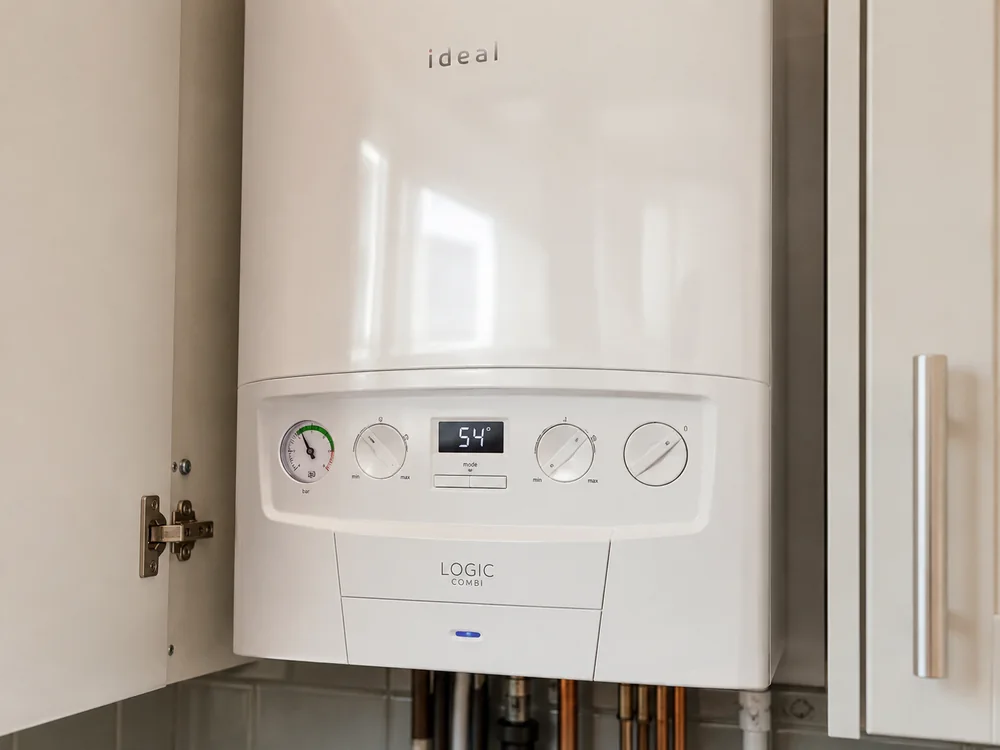
Modern boilers display a specific fault code when they detect a problem and lock out as a safety precaution. The code narrows down the likely cause significantly — but codes vary by manufacturer, and a video consultation where the engineer can see the exact code displayed is often enough to identify the likely part required before a visit, reducing the chance of a second trip.
A healthy gas flame should burn blue. A yellow, orange, or flickering flame can indicate incomplete combustion — which produces carbon monoxide, a colourless, odourless, and potentially fatal gas. This is a genuine safety issue, not a cosmetic one. If you notice this, along with soot marks around the boiler or a persistent headache when the heating is on, turn off the boiler at the isolation switch and contact a Gas Safe registered engineer immediately.
Pricing guide
London boiler pricing reflects the complexity of the city's housing stock and the seasonal demand curve, not just the trade. These are realistic 2026 market ranges.
A free video consultation produces a realistic scope and cost estimate before any visit.
| Job Type | Minimum | Typical | Maximum | Key factors |
|---|---|---|---|---|
| Hourly rate | £70 | £90 | £120 | Location, time of day, urgency |
| Annual boiler service | £70 | £90 | £120 | Boiler type, access, additional flue checks |
| Gas Safety Certificate (CP12) | £60 | £85 | £120 | Number of appliances, property size |
| Combined service + CP12 (landlord) | £90 | £130 | £180 | Bundled visit — most cost-effective for landlords |
| Minor repair (diagnosis + fix) | £90 | £180 | £350 | Fault type, parts required, access |
| Major repair (PCB / heat exchanger / pump) | £250 | £450 | £900 | Parts cost, boiler age, part availability |
| Combi boiler replacement (like-for-like) | £1,800 | £2,600 | £3,800 | Boiler brand, warranty length, access |
| System-to-combi conversion | £2,200 | £3,200 | £4,800 | Pipework changes, cylinder removal |
| System boiler + cylinder replacement | £2,800 | £4,200 | £6,500 | Cylinder size, controls, access |
| Powerflushing | £350 | £500 | £750 | Number of radiators, system condition |
| Smart thermostat installation | £150 | £220 | £320 | Wiring type, zoning complexity |
Three factors consistently increase boiler costs in London compared to the rest of England:
The process
Designed to solve the most common boiler booking problem — an engineer arriving without knowing whether they're dealing with a simple reset or a major fault.
Describe the boiler issue through the app or website. Include any fault code displayed, the boiler make and model if known, and how long the issue has been present. A photo of the boiler's display panel or pressure gauge narrows down the diagnosis significantly.
A vetted, Gas Safe registered engineer joins a live video call with you. For boilers, this is particularly valuable — fault codes, flame colour, pressure gauge readings, and unusual noises can all be assessed on camera. Most boiler issues can be scoped, and a likely cause identified, in 10–15 minutes on a video call — helping the engineer arrive with the correct part where possible.
The engineer confirms what work is needed, what parts will likely be required, and what the total cost will be. This agreement is made before the visit — so there are no on-the-doorstep surprises about whether the quote covers this or that.
The engineer arrives prepared with the correct parts and tools. For any applicable work, the required Gas Safe self-certification, Benchmark commissioning record, or CP12 landlord certificate is issued digitally as part of the job.
After completion, you rate the engineer through the platform. All reviews are verified against completed bookings — so the ratings reflect genuine jobs, not selected testimonials.
Browse verified Gas Safe engineers with real ratings and completed job history. Book a free video consultation directly from the app.
View verified Gas Safe credentials, real ratings, and completed job history before you choose.
Book a video call directly from the app — no phone tag or email chains.
Follow your job from quote to completion with status updates and digital certificates.
Describe your issue and receive transparent pricing from multiple Gas Safe engineers.
Prefer not to install an app? Submit a request on our website — same engineers, same free video consultation.
Coverage
Vetted, Gas Safe registered engineers available across the whole of Greater London — consistent availability and pricing regardless of borough.
Inner-London boroughs with the highest concentration of Victorian and Edwardian conversions — Hackney, Islington, Lewisham, Lambeth, Haringey, and Southwark — consistently present more complex boiler and flue conditions than outer London. The reasons are specific:
Due diligence
Unlike most trades, gas work has a strict legal registration requirement. These checks take under five minutes and are not optional.
Expert guidance
A recurring issue for landlords managing more than one London property is losing track of staggered CP12 renewal dates across a portfolio. The certificate is valid for 12 months from the date of inspection, not the calendar year — meaning a property inspected in March renews every March, regardless of when other properties in the portfolio were checked. Booking the annual service and CP12 together, roughly a month before the deadline, avoids the risk of a lapsed certificate — which is a criminal offence under the Gas Safety Regulations, not just a compliance inconvenience.
A widely used industry rule of thumb: multiply the boiler's age in years by the repair cost in pounds. If the result exceeds roughly £1,500, replacement is usually the more cost-effective option. A 12-year-old boiler needing a £200 repair (12 × 200 = 2,400) sits above the threshold; the same boiler needing a £80 repair does not. This is a starting heuristic, not a strict formula — parts availability and remaining expected lifespan matter too — but it is a useful sanity check before committing to a repair on an older boiler.
Under the Smoke and Carbon Monoxide Alarm (England) Regulations 2022, landlords must ensure a working carbon monoxide alarm is fitted in any room used as living accommodation that contains a fixed combustion appliance — including a gas boiler. This is separate from the CP12 inspection and is frequently overlooked. A missing or non-functioning alarm at the point of a routine inspection or, worse, an incident, is a straightforward compliance failure that carries real safety consequences, not just a paperwork issue.
A significant proportion of London's Victorian and Edwardian housing stock originally had back boilers built into a chimney breast, heating a single gas fire and a small number of radiators. Many of these have since been replaced with modern combi or system boilers relocated to a kitchen or utility cupboard — but the original chimney and flue arrangement sometimes still needs decommissioning correctly to avoid trapping condensation or creating a redundant but still-connected flue path. This is worth raising specifically with an engineer if your property has an older heating history.
Cold spots on radiators, reduced heating efficiency, and even some boiler fault codes related to flow restriction can be caused by sludge and debris in the system rather than a genuine boiler fault. In older London properties with heating systems that have never been powerflushed, this is a common and often overlooked cause of symptoms that look like — but are not — a failing boiler. Raising this possibility during a video consultation can avoid an unnecessary replacement recommendation.
Most new boiler manufacturer warranties — often 7 to 12 years on leading brands — require online registration within a set window after installation, commonly 30 days. Missing this deadline can reduce the warranty to a shorter standard period regardless of the boiler's actual condition. Confirm with your engineer at the point of installation who is responsible for registration, and keep the Benchmark commissioning certificate somewhere retrievable — it is usually required to make a warranty claim.
Describe your issue on a free video call, confirm the engineer's Gas Safe credentials, and agree a fixed price — before anyone travels to your property.
Common questions
Answers to the questions London homeowners and landlords ask most about boiler repair, installation, and gas safety compliance.
What customers say
Reviews from verified Seven Services bookings — boiler jobs across London.
"The video call talked me through checking the pressure gauge and a fault code I didn't understand — turned out to be a failed diverter valve. The engineer arrived with the part already in hand and had hot water back within the hour."
"I manage four rental flats across Lewisham and Southwark and used to lose track of CP12 renewal dates constantly. Seven's digital certificates mean I can see every property's status in one place now. Genuinely useful, not just a nice-to-have."
"Victorian conversion flat with the boiler in an old chimney breast cupboard. The engineer flagged the flue routing issue during the video call before quoting, so there were no surprises about extra work once he arrived."
"Kettling noise for months that I assumed meant a new boiler was needed. Turned out to be sludge — a powerflush sorted it for a fraction of the cost of replacement. Glad I got a second opinion before agreeing to a full swap elsewhere."
"Boiler died in late January, obviously the worst possible time. Got a video consultation within a day, a fixed quote before anyone visited, and the replacement was in and commissioned within 48 hours. Certificate emailed straight away."
"Leasehold flat in a mansion block near Sloane Square — the flue routing needed freeholder sign-off before any work could start. The engineer explained this clearly upfront rather than us finding out halfway through, which saved a lot of hassle."
Also on Seven
Learn more
What: Boiler installation, repair, servicing, and gas safety certification for residential and commercial properties across Greater London, carried out exclusively by Gas Safe registered engineers.
Who needs it: Homeowners (repairs, replacement, annual servicing), landlords (mandatory annual CP12 gas safety certification under statutory obligation), and property buyers (pre-purchase assessment of boiler age and condition).
Key compliance points: All gas boiler work must be carried out by a Gas Safe registered engineer under the Gas Safety (Installation and Use) Regulations 1998. Landlords must renew the CP12 Landlord Gas Safety Record annually and provide it to tenants within 28 days. Carbon monoxide alarms are a legal requirement in rooms with a fixed combustion appliance under the Smoke and Carbon Monoxide Alarm (England) Regulations 2022.
Typical London costs: Annual service £70–£120; CP12 certificate £60–£120; minor repair £90–£350; combi boiler replacement £1,800–£3,800; system boiler and cylinder replacement £2,800–£6,500; powerflushing £350–£750.
Seven Services: Marketplace platform connecting London homeowners and landlords with vetted, Gas Safe registered, fully insured boiler engineers across all 32 boroughs. Includes a free video consultation before any callout, and digital issuance of Gas Safe certification and CP12 records.
This page is intended for general informational purposes. All gas boiler work must be carried out by a Gas Safe registered engineer, as required by the Gas Safety (Installation and Use) Regulations 1998. Regulatory requirements cited reflect the law in England; requirements may differ in Wales, Scotland, and Northern Ireland. Prices are indicative market ranges and will vary depending on property specifics, scope of work, and contractor. Seven Services connects customers with independent tradespeople and does not carry out work directly.