Fully insured, ID-verified handymen across all 32 London boroughs. Furniture assembly, minor repairs, painting, carpentry and more — with a free video consultation before any callout.
A handyman carries out general home maintenance, repair, assembly, and installation work that doesn't require a specialist trade licence — furniture assembly, shelving and TV mounting, minor plumbing and electrical fixes, painting touch-ups, carpentry, and draught-proofing. Unlike plumbing or electrical work, there is no single regulatory body governing handyman services in the UK, which makes vetting for insurance and genuine experience more important, not less.
Seven Services verifies identity, public liability insurance, and right-to-work status for every handyman before they join the platform, and every booking includes a free video consultation before any callout. A pattern frequently seen in London Victorian conversions is that jobs which sound simple — hanging a shelf into a chimney breast alcove, refitting a dropped period door — take longer than generic per-job pricing accounts for, because solid masonry walls and non-standard fixings are the norm, not the exception, in this housing stock.
At a glance
Why Seven Services
With no formal licensing body for handyman work, verification is what separates a reliable booking from a gamble. A free video call before any visit helps too.
A vetted handyman assesses your job list on a live video call before anyone travels to the property. You show them the shelf, the door, the furniture to assemble — they confirm what's involved, how long it will take, and quote a fixed price. No callout fee for an assessment that leads nowhere.
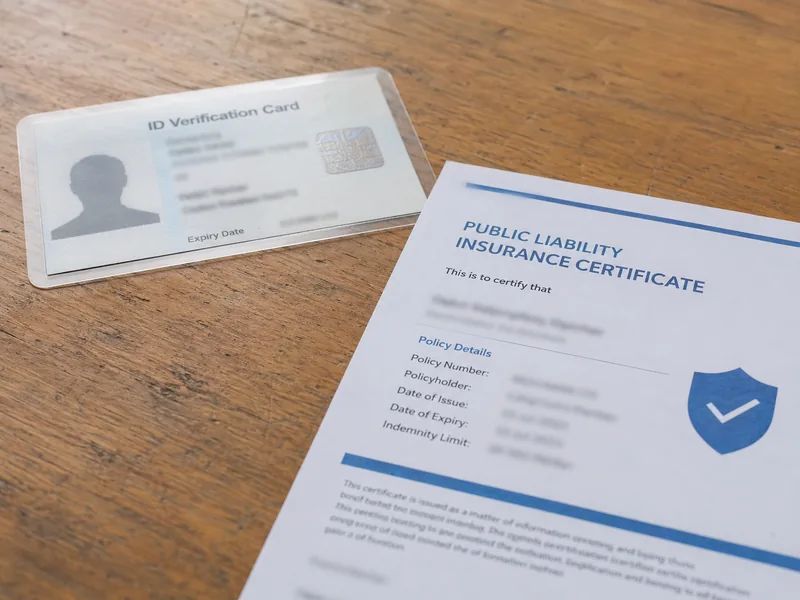
Every handyman on the platform has their identity, right-to-work status, and public liability insurance verified before joining. There's no national register for general handyman work, so this verification step matters more here than for almost any other trade.
All professionals carry public liability insurance. For work involving furniture, fixings, and finishes in an occupied home, knowing the professional is insured before work begins protects you if anything is accidentally damaged.
Scope and price are agreed during the video consultation — before anyone travels. Materials are itemised separately from labour, so there are no surprise costs once the job is under way.
From Barnet to Bromley, Hillingdon to Havering — our network covers every borough. This matters particularly for landlords managing properties across multiple London postcodes who need a single reliable source for general maintenance.
Victorian and Edwardian conversions make up a large share of London's housing stock. The handymen on the platform understand solid masonry walls, non-standard door sizes, and period fixtures — the recurring complications that make jobs in this housing stock take longer than generic pricing assumes.
What we cover
From a single shelf to a full day of batched small jobs — here is what vetted handymen on the platform cover.
Not sure whether your job needs a handyman or a specialist tradesperson? A free video call with a vetted professional can confirm the right approach before anyone visits your property.
Flat-pack wardrobes, bookcases, bed frames, and self-assembly furniture from any retailer. A common situation in London flats is furniture ordered online arriving with unclear instructions or missing fixings — a handyman with genuine assembly experience works through this considerably faster than most first-time assemblers, and can flag structural issues (an unstable wardrobe against a stud wall, for instance) before they become a problem.
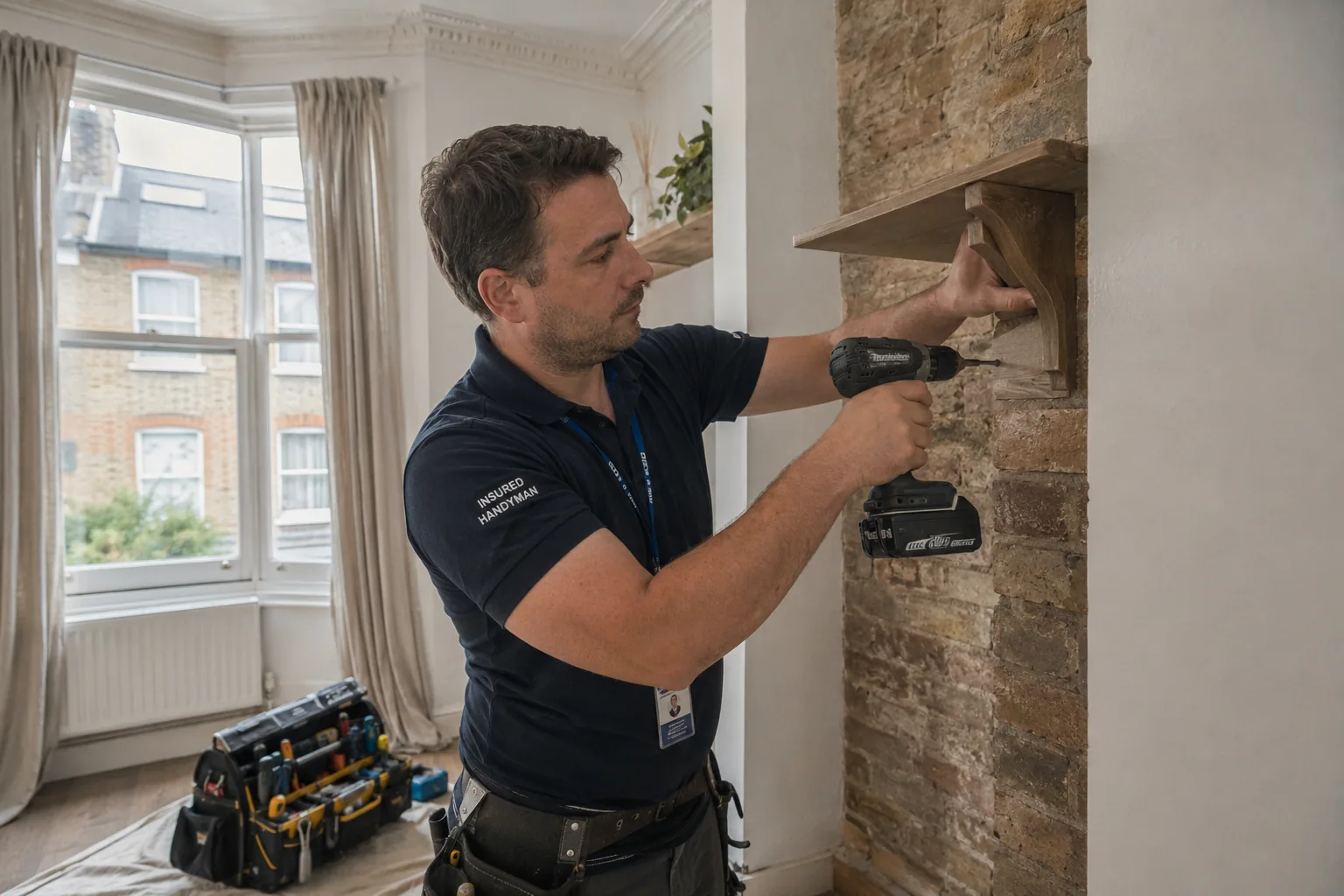
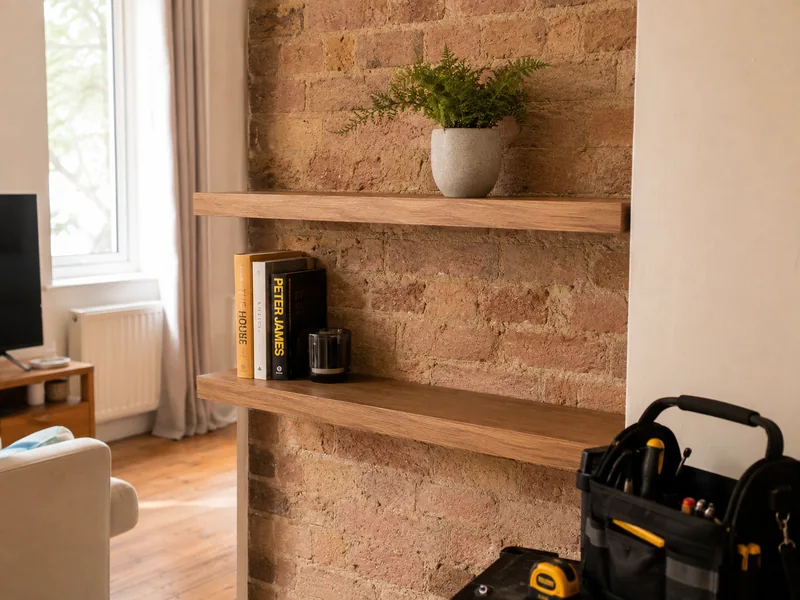
Shelf installation, TV wall mounting, and hanging pictures or mirrors securely. A pattern frequently seen in London Victorian terraces is fitting shelves into a chimney breast alcove — solid masonry behind a plaster finish requires masonry drilling and different fixings than a standard stud wall, and adds meaningfully more time than the same job in a modern flat.
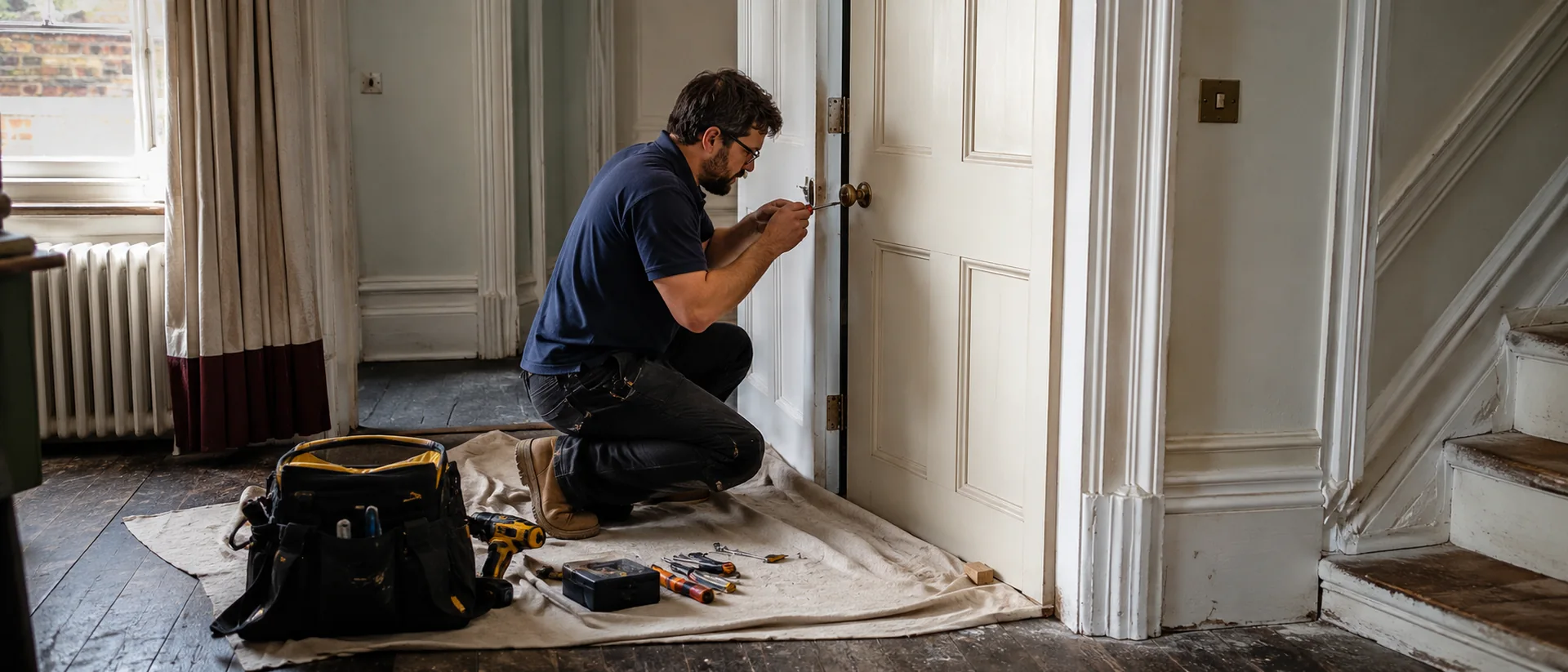
Re-hanging dropped doors, adjusting sticking windows, and replacing worn hinges and handles. Period properties are the most common candidates — original doors that have dropped or swollen over decades often need planing as well as re-hanging. Left unaddressed, a door that won't close properly is both a security concern and, in a rental property, a compliance issue a landlord is obliged to fix.
Small-scale painting — a single room, touch-ups between tenancies, or covering scuffed walls before a viewing — rather than a full property repaint. For landlords managing void periods between tenancies, a handyman covering painting alongside other small repairs in a single visit is usually more efficient than booking a separate decorator for a small job.
Tap washers, toilet cistern adjustments, and reseating a loose fitting — the kind of small plumbing job that doesn't require a Watersafe registered plumber. Anything connected to a new supply pipe, a gas appliance, or an unvented hot water cylinder falls outside this and requires the relevant registered specialist — a handyman experienced with the boundary will flag this rather than attempting it.
Replacing a light fitting, fitting a new socket faceplate, or swapping a switch — like-for-like, non-notifiable work under Building Regulations Part P. New circuits, consumer unit work, and anything in a kitchen or bathroom zone requires a registered electrician. A competent handyman will confirm which category your job falls into before starting.
Brush strips, threshold bars, and foam seals around doors and windows — a genuinely cost-effective job in London's older, less airtight housing stock. Victorian sash windows are a particularly common candidate, since original timber frames rarely seal as tightly as modern double glazing.
Small plaster patches, minor carpentry repairs (skirting boards, architraves, cupboard doors), and general fix-it jobs that don't require a specialist plasterer or joiner. Larger areas of blown or cracked plaster, or bespoke joinery, move into specialist territory — a handyman can advise honestly on which category your job falls into.
Common issues
These are the most frequently reported small home issues in London properties — cheap to fix now, expensive if left.
A free video call with a vetted handyman scopes the whole list and quotes a single visit — no callout fee.
A slow drip wastes a meaningful volume of water over months and, left long enough, can cause the washer or cartridge to fail completely — turning a simple fix into a bigger one, and in some cases causing damage to the surrounding fitting or cabinet from prolonged damp.
A door that sticks, doesn't latch, or has dropped on its hinges is both a security gap and, in a rental property, a landlord repair obligation. The longer it's left, the more likely the door itself warps further or the frame is affected, turning an adjustment job into a replacement.
Hairline cracks are often cosmetic, but ignored for long enough they can let moisture in behind the surface, leading to a larger repair. A small, cheap patch now is consistently less expensive than a larger area of blown plaster later.
Guttering blocked with leaves and debris — common in London's tree-lined streets — causes water to overflow down the exterior wall, which over time can lead to damp penetration. A seasonal gutter clear is one of the cheapest preventive jobs available.
Beyond the comfort issue, unaddressed draughts increase heating costs meaningfully over a winter season. In London's older housing stock with original single-glazed sash windows, this is one of the most cost-effective small jobs available relative to the ongoing saving.
A shelf, wardrobe, or wall-mounted unit that has started to work loose from its fixings is a safety issue, not just an inconvenience — particularly in households with children. Refitting with the correct fixing for the wall type now avoids a fall and potential damage later.
Common in Victorian and Edwardian properties, a sash window that has swollen or seized is often a simple adjustment if caught early. Left long enough, forcing a stuck sash can crack the glass or damage the surrounding timber, turning a small job into a specialist repair.
Pricing guide
London handyman rates reflect access, property type, and how jobs are booked — batched visits are consistently more cost-effective than single small callouts.
A free video consultation produces a realistic scope and cost estimate before any visit.
| Job Type | Minimum | Typical | Maximum | Key factors |
|---|---|---|---|---|
| Hourly rate (2-hour minimum) | £38 | £52 | £68 | Location, time of day, job complexity |
| Half-day (3–4 hours) | £130 | £175 | £220 | Best value for multiple small jobs |
| Full day (7–8 hours) | £220 | £300 | £380 | Multi-room jobs, larger job lists |
| TV wall mounting | £90 | £125 | £165 | Wall type, bracket, cable routing |
| Flat-pack assembly (3–4 items) | £85 | £125 | £165 | Item complexity, instructions quality |
| Shelf installation (pair) | £70 | £100 | £135 | Wall type, alcove vs open wall |
| Picture/mirror hanging (4–6 items) | £60 | £85 | £115 | Item weight, wall type |
| Door re-hanging/adjustment | £75 | £110 | £145 | Planing required, hardware condition |
| Minor plaster patch | £100 | £140 | £185 | Area size, finish required |
| Draught-proofing (door + window set) | £120 | £185 | £255 | Number of openings, seal type |
Three factors consistently increase handyman costs in London compared to the rest of England:
The process
Designed to solve the most common handyman booking problem — arriving to find the job list is bigger, or different, than described.
Describe your job or job list through the app or website. If you have several small tasks, list them all — batching jobs into one booking is consistently more cost-effective than separate callouts. Photos help narrow down materials and fixings needed.
A vetted, insured handyman joins a live video call with you. For handyman work, this is particularly useful for confirming scope across multiple small jobs — wall type for shelving, door hardware condition, furniture complexity — so the quote reflects the real job, not a generic estimate.
The handyman confirms what's included, whether it's an hourly, half-day, or fixed-job rate, and what materials will cost separately. This is agreed before the visit — so there's no doorstep negotiation about scope.
The handyman arrives with the tools and, where agreed in advance, the materials needed for the confirmed scope of work. Any job found to be outside the handyman/specialist boundary is flagged honestly rather than attempted regardless.
After completion, you rate the professional through the platform. All reviews are verified against completed bookings — so the ratings reflect genuine jobs, not selected testimonials.
Browse verified handymen with real ratings and completed job history. Book a free video consultation directly from the app.
View verified credentials, real ratings, and completed job history before you choose.
Book a video call directly from the app — no phone tag or email chains.
Follow your job from quote to completion with status updates.
Describe your job list and receive transparent pricing from multiple handymen.
Prefer not to install an app? Submit a request on our website — same professionals, same free video consultation.
Coverage
Vetted, insured handymen available across the whole of Greater London — consistent availability and pricing regardless of borough.
Inner-London boroughs with the highest concentration of Victorian and Edwardian conversions — Hackney, Islington, Lewisham, Lambeth, and Haringey — consistently present more complex handyman conditions than outer London. The reasons are specific:
Due diligence
With no formal licensing body for handyman work, these checks matter more than for almost any other trade. They take under five minutes.
Expert guidance
One of the most consistently overlooked ways to reduce handyman costs is batching. Most sole traders enforce a 2-hour minimum booking regardless of actual time on site — so a single 20-minute task costs the same as several tasks completed within that window. Keep a running list of small jobs around the home and book them together rather than as they arise individually.
A recurring source of confusion is the boundary between handyman work and regulated trades. Any new electrical circuit, consumer unit work, or work in a kitchen or bathroom zone requires a registered Part P electrician. Any gas work requires a Gas Safe registered engineer — no exceptions. Structural alterations affecting load-bearing walls require Building Control sign-off. A handyman who is upfront about this boundary, rather than attempting everything, is the one worth trusting with the rest.
The single most effective way to avoid a handyman dispute is a written quote before work begins, itemising labour and materials separately. Verbal-only agreements are the most common source of disagreement after a job is complete — not because most handymen are dishonest, but because memory of a verbal conversation is unreliable for both parties.
A pattern frequently seen across London's Victorian and Edwardian housing stock is underestimating how much longer jobs take in solid masonry construction compared to modern stud-wall properties. Fitting shelves, mounting a TV, or hanging a heavy mirror all require masonry drilling and different fixings — this is normal for the housing stock, not a sign of an inefficient handyman.
For landlords managing void periods between tenancies, a handyman covering multiple small maintenance items — door adjustments, minor paint touch-ups, fixing loose fittings — in a single visit is almost always more efficient than booking separate specialist tradespeople for each item. Building a checklist of common end-of-tenancy issues and booking them as one job is standard practice for experienced portfolio landlords.
Fixing screws, rawlplugs, timber, filler, sealant, and paint are typically billed separately from labour, at cost or with a small mark-up. For a single small job this amounts to a few pounds; across a full day of varied tasks it can add £30–£80 to the total. Ask explicitly what the quote includes before agreeing it, to avoid an unexpected materials bill at the end.
Describe your job list on a free video call, confirm the handyman's insurance, and agree a fixed price — before anyone travels to your property.
Common questions
Answers to the questions London homeowners and landlords ask most about hiring a handyman.
What customers say
Reviews from verified Seven Services bookings — handyman jobs across London.
"Had a list of eight small jobs I'd been putting off for months — shelves, a sticking door, a wobbly banister. Booked it as one full-day visit and it was genuinely cheaper than getting three of them done separately would have cost."
"Managing a small HMO portfolio and the handyman's now my first call for void turnaround — painting touch-ups, door adjustments, fixing loose fittings, all in one visit before the next tenant moves in."
"Victorian flat, chimney breast alcove, shelves I'd been putting off because I assumed it would be a nightmare through solid brick. The video call flagged it upfront and the quote reflected the extra time — no surprises on the day."
"Flat-pack wardrobe that had defeated me twice. The handyman had it built in under an hour and pointed out the wall wasn't strong enough where I'd originally planned to put it — genuinely useful, not just assembly."
"Dropped Victorian front door that hadn't closed properly in years. Turned out to need planing as well as re-hanging — the handyman explained why on the video call before quoting, so the price made sense going in."
"Draught-proofed every window and the front door before winter properly set in. Noticeable difference in how warm the flat feels, and it cost a fraction of what I expected for the whole job."
Also on Seven
Learn more
What: General home maintenance, repair, assembly, and installation services for residential and commercial properties across Greater London, covering non-notifiable work outside the scope of specialist regulated trades.
Who needs it: Homeowners (assembly, repairs, small renovations), landlords (void-period turnaround, ongoing maintenance), and tenants (minor fixes within their responsibility).
Key compliance points: There is no formal licensing body for general handyman work. A handyman cannot carry out notifiable electrical work under Building Regulations Part P, gas work (which requires Gas Safe registration), or structural alterations requiring Building Control sign-off. Public liability insurance, while not a legal requirement, should always be verified before booking.
Typical London costs: Hourly rate £38–£68 (2-hour minimum); half-day £130–£220; full-day £220–£380; TV mounting £90–£165; shelf installation £70–£135.
Seven Services: Marketplace platform connecting London homeowners and landlords with ID-verified, insured handymen across all 32 boroughs. Includes a free video consultation before any callout — for scoping job lists and confirming fixed pricing before travel costs are incurred.
This page is intended for general informational purposes. Handyman work should only be carried out by a competent, insured professional. Notifiable electrical work requires a registered Part P electrician; gas work requires a Gas Safe registered engineer; structural alterations require Building Control sign-off. Regulatory requirements cited reflect the law in England; requirements may differ in Wales, Scotland, and Northern Ireland. Prices are indicative market ranges and will vary depending on property specifics, scope of work, and contractor. Seven Services connects customers with independent tradespeople and does not carry out work directly.