London's Victorian housing stock — the terraced properties built between roughly 1840 and 1914, with the bulk of today's rental market dating from the 1880s to 1910s — makes up a substantial share of the capital's buy-to-let sector. In boroughs like Hackney, Islington, Lewisham, Southwark, Haringey, and Lambeth, Victorian terraces account for the majority of privately rented homes. They attract tenants readily. They also come with a predictable set of maintenance challenges that landlords who've only managed modern stock frequently find surprising.
This article covers the recurring maintenance patterns of Victorian buy-to-let properties in London — what to expect, why these issues occur, and how landlords can manage them systematically over time. It is general guidance only; for any specific maintenance concern, always consult a qualified professional in person.
Why Victorian Rental Properties Generate More Maintenance Work
Victorian terraces were not built for the lifecycle of modern property management. They were built for families with servants, not for multi-tenancy turnover, insulation retrofits, and energy performance certificates. The materials are excellent in many respects — solid brick construction, lime mortar, slate roofing — but they were designed to work together as a breathable, flexible system. Introduce modern airtight improvements, cement repointing, or sealed floors into that system and you disrupt it in ways that create problems for a landlord further down the line.
Three structural realities drive Victorian property maintenance costs higher than modern equivalents for landlords. First, the materials are no longer standard — replacing a slate roof, repairing original lime plaster, or sourcing matching stock bricks all require specialists rather than general builders. Second, 130-plus years of incremental modification mean that previous owners' decisions — a 1970s rewire done cheaply, a flat-roof extension without adequate drainage, a back boiler blocked off but not decommissioned — create hidden liabilities that only surface once you're the freeholder. Third, London's inner-borough density means access constraints: no side access for machinery, party wall obligations, shared drains, and parking restrictions that translate directly into contractor surcharges.
Landlords managing Victorian stock in inner London should budget towards the upper end of the 1–2% of property value convention. This is not pessimism — it's the realistic cost of maintaining a building that requires a different maintenance philosophy from a 1990s new-build, and factoring it into your rental yield calculations up front avoids nasty surprises later.

Lead Pipes and Victorian Plumbing: What Buy-to-Let Landlords Need to Know
Properties built before 1970 in London may retain lead pipework, particularly in the supply pipe running from the street to the property boundary and in internal distribution pipes within the building. The Water Industry Act 1991 places responsibility for the supply pipe from the street boundary to the property on the property owner — not on Thames Water. Lead pipes do not need replacing immediately or automatically, but water quality testing is advisable if the supply pipe is original lead, particularly in properties rented to families with young children.
In practice, much of inner London's Victorian supply pipe network has already been partially replaced over multiple decades of piecemeal improvement. Whether the specific pipe serving your property has been updated is something a qualified London plumber can assess, and Thames Water publishes guidance on partial replacement contributions for landlords in affected areas.
Below-ground drainage is the Victorian plumbing issue that catches landlords off guard most often. Original clay drains from this period are prone to cracking at joints, root ingress from garden trees — mature London plane, fig, and wisteria roots are particularly aggressive — and partial collapse. The symptoms frequently present as slow drainage or recurring tenant complaints about blockages that appear to be above-ground sink or bath problems but are actually a metre below the surface. A CCTV drain survey before purchase, or commissioned when a tenancy begins on a property that hasn't had one recently, is one of the highest-value maintenance inspections a Victorian buy-to-let landlord can arrange.
Internal pipework in Victorian conversion flats — where a single terrace has been divided into two, three, or four units — often runs through party walls or beneath original suspended timber floors. This means access for any repair requires lifting original floorboards or, in shared freehold buildings, coordinating with other landlords or leaseholders. Factor this into your expected repair costs and tenancy disruption planning.
Electrical Systems in Pre-War Properties
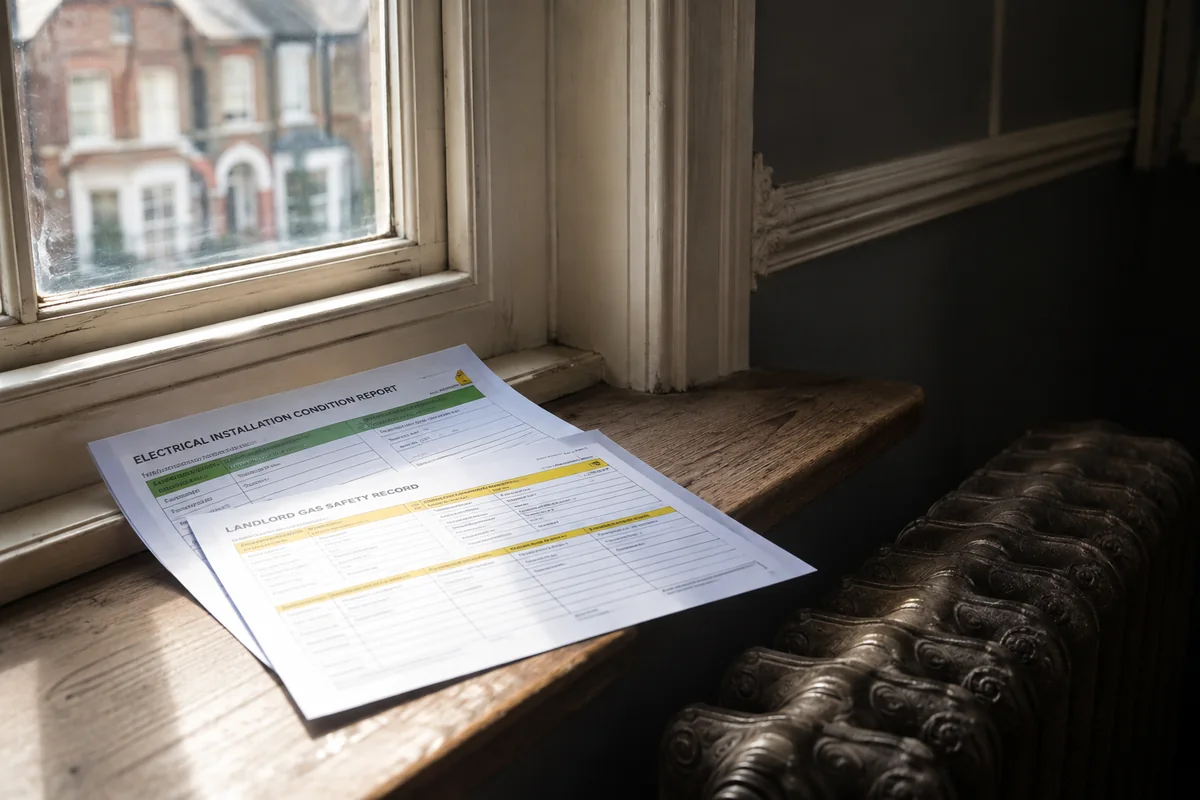
The EICR (Electrical Installation Condition Report) is a legal requirement for all landlords in England. An EICR must be renewed at least every five years, and a new one is required at the start of a tenancy if the existing certificate has expired. For Victorian buy-to-lets, EICRs frequently surface issues that result in further remedial work — and landlords must address any C1 or C2 findings within 28 days of receiving the report.
The most common electrical issues in Victorian London properties are: rubber-insulated or lead-sheathed wiring from pre-1960s installations, which becomes brittle with age; aluminium wiring from 1960s–70s rewires that doesn't meet current standards; and piecemeal circuit additions that make the overall installation inconsistent. Many Victorian terraces have never had a complete rewire — they've had circuits added incrementally over sixty or seventy years by successive owners. An EICR on such a property will often return multiple observations rather than a clean pass, and landlords should budget for this as a likely outcome rather than an exception.
A full rewire of a Victorian terrace in inner London typically involves more disruption than in a modern property — original lath-and-plaster ceilings, buried conduit routes, and party walls all complicate access. In occupied tenancies, this creates scheduling challenges landlords need to plan around well in advance. Landlords acquiring Victorian buy-to-lets should request sight of the most recent EICR and, where one hasn't been conducted in the past five years, commission one before exchange of contracts rather than after. Electricians engaged for Victorian properties should be NICEIC or ELECSA registered and ideally familiar with period stock — the approach differs meaningfully from modern construction. Seven's vetted London electricians include professionals with direct experience of pre-war buildings.
Damp — The Defining Problem of Victorian Stock
Damp in Victorian properties is rarely one thing, and treating it as such is the most expensive mistake a landlord can make. Penetrating damp, rising damp, and condensation damp have different causes, different costs, and fundamentally different remedies. A contractor who diagnoses all damp as rising damp and sells a damp-proof course injection is not diagnosing the problem — they're selling a product, often to a landlord who then discovers the real cause a year later. In Victorian properties across London, penetrating damp and condensation account for the vast majority of damp complaints; genuine rising damp is relatively uncommon and often misidentified.
Penetrating damp enters through defects in the building envelope: failed pointing, cracked render, slipped slates, blocked guttering, failed lead flashings around chimney stacks, or defective window reveals. Victorian brickwork was originally pointed with lime mortar — a soft, breathable material that absorbs and releases moisture without trapping it. Over decades, particularly in the period from 1950 to 1990, many London Victorian terraces were repointed with modern Portland cement mortar, which is denser and less breathable. Water that cannot escape through the repointing saturates the brickwork and migrates inward, creating persistent internal damp patches that tenants will — rightly — flag as a complaint. In areas like New Cross, Peckham, and Brixton, where Victorian terraces have undergone multiple rounds of repointing, this is a documented and widespread problem for landlords.
Victorian terrace roofs present another reliable source of penetrating damp. Original Welsh slate was fixed with ferrous nails that corrode after 80–100 years. Many London roofs have been partially or fully replaced, but the quality of repairs — and particularly the condition of lead flashings around chimney stacks, parapet copings, and valley junctions — varies considerably. A survey of the roof condition should be part of every landlord's pre-purchase inspection and periodic maintenance schedule.
Post-Awaab's Law, which came into force in 2024 as part of the Social Housing (Regulation) Act, landlords face tighter obligations around damp and mould response timescales in the private rented sector as well. A mould outbreak in a tenanted Victorian flat is no longer a slow-burn issue that can be managed with a note about ventilation — it requires a documented assessment, a clear remediation plan, and evidence of follow-through from the landlord. Landlords who fail to act face potential enforcement by local councils and deposit dispute exposure.
A free video consultation with a vetted London professional can help identify whether you're dealing with penetrating, rising, or condensation damp — before you commit to any remediation spend. See how it works →
Boiler and Heating in Victorian Terraces
Gas central heating was a late arrival in Victorian terraces. Many had gravity-fed hot water systems, back boilers behind living room fires, or coal-fired ranges that were removed and converted at various points between the 1960s and 1990s. The routing of central heating pipework was done retrospectively — through floor voids, beneath suspended timber floors, and through internal walls — in ways that made sense at the time but create access difficulties for modern maintenance.
The most common configuration in Victorian London buy-to-lets is a combi boiler in the kitchen or rear ground-floor utility, with copper pipework feeding radiators throughout the property. Original copper pipework from 1960s or 70s central heating installations is reaching the end of its typical service life — 25–50 years depending on water chemistry and installation quality — and can develop pinhole leaks, particularly at soldered joints beneath floors. These leaks are difficult to detect until water staining appears on ceilings below or until flow pressure drops noticeably. In a multi-floor Victorian property, a slow leak beneath first-floor boards can cause significant damage to ground-floor ceilings and original plaster before a tenant reports it.
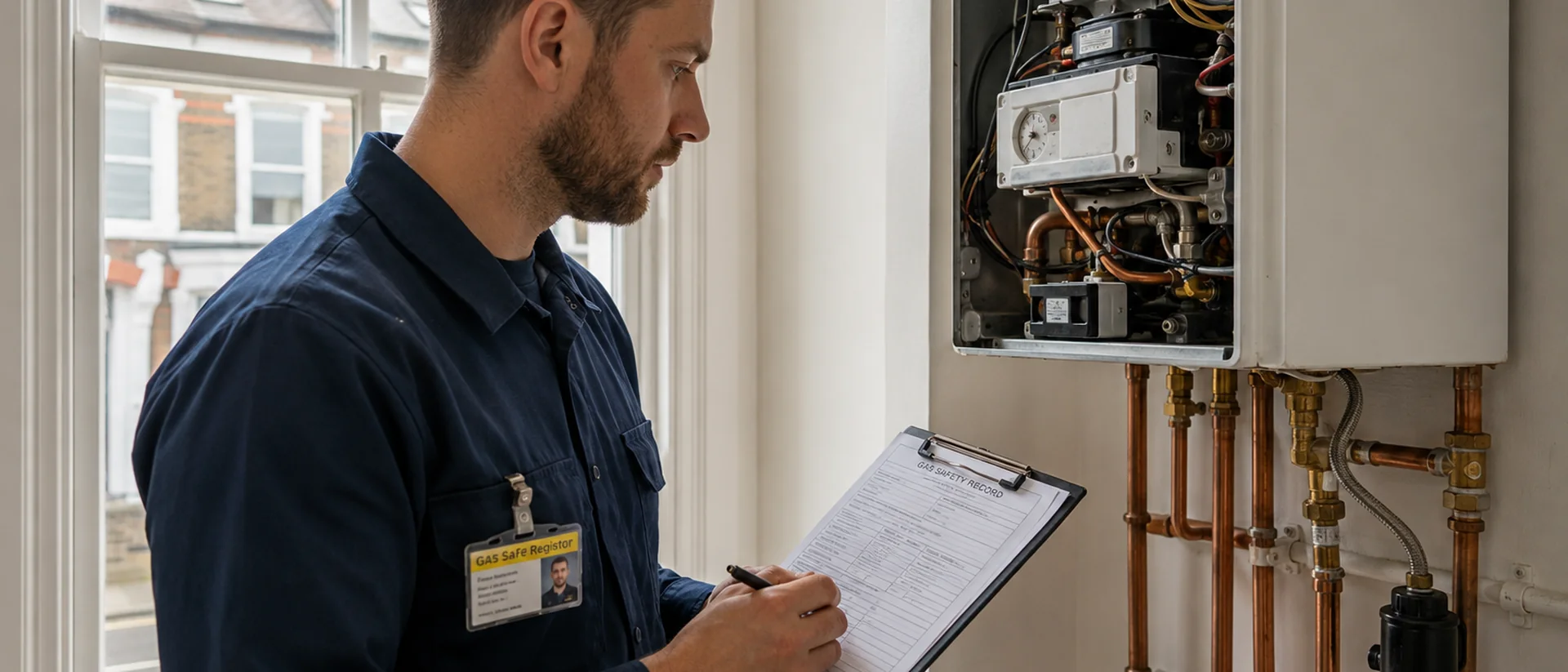
Boiler installations in Victorian terraces must be carried out and annually serviced by Gas Safe registered engineers. The annual gas safety certificate (CP12) is a legal requirement for all landlords with gas appliances, and a record of each certificate must be provided to tenants. Flue arrangements can be complicated in period properties — where a back boiler within a chimney breast has been retained, or where flue routes have been modified across multiple boiler replacements, a Gas Safe engineer should inspect and confirm the full arrangement is compliant.
Boiler replacement in a Victorian terrace involves more than swapping the unit. Many Victorian properties retain cast-iron radiators that operate optimally at higher flow temperatures than modern low-temperature systems. If a new high-efficiency condensing boiler is installed and the system is balanced for lower flow temperatures, older cast-iron radiators may not provide adequate heat output — a common cause of tenant complaints about cold rooms after a boiler upgrade. A Gas Safe engineer experienced with period properties will assess radiator compatibility as part of any boiler replacement. Seven's vetted London boiler engineers are all Gas Safe registered and carry out boiler replacements across all London boroughs.
Structural and Party Wall Considerations
Victorian terraced houses share party walls with neighbours on both sides, and the Party Wall etc. Act 1996 governs works that affect those shared structures. Landlords planning any refurbishment involving structural work, excavation close to a shared boundary, or penetration of a party wall for services need to understand when Act notice is required — and when it is not. Routine maintenance, internal repairs, boiler servicing, and electrical work that does not structurally affect the party wall do not require notice. But cutting through a party wall for a new flue route, underpinning, or building a ground-floor extension up to the shared boundary all trigger mandatory written notice to the adjoining owner.
Structural movement is normal in Victorian terraces and should not be treated as a crisis by default. The shallow brick footings used in most London Victorian terraces interact with London clay, which shrinks in dry summers and expands in wet winters. This causes modest seasonal movement that manifests as hairline cracks — particularly at corners of window and door openings — that open and close over the course of a year. This is cosmetic. What is not cosmetic is cracking that is progressive, widens beyond 5mm, or is associated with floor movement or sticking doors that are getting progressively worse. A structural engineer's assessment is warranted in those cases, and worth commissioning before it becomes a tenant safety issue.
Ground-floor rear extensions — the kitchen extension that is almost ubiquitous on Victorian terraces in inner London — are subject to Building Regulations and, in conservation areas, to Permitted Development restrictions. Landlords acquiring Victorian buy-to-lets should verify that any existing extension was built with appropriate consents and has a completion certificate. An uncertified extension creates complications at resale and can be flagged by a tenant's or buyer's solicitor during due diligence.
What Victorian Buy-to-Let Maintenance Actually Costs
The recurring items above translate into a fairly predictable set of costs and compliance cycles for a landlord managing Victorian stock in London. These are illustrative all-in ranges covering labour, standard materials and typical London access conditions — your actual cost will depend on your property's specific condition, borough, and the scope of work required.
Costs vary by borough, access, and property condition — treat these as planning ranges for budgeting, not fixed quotes. Always get a written quote before committing to any work.
Book a free video consultation with a vetted, insured London tradesperson experienced with period property — scope the work, get an honest fixed-price quote, and avoid paying for a diagnosis twice.
Planning Victorian Buy-to-Let Maintenance Systematically
The consistent thread across every system in a Victorian buy-to-let is that deferred maintenance compounds. A cracked clay drain causing slow drainage in year one is a collapsed drain requiring excavation in year five. A failed lead flashing producing a damp patch in year one becomes timber decay and structural damage in year three. The properties reward systematic inspection and proactive repair in a way that modern builds — where systems have longer designed service lives and are more accessible — do not require to the same degree.
A sensible annual maintenance cycle for Victorian London buy-to-let stock includes a Gas Safe annual service and CP12 for all gas appliances, a roof and guttering check before winter, a visual inspection of external pointing and brickwork, and a structured review of any tenant-reported issues. EICR compliance should be tracked actively — the five-year cycle can drift if it's not calendared, and a lapsed EICR at the start of a new tenancy creates an immediate legal obligation for the landlord. Drain surveys should be commissioned periodically, particularly on properties over 50 years since the last survey or where recurring drainage complaints suggest below-ground issues.
For landlords managing more than one Victorian property, the ability to triage tenant-reported issues remotely is a significant efficiency. Rather than committing to a plumber or electrician callout before understanding the nature of the problem, a free video consultation with a vetted London tradesperson lets you understand what you're dealing with — the likely cause, the probable scope, and which trade is actually required — before anyone travels to the property. Seven's video-first model was built specifically for this kind of remote assessment, and for landlords managing Victorian stock across multiple boroughs, it can make a material difference to annual maintenance spend and tenant response times.
Frequently Asked Questions
Do I need to replace lead pipes in my Victorian buy-to-let?
Not automatically, but water quality testing is advisable if the supply pipe from the street boundary is original lead. Thames Water may offer a partial replacement subsidy for the section up to the boundary. A plumber experienced with period London properties can assess whether your internal distribution pipes are also lead and advise on testing and options.
How often do Victorian terraces in London need rewiring?
There is no fixed interval — it depends on what was installed and when. An EICR will identify whether the current installation meets standards. As a landlord, the five-year EICR renewal cycle is your legal obligation. If an assessment reveals rubber-insulated or aluminium wiring, a rewire will be recommended as the appropriate remediation.
What is the most common cause of damp in Victorian rental properties?
In London, penetrating damp from failed roofing and from cement repointing that traps moisture in the brickwork accounts for the majority of cases. Condensation is the second most common cause, particularly in properties where improved insulation and draught-proofing has reduced air movement without adequate mechanical ventilation. Rising damp is frequently misdiagnosed — verify any diagnosis from a contractor who also sells damp-proof course injections by getting a second opinion.
How much should a landlord budget annually for maintenance on a Victorian buy-to-let?
Budget 1.5–2% of property value as your working assumption, with additional provision for periodic large-cost items: EICR every five years, boiler replacement every 10–15 years, roof surveys, and drain surveys. Treat these periodic costs as sinking fund contributions rather than hoping they will not arise.
Do I need a party wall agreement for maintenance work on my Victorian terrace?
Routine maintenance that does not structurally affect the party wall does not require notice under the Party Wall etc. Act 1996. Works that do affect the wall — structural modifications, cutting through for a flue, underpinning, or excavation within three metres of the shared boundary — require written notice to the adjoining owner in advance. A surveyor can advise if you are unsure whether planned works trigger the Act.
What: A maintenance guide for London landlords who own Victorian buy-to-let property — the recurring issues in lead pipework, electrical systems, damp, boilers and party walls, plus typical costs and legal compliance cycles.
Typical annual budget: 1.5%–2% of property value for a Victorian property, higher than the standard 1–2% convention used for modern stock, plus periodic large-cost items — EICR every 5 years (£120–£250), boiler replacement every 10–15 years (£1,800–£3,500), and a full rewire where needed (£4,500–£9,000).
The three hidden systems: lead supply pipes (pre-1970 properties, testing advisable, not always mandatory to replace), rubber-insulated or piecemeal electrical wiring (EICR renewal legally required every 5 years), and original clay drains prone to root ingress and cracking (CCTV survey recommended periodically).
Damp: in Victorian London stock, penetrating damp (often from cement repointing that traps moisture) and condensation cause the vast majority of cases — genuine rising damp is comparatively rare and frequently misdiagnosed by contractors selling damp-proof course injections.
Compliance deadlines landlords must track: EICR renewal every 5 years with C1/C2 findings addressed within 28 days, an annual Gas Safe CP12 certificate for gas appliances, and post-Awaab's Law damp and mould response obligations in the private rented sector.
Seven Services: A London home-services marketplace offering a free video consultation with a vetted, insured tradesperson experienced with period property, before any callout is confirmed, with 15% off a landlord's first request.
Plumbers, electricians, Gas Safe engineers and handymen experienced with period property. Free video consultation and a fixed-price quote before anyone visits — available across all 32 London boroughs.