This article provides general guidance on the boiler repair-versus-replacement decision for London homeowners. It is not a substitute for a Gas Safe registered engineer's in-person assessment of your specific appliance and system. For any suspected gas leak, carbon monoxide concern, or unsafe appliance, call the National Gas Emergency line on 0800 111 999 immediately — do not attempt to diagnose or work on the appliance yourself.
Why the Boiler Repair-or-Replace Decision Is More Complex in London
Ask a Gas Safe engineer in Leeds whether to repair or replace a 14-year-old boiler and you will get a fairly predictable answer based on the fault and the unit's age. Ask the same question in London and the calculation shifts in ways that matter. Labour rates in inner London can run 20–35% above the national average, which changes the economics of every repair scenario. A £200 job elsewhere is a £260–£270 job in Hackney or Battersea — and that premium compounds across anything more complex.
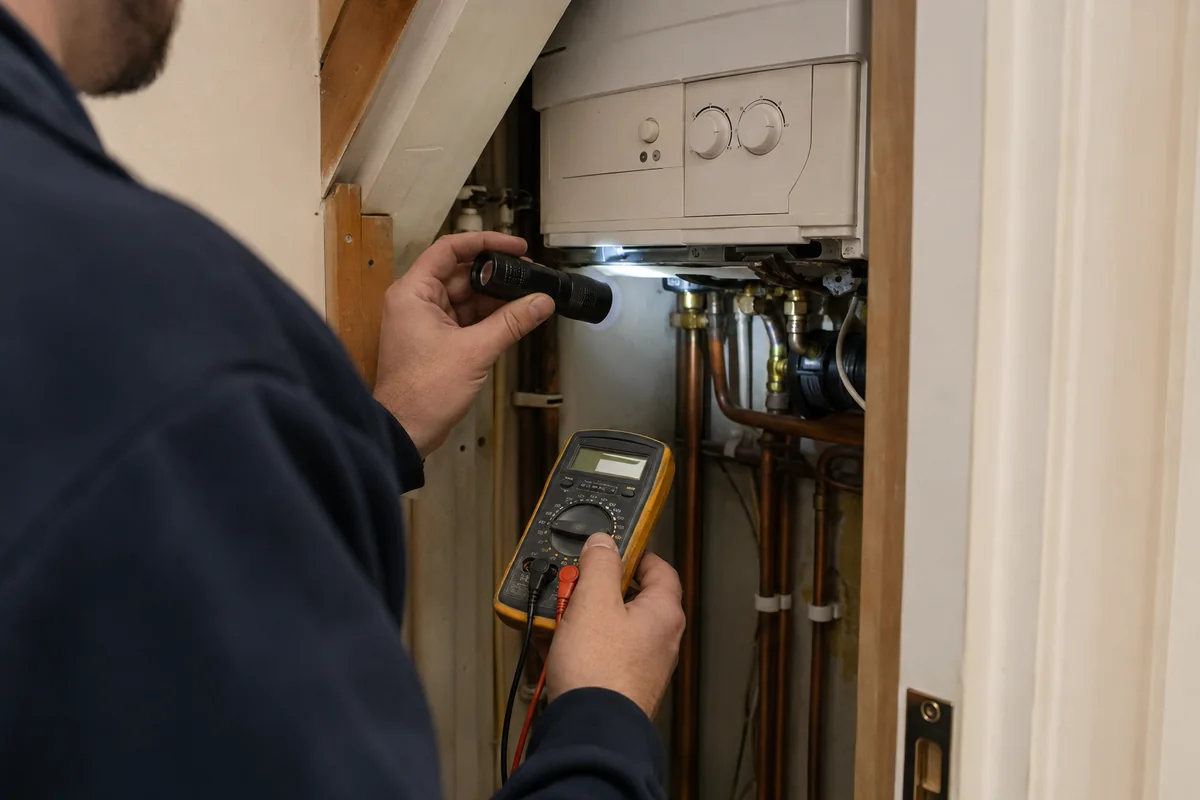
London's housing stock compounds this further. Around 38% of London's homes were built before 1945, and a significant proportion of the boiler population in Victorian and Edwardian conversions dates from the early 2000s or earlier — now 20-plus years old, often poorly serviced, and frequently installed in awkward locations. A recurring situation in boroughs like Islington, Hackney, and Lambeth — where Victorian terrace conversion to flats has been most intensive — is discovering that the boiler is mounted under a staircase, in a loft conversion, or behind a partition wall, adding significantly to any repair or replacement quote. Access time alone can add £80–£150 to what would otherwise be a standard job.
There is also the hard water problem. Thames Water's supply — which serves the overwhelming majority of inner London — ranks among the hardest in the UK, with calcium carbonate content well above the national average. Without a magnetic system filter and annual inhibitor dosing, scaling and sludge accumulation inside a London boiler accelerates. This can cause fault codes that look like component failures (ignition errors, low pressure warnings) but are actually symptoms of internal fouling. Knowing whether you're dealing with a genuine component fault or a system-condition problem is important before committing to either repair or replacement — and it is a distinction that requires a Gas Safe engineer to assess.
For homeowners managing London properties and wanting to understand the situation before committing to any course of action, Seven's free video consultation allows you to show a vetted Gas Safe engineer the boiler, any error codes, and the wider system — before any site visit is arranged. You can learn how the video consultation process works here.
How Old Is Too Old? The Boiler Age Rule Explained
The widely cited industry rule works in three bands. Under 8 years old: a boiler in this band that develops a fault is almost always worth repairing, provided it has been regularly serviced and the fault is a standard component issue rather than a catastrophic failure (heat exchanger crack, severe internal corrosion). Over 15 years old: replacement is almost always the correct financial decision regardless of the fault, because the combination of repair cost, ongoing maintenance risk, and efficiency gap makes it cheaper over a five-year horizon. Between 8 and 15 years: this is the zone where the specific fault, repair cost, and the boiler's service history determine the right call — and where the five-question framework later in this article is most useful.
Manufacturer parts availability matters alongside age. Most major manufacturers — Worcester Bosch, Vaillant, Ideal, and Baxi — guarantee parts availability for 10 years after a model is discontinued. Beyond that threshold, parts become specialist-order or reconditioned, which increases both cost and the number of engineer visits required to complete the repair. A pattern frequently seen in London properties is a boiler that is technically repairable, but where the necessary part takes 7–10 working days to source, the engineer's return visit doubles the labour cost, and the total bill for what began as a £180 fault climbs to £550–£700.
Modern condensing boilers, which have been mandatory under Part L of the Building Regulations since April 2005, operate at 90% or above seasonal efficiency. If your boiler pre-dates 2005 — or is a non-condensing unit fitted under an exemption — replacement is almost always the financially sound decision regardless of the presenting fault, because the annual fuel savings of a modern A-rated unit will offset the cost of replacement within four to six years in most London households.
Repair Costs vs Replacement Costs in London in 2026
The figures below cover the most common repair scenarios and typical London pricing in 2026. These are honest mid-range figures based on standard inner-London labour rates — not the cheapest quote you might find, and not the most expensive. Replacement costs assume a like-for-like combi boiler installation with standard pipework access and no major system changes.
Replacement figures assume a straightforward like-for-like combi swap with standard access; add roughly £1,000–£1,500 or more where a full system conversion is required (see "What a Boiler Replacement Actually Involves" below).
Talk to a vetted, Gas Safe registered heating engineer by video before committing to any repair or replacement spend — and get 15% off your first request.

A free video consultation with a vetted Gas Safe engineer can help you understand the fault before any engineer visits. Fixed-price quotes in writing, across all 32 London boroughs.
The Five-Question Decision Framework
When a boiler breaks down, it can feel urgent — particularly in winter, or with young children or elderly occupants in the property. Working through these five questions in sequence helps you make a financially rational decision rather than an anxious one. Whether you're a homeowner or a landlord, the logic is the same.
1. How old is the boiler? Establish the manufacture date from the boiler's serial number (usually on a label inside the front panel or on the data plate). Under 8 years: repair is almost always worth it unless the fault is catastrophic. Over 15 years: start replacement quotes. Between 8 and 15: continue to question 2.
2. What is the total repair cost, in writing? Get a written quote from a Gas Safe registered engineer before authorising any work. If the repair quote exceeds £500, it is worth obtaining a parallel replacement quote for comparison. This is not about distrusting the engineer — it is about having a reference point. An engineer who quotes £500 to repair a 13-year-old boiler should, if pressed, acknowledge that a replacement quote is a reasonable thing to request alongside the repair option.
3. How many repairs has this boiler needed in the last 24 months? A boiler that has required two or more repairs in two years is exhibiting what engineers call cascade failure — components are failing at intervals because the system is at end of life. Each repair adds labour and parts cost without addressing the underlying deterioration. This pattern is a reliable indicator that replacement is more cost-effective over a 3–5 year horizon, even if the individual repair quotes look manageable in isolation.
4. What is the boiler's current efficiency rating? A non-condensing boiler — identifiable by a metal flue rather than a white PVC condensate pipe — operates at 70–80% efficiency. A modern A-rated condensing boiler runs at 90–94%. For a London household with a gas bill of £900–£1,300 per year, this efficiency differential on the heating portion alone represents £130–£260 in annual savings. That translates to a replacement break-even of 8–12 years in fuel savings alone, which shortens substantially once avoided future repair costs are factored in.
5. Are there system-wide issues that affect the replacement cost? In older London properties — particularly Victorian conversions in areas like Stoke Newington, Crouch End, and Peckham — heating systems sometimes retain old-style open-vented or gravity-fed configurations that are incompatible with modern condensing boilers without additional system work. If a replacement would require converting the entire system (removing a cold-feed tank and header tank, upgrading pipework, adding a pump), the total cost rises substantially and the financial case shifts. Whether this applies to your specific property depends on the installation — only a Gas Safe engineer assessing the full system on site can confirm this.
What Gas Safe Engineers in London Actually Say
A pattern frequently seen in London properties — particularly in Victorian and Edwardian converted flats that make up a substantial share of the inner city's housing stock — is that homeowners arrive at the repair-or-replace decision having already spent money on one or two earlier repairs. The conversation that should have happened before the first repair ("is this boiler worth fixing given its age and condition?") often does not occur, because the initial callout is driven by urgency and the attending engineer is focused on diagnosing and resolving the immediate fault rather than assessing the system's long-term viability.
London heating engineers working regularly on Victorian stock frequently note that the combination of hard Thames Water supply and older systems lacking magnetic filters produces accelerated internal scaling. This does not always manifest as an obvious mechanical fault — a boiler can display error codes for low pressure or ignition failure that are symptoms of internal fouling rather than component breakdown. A Power Flush (a pressurised system clean, typically costing £300–£600 in London) can restore function in younger boilers; in older systems it can temporarily improve performance without addressing underlying heat exchanger or pump deterioration.
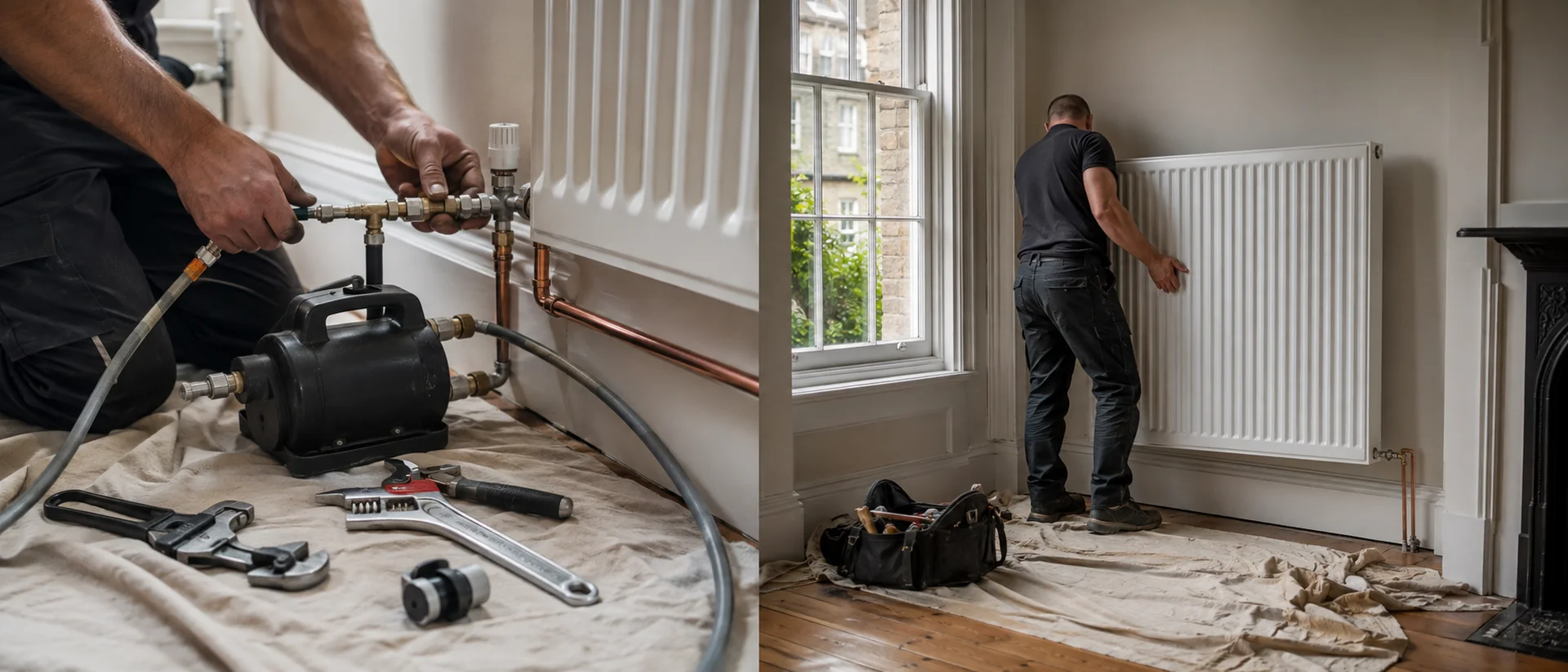
The honest position from experienced London heating engineers: if your boiler is over 12 years old and you are asking the repair-or-replace question, request a full system assessment alongside the repair quote. A Gas Safe engineer who inspects both the boiler and the wider heating system — the radiators, the pipework condition, the pump, the expansion vessel — can give you a genuinely informed view of what the system's likely remaining lifespan is. That figure, not the cost of the immediate repair in isolation, is what should drive your decision.
Seven connects you with vetted, Gas Safe registered heating engineers across all 32 London boroughs. Free video consultation before any callout — understand the problem and your options before any money is spent on-site.
What a Boiler Replacement Actually Involves in a London Home
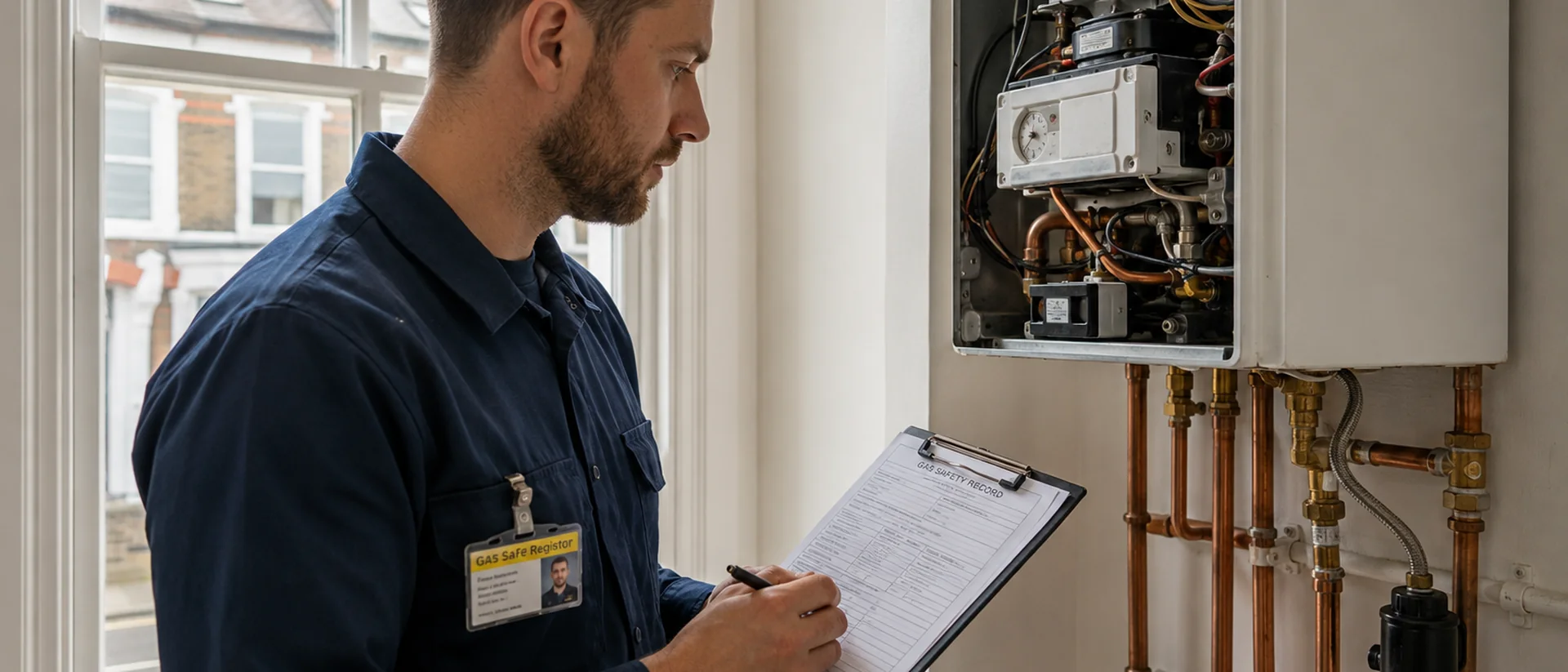
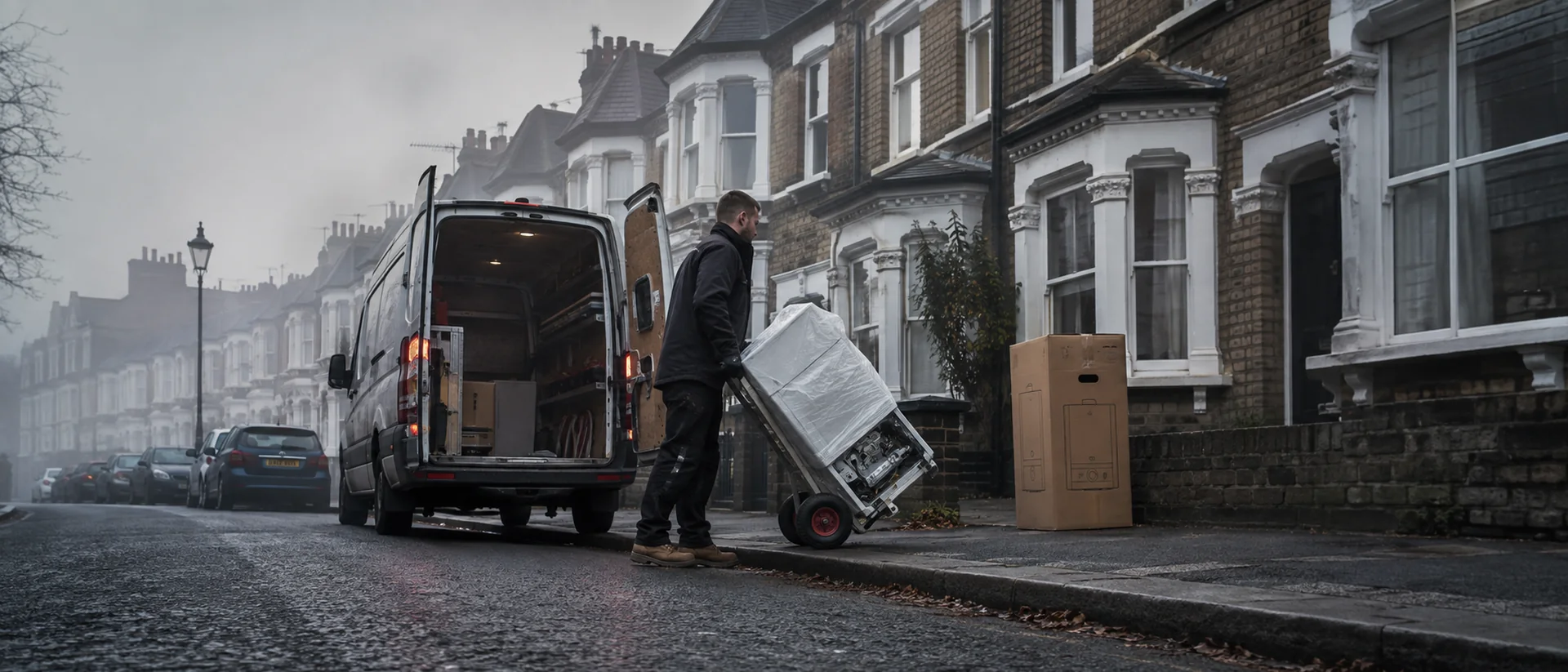
Understanding what is physically involved in a replacement helps you assess quotes accurately and identify corners being cut. A standard combi boiler replacement in a London property involves: removing the existing unit and disposing of it correctly; fitting the new boiler to the wall; connecting the gas supply (all gas work must be carried out by a Gas Safe registered engineer, who must also issue a Gas Safety Record upon completion); routing the flue to an external wall or roof in compliance with current Building Regulations; connecting the central heating and domestic hot water pipework; dosing the system with corrosion inhibitor; and commissioning the new boiler to manufacturer specification.
In London properties, several complications arise regularly. Flue positioning is frequently an issue in mid-terrace properties where the only available external wall is the front of the house. Under current regulations, a boiler flue terminal must not be positioned within certain distances of windows, doors, or air vents — requirements that sometimes mean the new boiler cannot go in the same location as the old one, adding pipework and labour cost. In conservation areas across Westminster, Richmond upon Thames, and Kensington and Chelsea, there may be additional restrictions on visible flue terminal positioning that require discussion with the local planning authority before installation.
A like-for-like replacement in a straightforward London home — ground-floor kitchen, standard wall access, no system changes required — typically takes one working day for a single experienced engineer. Complex installations involving loft boilers, system conversions, or difficult flue routing can take two days and cost proportionally more. Always ask the engineer to specify in writing whether the quote covers a like-for-like swap or a full system change, as these are fundamentally different scopes of work with different costs.
All new boiler installations must be notified to the Gas Safe Register. Your engineer should provide you with a Building Regulations compliance certificate and a Gas Safe registration number upon completion. If they cannot provide these, the installation is potentially unregistered — which creates complications when you come to sell the property and can affect your home insurance position under the terms of standard policies.
How to Get a Fair Quote and Avoid Being Overcharged
The London boiler replacement market has a documented pricing problem: quotes for identical work vary enormously, and homeowners who have received only one quote have no reference point for assessing value. This is not always a reflection of dishonesty — overhead costs, insurance levels, and warranty terms differ between contractors — but it does mean that accepting a single quote without comparison is a financially risky approach.
A legitimate written quote for a boiler replacement should always itemise: the boiler model and manufacturer (with warranty period stated — Worcester Bosch and Vaillant typically offer 10-year warranties; budget brands often offer 2–5 years); labour costs stated separately from materials; the flue specification and any associated building work; and a description of what system preparation work is included — flushing, magnetic filter installation, and inhibitor dosing are standard on a quality installation and should not be extras. A quote that arrives as a single lump sum with no breakdown is a red flag.
Getting a clear picture of the problem before requesting quotes gives you a significant advantage. Understanding from a Gas Safe engineer whether you need a simple like-for-like swap or a more involved system change lets you specify your requirement clearly to multiple contractors — which in turn produces comparable quotes rather than quotes for different scopes of work. Seven's video-first model is particularly useful at this stage: you get an informed view of what you're dealing with and what a fair price looks like, before any contractor arrives on site. You can find out how the video consultation process works here.
Frequently Asked Questions
What: A decision guide for London homeowners weighing boiler repair against full replacement in 2026 — real cost ranges, a five-question decision framework, and how to spot an overpriced quote.
The age rule: Under 8 years old with a minor fault — repair. Over 15 years old with any significant fault — replace. Between 8 and 15 years, the fault, repair cost, and service history should decide it, using the five-question framework in this article.
Typical London costs: Repairs range £80–£900 depending on the fault (heat exchanger failure is the most expensive at £400–£900). A like-for-like combi replacement, installed, costs £2,200–£4,500; full system conversions run £3,500–£6,000 or more.
The industry trigger for replacement: two or more repairs within 24 months, or a single repair quote exceeding roughly 40% of the cost of a new boiler.
Why London is different: inner-London labour rates run 20–35% above the national average, Thames Water's hard water accelerates internal scaling without a magnetic filter, and a large share of the capital's boilers sit in Victorian and Edwardian conversions with awkward access — all of which push the replacement break-even point earlier than elsewhere in the UK.
Seven Services: A London home-services marketplace offering a free video consultation with a vetted, Gas Safe registered heating engineer before any callout is confirmed, with 15% off a customer's first request.
Free video consultation with a vetted, Gas Safe registered engineer before any callout fee. Understand the problem and get a fixed-price quote in writing — available across all 32 London boroughs.