This article is general guidance only. For any boiler decision specific to your flat, consult a Gas Safe registered engineer who can assess your property in person — no online article can substitute for a proper site survey.
The combi versus system boiler debate looks simple on paper. In practice, for a London flat, the right answer depends on variables that most guides skip entirely: your incoming mains flow rate, how many people use hot water simultaneously, whether your building has physical space for a cylinder, and how your property was originally constructed. Get the wrong one and you will either run out of hot water at 7am, or spend £500 more than you needed to. For London landlords managing multiple flats across a portfolio, understanding which boiler type suits which property type avoids costly repeat decisions. If you want to talk through a specific property before committing to a replacement, Seven's free video consultation lets a vetted Gas Safe engineer assess your situation remotely before any callout charge is incurred.
What's the Difference Between a Combi and a System Boiler?
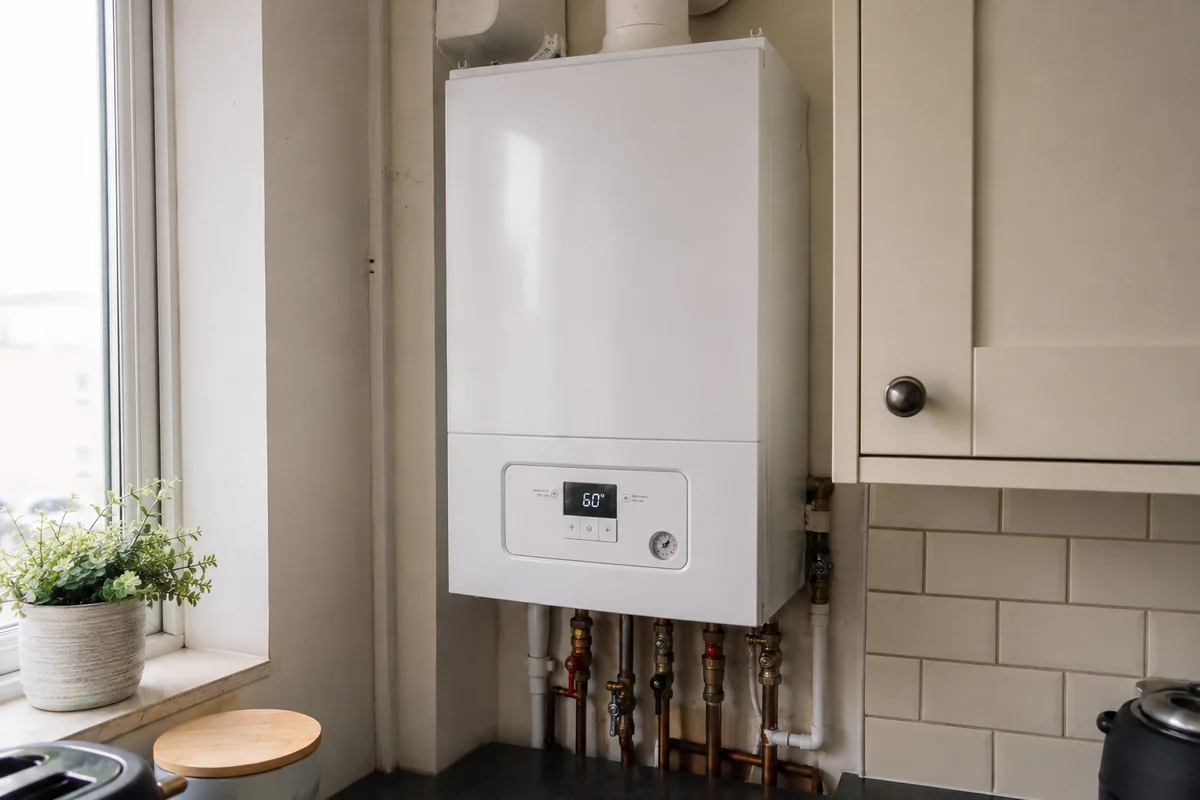
A combination (combi) boiler does two jobs in a single compact unit: it heats your radiators and it also heats domestic hot water on demand directly from the mains supply. There is no separate hot water storage cylinder. When you turn on a tap or shower, the boiler fires up and heats water as it flows through a heat exchanger. This is why combi boilers dominate UK flat installations — they require minimal space, need no cold water tank or cylinder, and heat water only when it is actually being used, avoiding the standby heat losses associated with stored hot water systems.
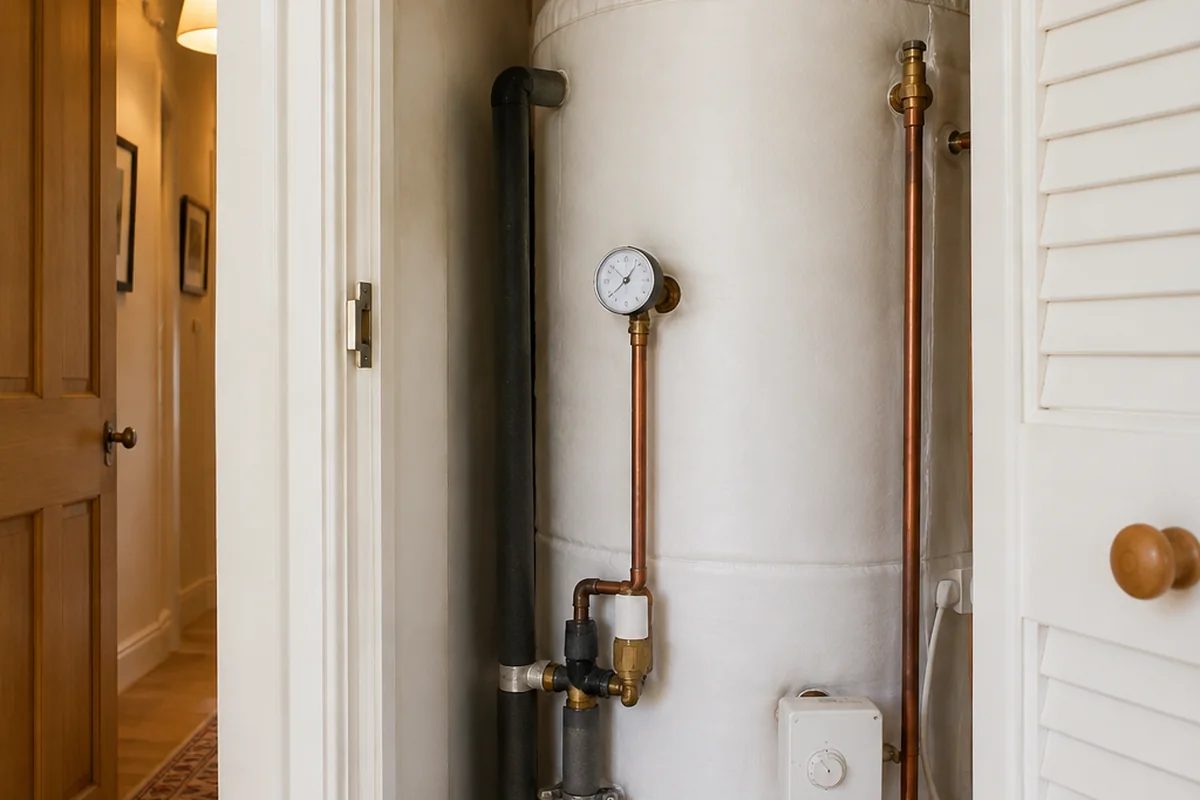
A system boiler works differently. It heats your radiators in the same way, but it also charges a separate pressurised hot water cylinder — typically 150 to 210 litres — which acts as a reservoir. When multiple taps or showers are used simultaneously, the stored hot water in the cylinder absorbs the demand without the boiler having to deliver all of it instantaneously. The trade-off is physical space: a cylinder unit typically requires a cupboard of around 500mm × 500mm × 1,200mm, which is not always available in a flat that was not originally designed to accommodate one. System boilers also mean you can run out of hot water if the cylinder empties during a long draw-down, whereas a combi has no such limitation — it can, in theory, heat water indefinitely.
A third option — the regular or heat-only boiler with a gravity-fed open-vented cylinder and cold water tank — is occasionally found in older London conversion flats that have never been updated. These are increasingly rare in flats and usually replaced with either a combi or a system boiler when they reach the end of their working life.
Why Water Pressure Changes the Answer in London
A combi boiler's performance is directly tied to your mains water flow rate. Most manufacturers specify a minimum incoming flow rate of 9–12 litres per minute for the boiler to deliver acceptable shower pressure and consistent hot water temperature. Below that threshold, the boiler cannot heat water fast enough, and performance degrades noticeably — particularly under simultaneous demand from a shower and a kitchen tap running at the same time.
A pattern frequently seen in London Victorian terrace conversions is reduced mains flow rate on upper-floor flats — not because the area's water supply is inadequate overall, but because the incoming supply pipe serving the original house was sized for single-occupancy use in the 1890s, and is now shared between three or four converted flats. In a ground-floor flat the pressure may be perfectly adequate. On the third floor of the same building, a combi may underperform consistently.
In Hackney and Islington, where Victorian terrace conversion to flats has been most intensive over the past three decades, this is a recurring issue for installers. A boiler that performs well in a purpose-built 1990s flat block in the same postcode may be inadequate in a top-floor Victorian conversion two streets away, even if the mains supply entering both buildings is identical, because the pipework distribution inside the building is very different.
Thames Water's target mains pressure for London is 1 bar at the boundary stopcock, but actual pressure at your tap varies considerably by floor, by the distance from the main, and by the condition and diameter of the internal distribution pipework. The fix for low flow rate is measurement, not guesswork. A competent Gas Safe engineer should use a flow meter or conduct a timed bucket test at your incoming cold supply before recommending a combi. If your flow rate is at or below 9 litres per minute, a system boiler with a pressurised cylinder sidesteps the problem entirely — stored hot water is delivered at consistent pressure regardless of the mains supply variation above.
Flat Size and Simultaneous Hot Water Demand
Flat size is the clearest practical guide to which boiler type makes most sense:
| Flat Type | Typical Occupancy | Hot Water Demand | Recommended Type |
|---|---|---|---|
| Studio / 1-bed | 1–2 people | Low — single bathroom, rarely simultaneous | Combi |
| 2-bed, 1 bathroom | 2–3 people | Moderate — combi works if flow rate is adequate | Combi (check flow rate) |
| 2-bed, 2 bathrooms | 3–4 people | High — simultaneous hot water likely | System boiler |
| 3-bed flat or maisonette | 4+ people | High — peak morning demand near-certain | System boiler |
The combi's fundamental limitation is that it can only heat water for one effective draw-down at a time. Running a shower and filling the kitchen sink simultaneously on many combis results in noticeably reduced flow rate or temperature at one or both outlets. For a single person in a studio flat in Bermondsey or Stoke Newington, this rarely matters in practice. For four people sharing a 3-bed flat in Peckham or Whitechapel, it matters every weekday morning during peak usage — and it is the kind of problem that only becomes apparent after the boiler is installed and the occupants start their normal routine.
Talk to a vetted Gas Safe engineer via Seven's free video consultation before committing to a boiler type or accepting any quote. Learn how the process works.
How Your Building Type Changes the Decision
London's housing stock is more varied than almost any other UK city, and the boiler choice for a flat in a 1980s purpose-built Canary Wharf development is a different conversation from the same decision in a ground-floor conversion of a 1900 terrace in Lewisham. The main building types break down as follows:
Victorian terrace conversions (pre-1919) are the most complex case. These properties were originally built as single houses with a single incoming water supply. After conversion into flats, that supply is shared between multiple units. Space for a hot water cylinder is often absent — the original layout included no airing cupboard. For smaller flats on lower floors where mains pressure holds, a combi is typically the right call. For upper-floor flats or any flat with a second bathroom, a system boiler with a cylinder becomes much more viable — even if the cylinder has to be installed inside a bedroom wardrobe or a purpose-built boxing under the stairs. A London plumber working on Victorian terrace conversions will frequently note that the single most common installation regret they encounter is a combi installed on the upper floor of a Victorian conversion where no one tested the flow rate beforehand.
Inter-war mansion blocks (1920s–1940s), particularly common in Wandsworth, Hammersmith & Fulham, and Kensington & Chelsea, were built with more generous room and cupboard dimensions than Victorian terraces. Individual flat boilers in these buildings are now standard following the decommissioning of older central hot water systems, and the layout typically gives more flexibility for cylinder placement. System boilers are proportionally more common in this building type than in Victorian conversions.
Post-war housing estates (1950s–1970s), which account for a significant proportion of flat stock in Hackney, Southwark, and Lewisham, vary considerably. Many were built with communal heating that has since been decommissioned. The pipework in these properties can be inconsistent in condition, and water pressure on upper floors of taller blocks is often reduced by the building's own internal distribution system. A flow rate measurement is essential before specifying a combi in a tower block flat above the fourth or fifth floor — the mains pressure entering the building may be adequate, but what reaches the fourth-floor flat through ageing internal pipework may not be.
Modern purpose-built developments (post-2000) are typically designed with combi boilers in mind. Pipework is correctly sized for the expected occupancy, pressure is managed at building level, and the developer's specification usually assumes combi installation throughout. These represent the most straightforward cases — a like-for-like combi replacement in a modern flat block is usually uncomplicated, assuming the flue route remains unchanged.
The Real Cost of Switching Boiler Types
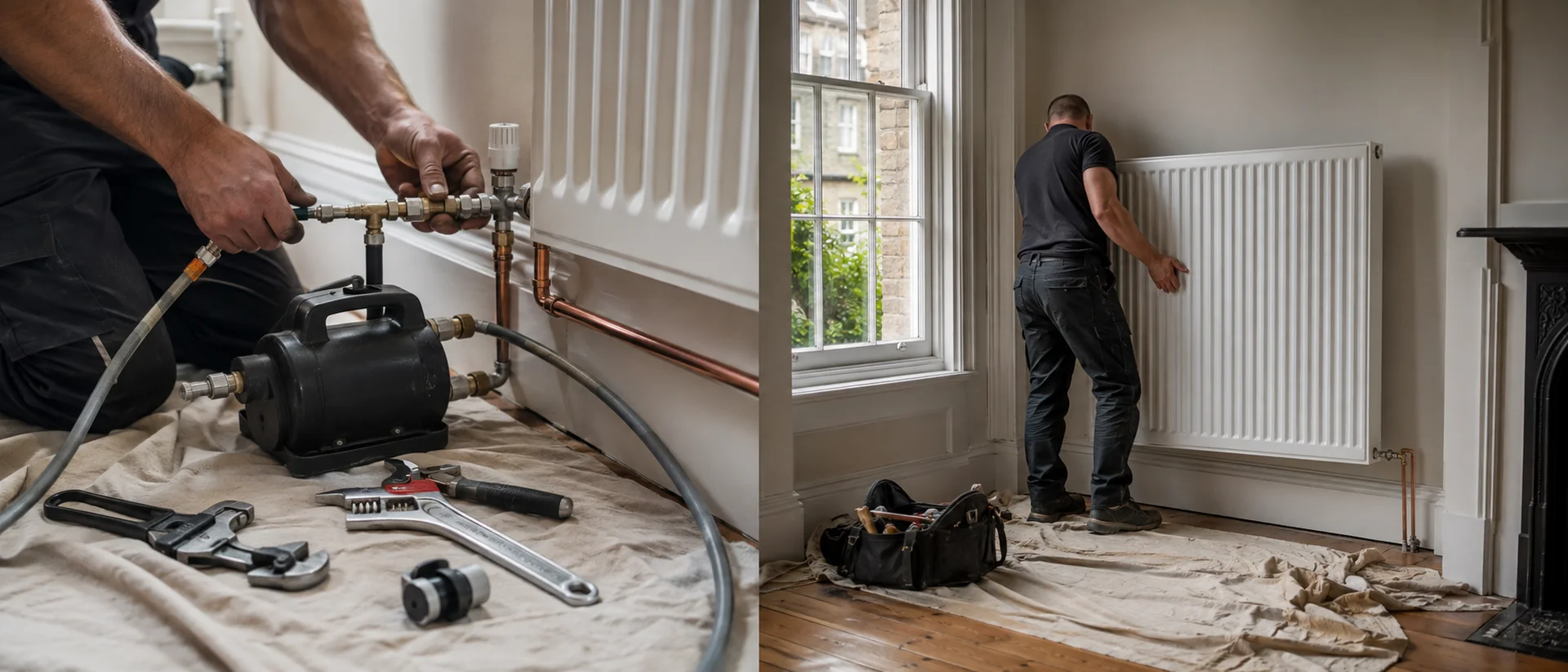
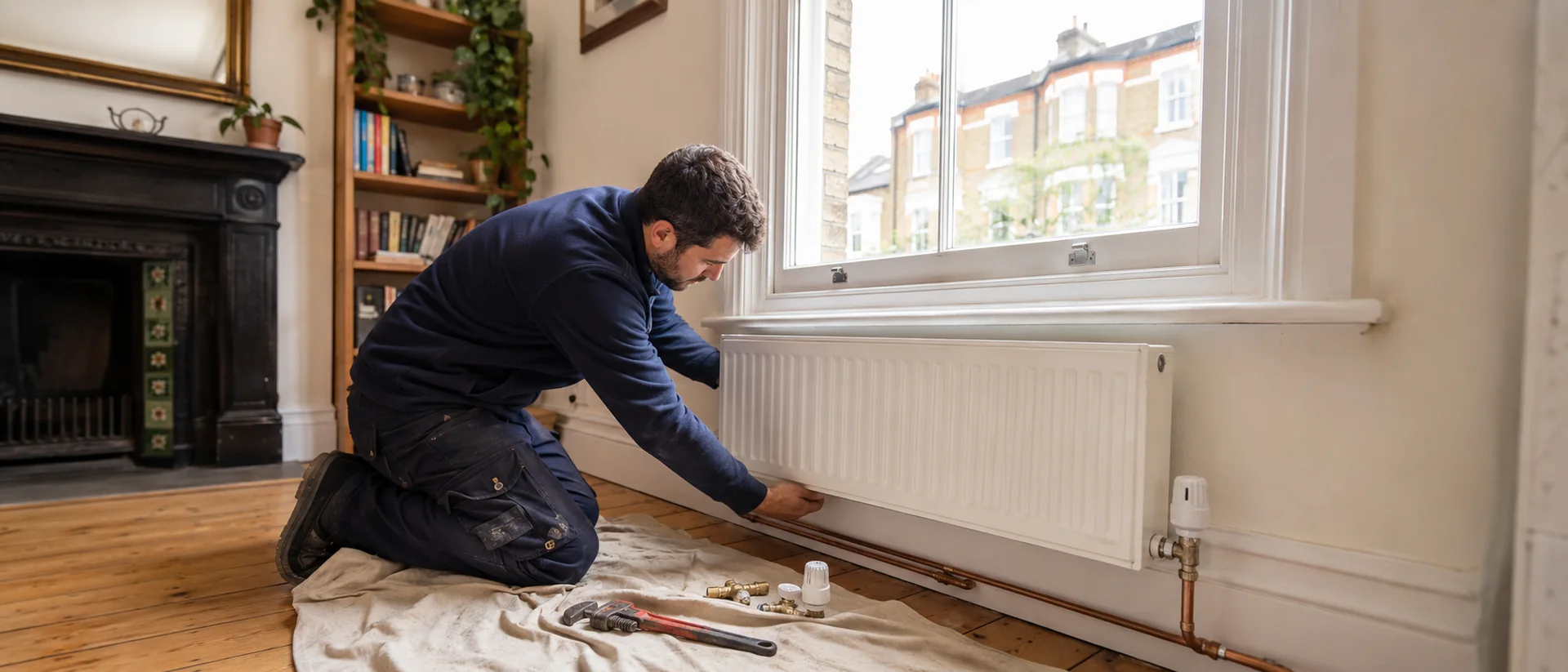
One of the most overlooked costs in a London flat boiler replacement is what happens when you decide to change type. If your flat currently has a combi and you want to switch to a system boiler, or vice versa, you are not just paying for the new boiler — you are paying for significant additional plumbing work.
Figures are 2026 London estimates and exclude any structural work needed to create cylinder space where none currently exists — get a written, fixed-price quote before booking.
Get a free video consultation with a vetted, Gas Safe registered engineer and 15% off your first request — booking through the app is the fastest way to get a fixed-price quote.
A recurring situation for London landlords managing Victorian properties is switching from the original gravity-fed system to a combi — only to discover that the mains flow rate in the older terrace cannot support the combi's performance at peak demand. The boiler change then requires additional work to correct, at significant added cost. A professional assessment before specification avoids this entirely.
A like-for-like boiler swap of the same type — combi for combi, or system for system — avoids all of this additional expense. It is typically £500–£900 cheaper than a type switch of equivalent specification, and the installation time is shorter. For a straight swap, a Gas Safe registered engineer should be able to complete a combi replacement in 4–6 hours and a system boiler replacement with an existing cylinder in 6–8 hours, assuming no unexpected pipework complications.
Seven's vetted Gas Safe engineers provide fixed-price written quotes and a free video consultation before anyone travels to your property. See our boiler service.
Heating Zones, Smart Controls, and Modern Compliance
Both combi and system boilers are fully compatible with modern smart thermostats — Nest, Hive, Honeywell T6R, and similar systems work with either boiler type. However, system boilers have a practical advantage in larger flats: they more easily support separate heating zones, where different areas of the flat can be controlled independently. This is most relevant in 3-bed maisonettes or larger conversion flats where the heating layout has distinct living and bedroom wings with different occupancy patterns during the day.
For a standard 1–2 bed London flat, zoning rarely justifies the additional cost of a system boiler on its own. A single-zone combi with a programmable smart thermostat is sufficient for most occupancy patterns and heating schedules. The zoning argument becomes meaningful when the flat has three or more bedrooms, or when the property is managed as a short-let where consistent temperature control across different zones represents a genuine guest experience consideration.
Under the Boiler Plus requirements introduced through Building Regulations Part L in 2018, any gas boiler installed in England must include a minimum level of time and temperature control. For combi boilers specifically, this means a time-proportional and temperature control (TPTC) thermostat or equivalent must be included in the installation specification. Your Gas Safe engineer is legally required to include this — if a quote does not mention thermostat controls, ask explicitly. Whether this applies to your specific installation depends on the scope of work, but a boiler-only replacement will generally trigger the requirement.
What a Competent Boiler Engineer Should Assess Before Recommending Either Type
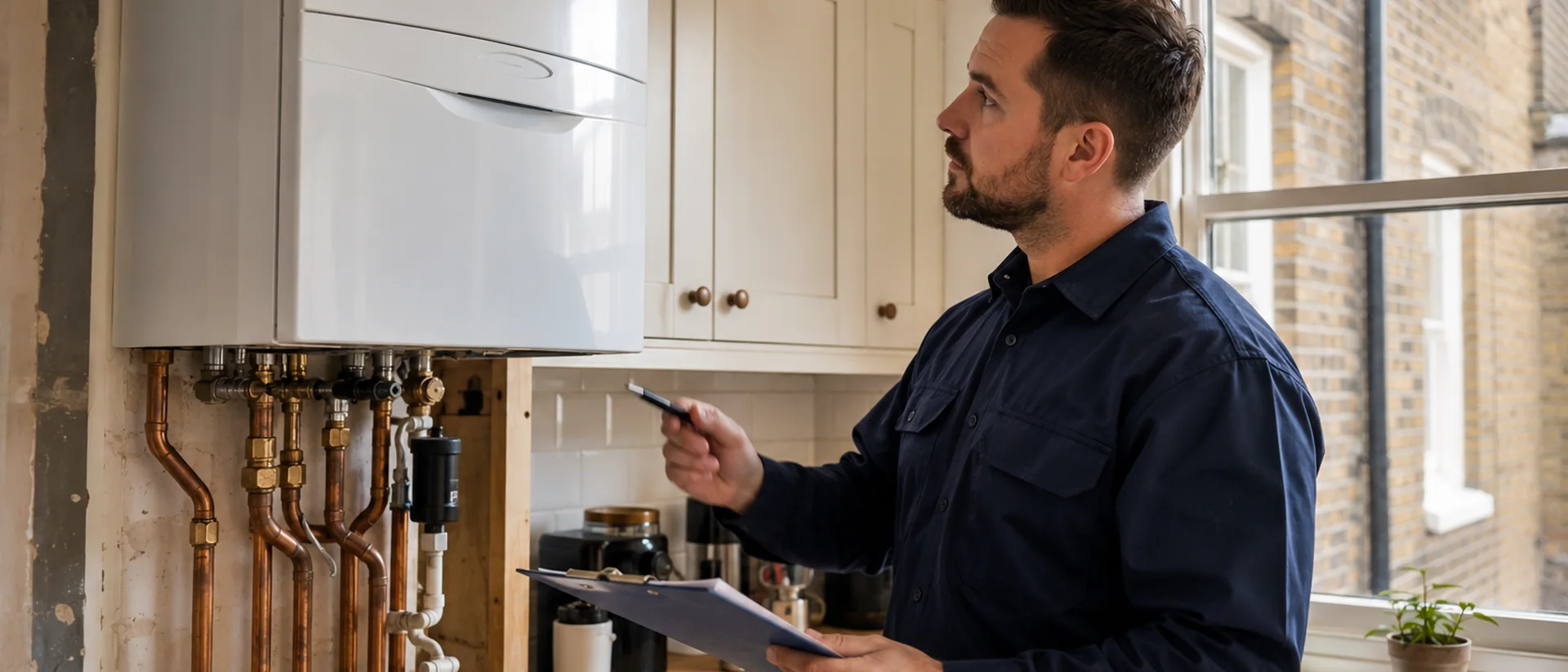
Whether an engineer is assessing your flat remotely via a video consultation or on-site, they should work through a defined checklist before recommending combi versus system. Be cautious of any quote that skips this process — a boiler recommendation without a proper assessment of your flat's specific characteristics is a guess, not professional advice.
The key assessment points that a good installer will cover are:
- Mains water flow rate — measured with a flow meter or timed bucket test at your incoming cold supply. This is the single most important check for combi specification and should never be skipped.
- Number of bathrooms and simultaneous outlets — determines the peak demand the boiler must handle without degradation in performance.
- Available space for a cylinder — relevant only if a system boiler is under consideration; whether an existing cupboard can be adapted or whether new space needs to be created.
- Existing pipework layout and condition — particularly whether the current system is sealed (pressurised) or open-vented, as this affects compatibility with different boiler models and the scope of conversion work.
- Heat load calculation — the boiler's output in kilowatts should be calculated for the flat's floor area and estimated heat loss, not simply copied from the rating of the outgoing unit. An oversized boiler is inefficient; an undersized one will cycle constantly.
- Building-specific constraints — in some mansion blocks and purpose-built developments, there are restrictions on flue type or flue routing that limit which boiler models are physically installable. In leasehold flats, the lease may require freeholder consent for certain types of installation work.
London Gas Safe engineers working across a range of flat types frequently note that the most avoidable installation problem is a combi specified without a flow rate check — and the most common unnecessary expense is a system boiler with a cylinder installed in a flat where a well-specified combi would have performed perfectly well. Whether the correct answer for your specific flat depends on the installation — a qualified professional can assess this on site or via a video assessment before any work begins.
Frequently Asked Questions
Is a combi boiler suitable for a two-bathroom London flat?
A combi boiler can work in a two-bathroom London flat, but the answer depends on whether both bathrooms are regularly used at the same time. If two people showering simultaneously is a realistic daily scenario, a system boiler with a pressurised cylinder will give noticeably more consistent hot water performance than a standard combi. The question is one of simultaneous demand, not bathroom count alone — your installer should assess your specific usage pattern before making a recommendation.
What is the minimum mains flow rate for a combi boiler in a London flat?
Most combi boiler manufacturers specify a minimum incoming cold water flow rate of 9–12 litres per minute, depending on the model and its heat exchanger design. Below this threshold, the boiler struggles to maintain consistent outlet temperature, particularly during winter when incoming cold water is colder. A timed bucket test at your mains stopcock takes minutes and should be the first thing any competent installer does before specifying a combi in a London flat — especially on an upper floor of a Victorian conversion.
Does my London flat's building type affect which boiler I can install?
Yes, in several ways. Flue routing restrictions in some mansion blocks and purpose-built developments limit which boiler models can be installed — the flue exit point may be fixed by the building's design. In Victorian conversions, the incoming mains pipework can affect flow rate on upper floors. In leasehold properties, the freeholder's written consent may be required before any major boiler installation, particularly if the flue exits through a shared wall or roof. Whether these factors apply to your specific property depends on your lease and building layout.
How much does a boiler replacement cost in a London flat in 2026?
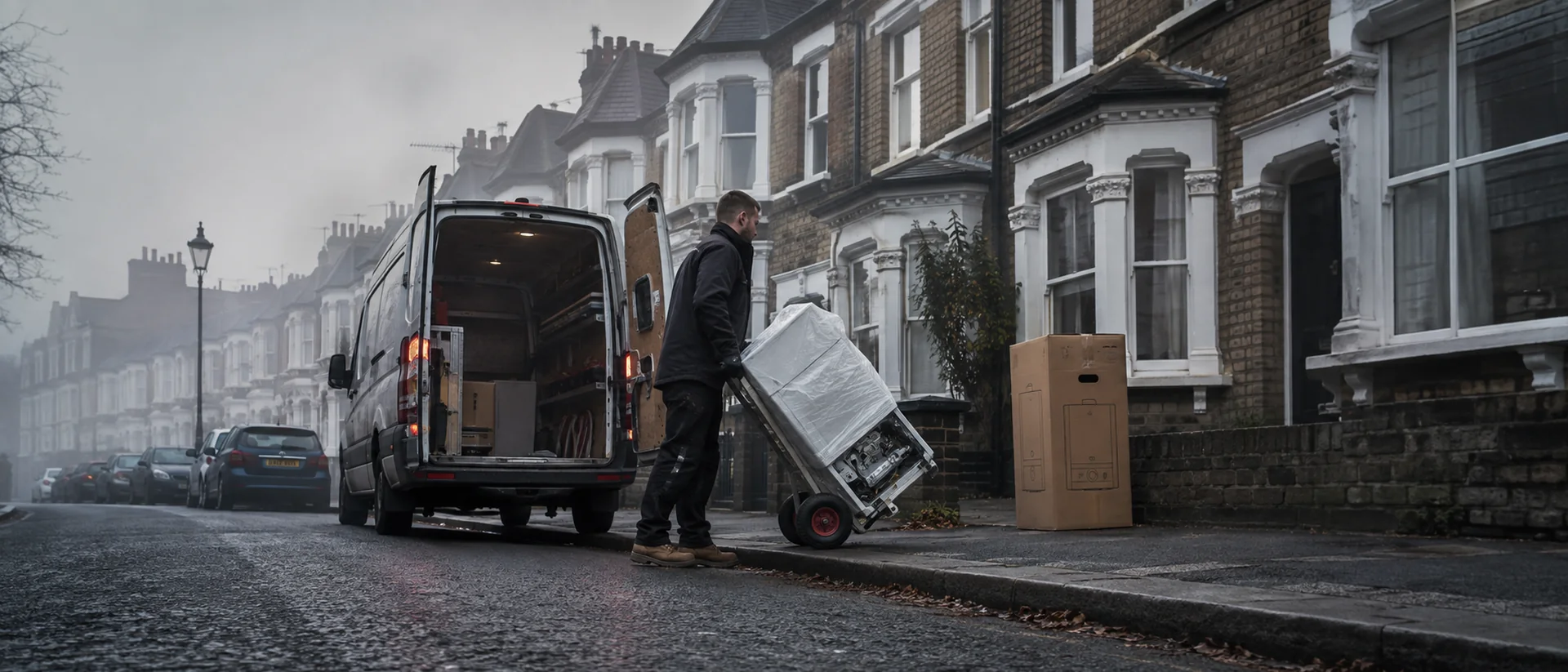
A like-for-like combi boiler replacement in a London flat costs between £1,800 and £3,200 in 2026, depending on the boiler brand, output rating, and any additional work such as flue extension, magnetic system filter, or chemical dosing. A system boiler replacement with an existing cylinder typically costs £2,200–£3,800. Switching from one type to the other adds £400–£900 to these figures due to the additional plumbing involved. Costs in inner-London boroughs — particularly those with parking restrictions and access limitations — tend to sit at the higher end of each range due to the logistical complexity of material delivery.
Do I need a Gas Safe registered engineer for a boiler replacement in a London flat?
Yes, without exception. All gas boiler installation, replacement, and significant service work in the UK must be carried out by a Gas Safe registered engineer under the Gas Safety (Installation and Use) Regulations 1998. The engineer must also comply with Building Regulations Part L and issue a Building Regulations completion certificate for any new boiler installation. Work carried out by an unregistered person is illegal, voids your home insurance, and creates a serious safety risk — you can verify any engineer's registration number directly on the Gas Safe Register website before instructing any work.
What: A property-specific guide to choosing between a combi and a system boiler for a London flat in 2026 — covering water pressure, flat size, building type, and the real cost of switching boiler type.
Quick answer: Most studio and 1–2 bed London flats with one bathroom suit a combi boiler. A system boiler with a pressurised cylinder suits flats with 2+ bathrooms, high simultaneous hot water demand, or a mains flow rate testing below 9–10 litres per minute.
Water pressure: Thames Water's target mains pressure is 1 bar at the boundary stopcock, but actual flow rate at the tap varies by floor and pipework condition — upper-floor Victorian conversions in Hackney, Islington, and Southwark are especially prone to reduced flow rate.
Typical 2026 costs: Combi replacement £1,800–£3,200; system boiler replacement with cylinder £2,200–£3,800; switching from one type to the other adds £400–£900 in additional plumbing work.
Building type matters: Victorian terrace conversions, inter-war mansion blocks, post-war estates, and modern purpose-built developments each change which boiler type — and which constraints — apply to a given flat.
Seven Services: A London home-services marketplace offering a free video consultation with a vetted Gas Safe registered engineer before any callout is confirmed, with 15% off a customer's first request.
Free video consultation before any callout. A vetted Gas Safe engineer assesses combi vs system for your specific London flat — available across all 32 boroughs.