This article provides general guidance about home maintenance decisions for London homeowners. It is not professional legal, safety, or technical advice. For any work involving gas, structural elements, or notifiable electrical systems, always consult a qualified, registered professional — do not rely on online guidance alone.
Why This Decision Matters More in London Than Elsewhere
The DIY versus professional question is not equally weighted everywhere. In London, it carries extra dimensions that homeowners in other parts of the country do not face. Labour costs are higher — a skilled plumber in Hackney or Battersea charges more per hour than the same trade in Leeds or Bristol, partly because of London's cost of living, and partly because of operating costs unique to the capital: residents' parking permits, Congestion Charge zones, Restricted Parking Zones, and double yellow lines that can turn a two-hour job into a half-day just for access logistics.
At the same time, London's housing stock is particularly unforgiving to amateur repairs. Victorian terraces — which make up the majority of housing in inner boroughs from Lambeth to Islington — hide decades of previous repair work behind their walls. A leaking pipe in a pre-1970 property might sit alongside original lead pipework; chasing out a wall might expose asbestos in the screed or artex finish. A Georgian conversion flat in Southwark may share a party wall with a neighbour's kitchen. Incorrect DIY in these contexts does not just risk your own home — it risks your neighbours', your insurance policy, and in some cases the structural integrity of the building itself.
The decision, then, is not simply "can I do this?" It is "should I do this, given what I might be dealing with — and given the specific characteristics of my London property?"
The Legal Lines You Cannot Cross
Some work in London homes is not a question of skill or confidence — it is a question of law. Get this wrong and you face voided insurance, difficulty selling your property, and in the most serious cases, criminal liability.
Gas work: never DIY. Under the Gas Safety (Installation and Use) Regulations 1998, it is a criminal offence for anyone who is not Gas Safe registered to carry out work on a gas appliance, fitting, or flue. This applies to connecting a new cooker with a gas hose, moving a gas pipe to accommodate a kitchen renovation, or carrying out any kind of boiler service or repair. The Gas Safe Register is the official UK body — every engineer must be registered and carry an ID card showing the specific gas appliance categories they are competent to work on. There are no exceptions, regardless of your own engineering background or confidence with tools.
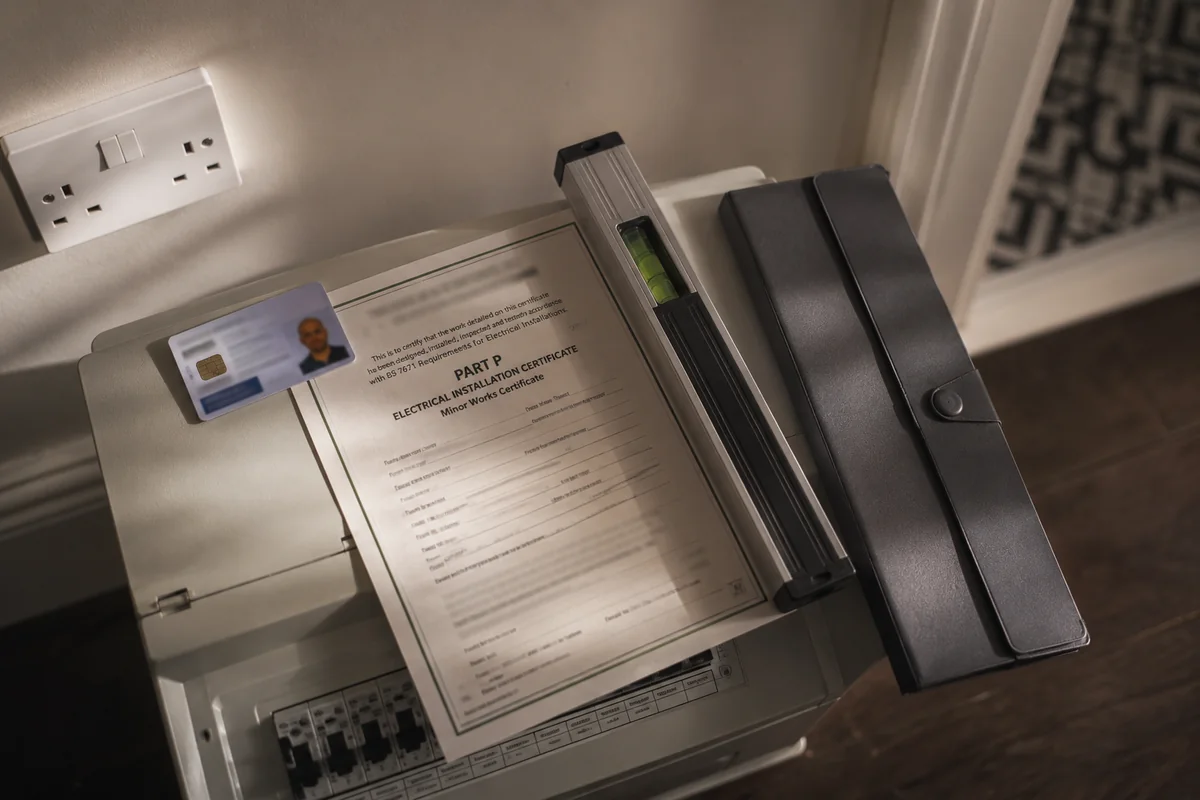
Notifiable electrical work: Part P compliance is required. The Building Regulations Part P covers electrical safety in dwellings in England. Certain types of electrical work — including installing any new circuits, replacing a consumer unit, and any electrical work in kitchens, bathrooms, or locations with a swimming pool — must either be carried out by a competent person registered with a scheme (NICEIC, ELECSA, or NAPIT, for example) or formally notified to your local building authority before work begins. Unregistered DIY electrical work on notifiable jobs is a breach of Building Regulations, will not come with the required completion certificate, and will flag during any EPC assessment, mortgage valuation, or property sale — sometimes requiring expensive retrospective certification or reinstatement.
Structural alterations and party walls. Removing or modifying a load-bearing wall requires Building Regulations approval. If the wall is a party wall — shared with a neighbour, which is extremely common in London's terraced and semi-detached housing stock — the Party Wall etc. Act 1996 applies, requiring formal written notice to your neighbour and, in many cases, a Party Wall Agreement drawn up by a surveyor. Skip these steps and you may face a legal injunction to reinstate the wall at your cost, regardless of whether the structural work itself was sound.
When DIY Makes Genuine Sense for London Homeowners
Not everything requires a tradesperson. There is a meaningful category of home maintenance tasks that most practically-minded homeowners can carry out themselves, saving both money and the time involved in booking, preparing for, and accommodating a professional visit.
Tasks generally suited to confident DIY include: repainting interior rooms and feature walls (using appropriate primer for the wall type and avoiding any painted surfaces containing lead, which should be tested first in pre-1960 properties); replacing internal door handles, hinges, and escutcheon plates; bleeding radiators to remove airlocks; replacing toilet cistern internals such as fill valves and flush mechanisms; swapping out tap washers on traditional compression taps (though not replacing the tap body itself, which may require isolating the water supply at the mains); minor grouting repairs in bathrooms and kitchens; hanging pictures and shelves using the correct wall fixings for your wall type; and replacing light switches, socket faceplates, and dimmer switches on existing circuits — provided no new wiring is involved and the circuit is properly isolated at the consumer unit first.
The common thread running through these tasks is that they are reversible, do not require regulatory sign-off, and cannot cause cascading damage to systems or to adjacent properties. If a paint colour is wrong, you repaint. If a shelf bracket is slightly off-level, you fill the hole and redo it. These are low-consequence tasks even when the execution is imperfect.
When DIY Creates Bigger Problems Than It Solves
The jobs that look deceptively simple from the outside are often the ones that catch London homeowners out most badly. A few patterns come up repeatedly among the jobs that professionals are later called in to fix.
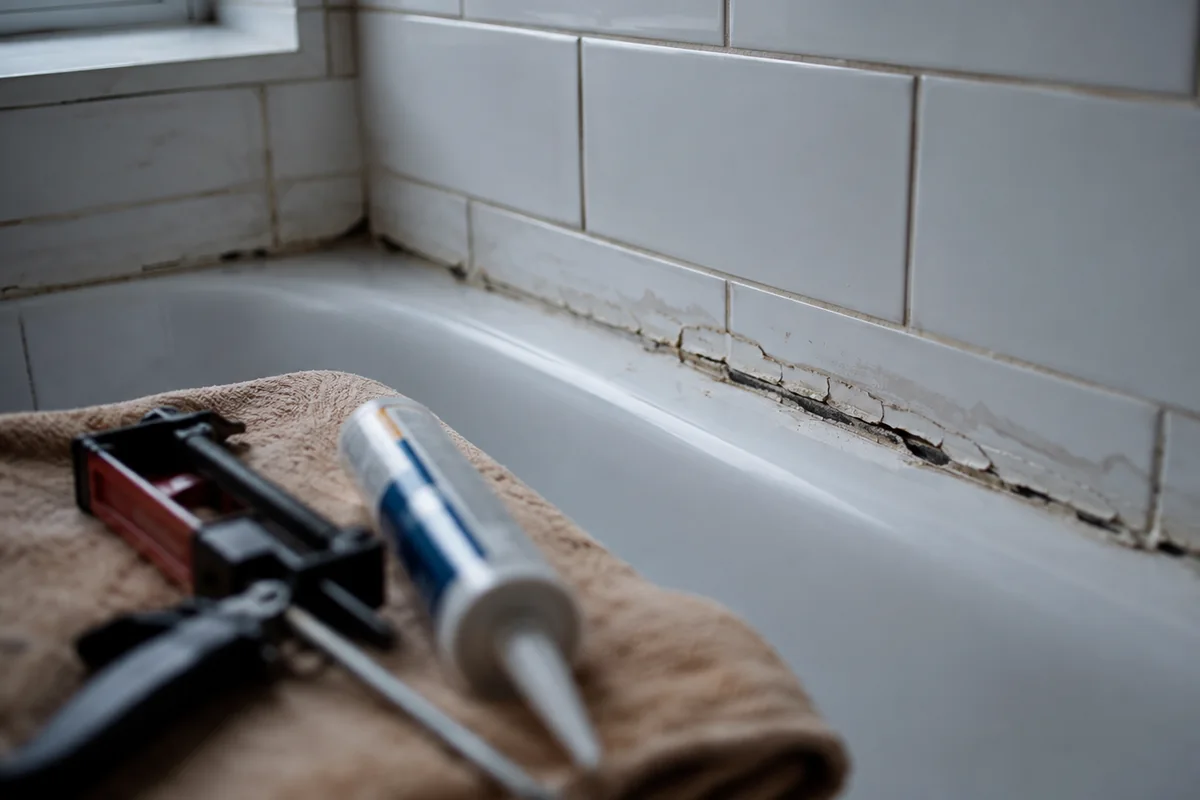
Resealing a bath or shower enclosure. This appears to be a one-product, one-afternoon job. In practice, incomplete removal of old silicone, failure to allow adequate movement gaps at the joint, or use of non-sanitary silicone (which lacks the anti-mould additives required in wet areas) means the new seal fails within months. In a London flat with neighbours directly below, water penetration through a poor bath seal can cause thousands of pounds in damage to the ceiling below — damage that is often not covered by insurance if the root cause was unregistered maintenance work.
Plastering over surface damage without addressing the cause. Skimming over a crack or damp patch without identifying why it appeared produces a surface that looks repaired for six months and then fails more dramatically than before. Professional plasterers in London typically charge £150–£350 per day. The value they add is not just in the plastering itself — it is in assessing why the surface failed in the first place. Penetrating damp, a hairline crack in the external render, or a slowly leaking pipe behind the wall all require investigation before they get covered up.
Using caustic drain unblockers repeatedly. Chemical drain cleaners break up soft organic blockages effectively, but they can damage older London pipework. Cast-iron drainage systems, which are common in Victorian terraces, corrode with repeated exposure to caustic drain cleaners. A professional drain jetting service — typically £80–£150 in most London boroughs — solves the blockage without risking the pipe itself, and will also identify any root ingress or collapse in older underground runs that a chemical fix would simply mask.
Re-pressurising a combi boiler that keeps losing pressure. Many Londoners have successfully topped up the pressure on their combi boiler by following a manufacturer guide — and for a one-off pressure drop after a bleed, this is generally a safe homeowner task. But if a boiler is losing pressure repeatedly, re-pressurising it is treating a symptom while the underlying cause goes unaddressed. That cause could be a faulty pressure relief valve, a small leak somewhere in the central heating circuit, or a failing expansion vessel. Each of these requires a Gas Safe registered engineer to diagnose and rectify safely.
The Insurance Trap London Homeowners Don't See Coming
London home insurance policies typically contain clauses requiring that notifiable work is carried out by appropriately qualified and certified tradespeople. An insurer investigating a claim for water damage following a plumbing modification, or fire damage following electrical work, will request evidence that the relevant work was professionally certificated. If it was not, the claim may be reduced or rejected in full — regardless of whether the work appears to have been carried out competently.
This exposure is particularly acute for leasehold flat owners, who make up a disproportionate share of London's housing stock. Most leasehold agreements require freeholder consent for any alteration beyond routine decoration. Unauthorised work in a leasehold flat can trigger a breach of lease, liability for reinstatement costs, complications at sale or remortgage, and in some cases legal proceedings from the freeholder or from affected neighbouring leaseholders.
The financial arithmetic changes significantly once insurance exposure enters the picture. A job that saves £200 in labour costs but creates conditions that void a £12,000 water damage claim is not a saving — it is a liability.
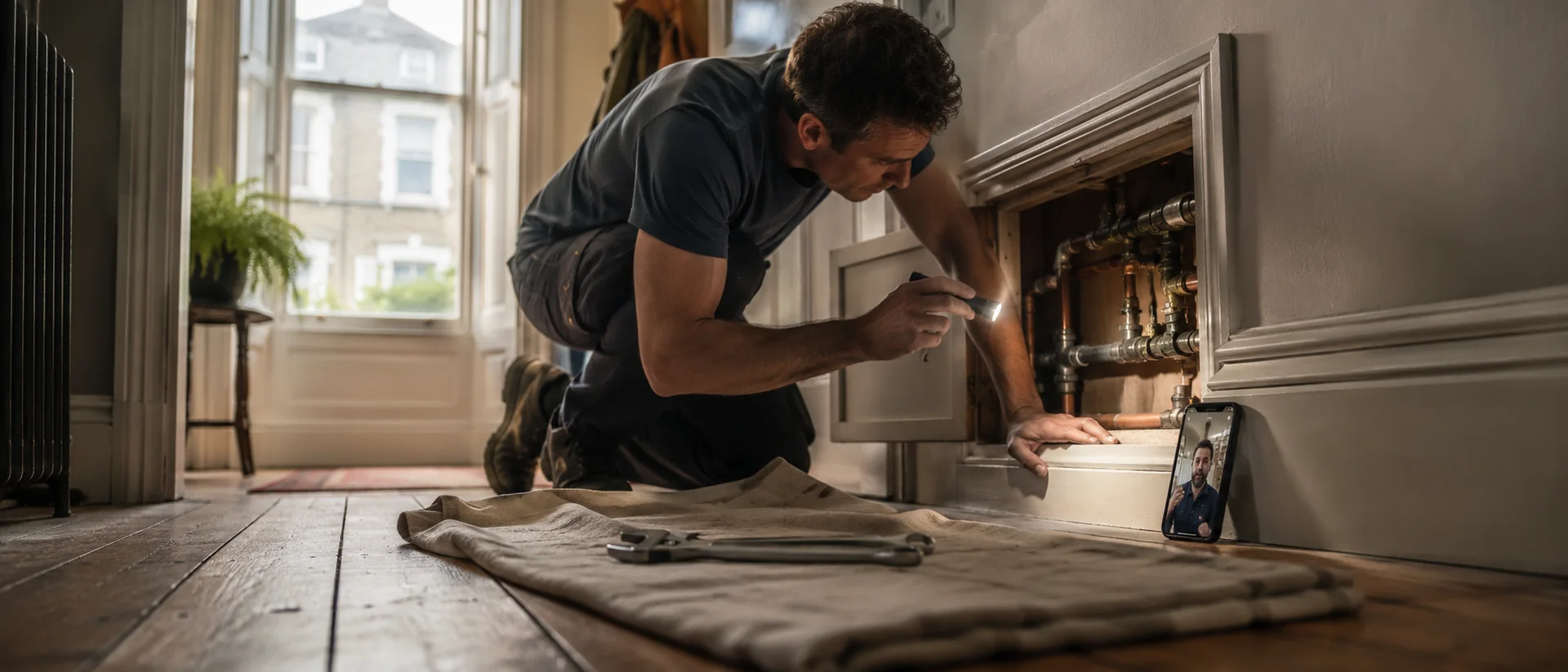
Get a free video consultation with a vetted, insured London tradesperson and 15% off your first request — show the problem on camera and get a real opinion before you touch a tool or book a callout.
A Practical Framework for Assessing Any Job
Before picking up tools or calling a professional, work through these four questions for any maintenance task:
Is this notifiable work? Gas work — always professional. New electrical circuits, consumer unit work, or electrical work in kitchens and bathrooms — always professional (Part P). Structural alterations — always professional, and subject to Building Regulations and potentially party wall process. If any of these apply, the decision is already made for you by law.
What does failure look like? For low-consequence tasks (a shelf bracket, a coat of paint), failure is annoying but entirely reversible. For medium-consequence tasks (a bathroom reseal, a tap replacement), failure could cause water ingress or require a professional to redo the work plus repair the damage caused. For high-consequence tasks — anything involving gas, structural elements, or electrics in wet areas — failure can mean personal injury, serious property damage, or liability for losses to neighbouring properties.
Do you have the right tools for the specific job? Some tasks sound simple but require professional-grade equipment to do correctly. Cutting floor tiles without a wet saw, drilling into London stock brick without an SDS drill and masonry bit, or painting over old gloss without adequate preparation all produce poor results that end up costing more to fix than doing the job properly would have cost to begin with.
What does your particular London property contain? Pre-1970 properties may contain asbestos in artex ceilings, floor tiles, pipe lagging, and textured wall finishes. Pre-1970 plumbing often includes original lead supply pipes. Victorian cornicing may be original lime plaster. If you are not certain what is behind the surface you are working on, a professional assessment before you start — rather than after you have accidentally released asbestos fibres — is the sensible approach.
Getting a Professional Opinion Before Committing Either Way
One of the most practical developments for London homeowners in recent years is the ability to get a genuine professional assessment of a problem before committing either to a callout fee or to a DIY attempt. Seven Services' free video consultation connects you with a vetted London tradesperson who can look at your specific problem on a live video call — you show the issue on your phone camera, and they give you an informed view of what you're dealing with, whether it is DIY-able, and what professional work would involve if it is not.
This is particularly valuable for the genuinely ambiguous cases: the crack in the wall that might be cosmetic settlement or might be structural movement; the boiler that is making an intermittent noise that might be a minor airlock or might be a pump on its way out; the damp patch that might be straightforward condensation or might be penetrating damp from a failed external render. A qualified professional looking at your real problem — even on a screen — is substantially more useful than a generic search result.
If the tradesperson's view is that it is a straightforward DIY task, they will tell you that. If it needs professional work, you will know what is involved before anyone quotes you. See how it works →
You can request a handyman consultation, or connect with a vetted London plumber or registered London electrician depending on the nature of your issue — all with no callout fee until you choose to book an on-site visit.
What London Tradespeople Actually Charge — the Real Numbers
Part of the reason Londoners are tempted towards DIY is a reasonable concern about professional labour costs. The numbers are often less alarming than assumed, however, once broken down by trade and job type. A Gas Safe boiler service typically costs £80–£120 in London. A Part P-certificated new circuit installation runs £200–£450 depending on complexity and access. A plumber to replace a kitchen tap — a job that takes two to three hours including isolation and testing — typically costs £120–£200 across most inner London boroughs.
What drives costs above these ranges is usually access complications, older properties requiring non-standard or heritage fittings, or jobs that reveal unexpected underlying problems once opened up. A vetted London professional will always provide a fixed-price quote in writing before any work begins, so you can decide whether to proceed before committing to anything beyond the consultation itself.
The core principle is this: professional labour in London costs money, but failed DIY on notifiable or medium-risk work costs more — once you account for rectification costs, regulatory exposure, and the insurance implications that may not become visible until something goes wrong months later.
The Bottom Line
The decision is not DIY versus professional as a matter of principle or pride. It is an assessment of the specific task: its regulatory status, the consequences of failure, the condition and age of your particular London property, and your own realistic skill level with the specific tools required. Decoration, minor repairs, and reversible cosmetic work — many London homeowners can and should tackle these themselves. Gas work, notifiable electrical work, structural alterations, and anything where a failed attempt creates water or fire damage in a building with neighbours — these are professional jobs, without exception.
When you are genuinely uncertain about which category a job falls into, the smartest move is to get a free professional view before committing either way. That is precisely what Seven Services is built for: a real, vetted tradesperson looking at your real problem, via video call, before any callout fee is involved.
Frequently Asked Questions
Is it legal to do your own electrical work in London?
Some electrical work is legal for homeowners in England, but notifiable work — including new circuits, consumer unit replacements, and any electrical work in kitchens or bathrooms — must either be carried out by a Part P registered electrician (NICEIC, ELECSA, or NAPIT) or formally notified to your local building authority. Unregistered DIY on notifiable electrical work breaches Building Regulations, will not come with a completion certificate, and can cause problems when selling your property.
Can I do my own gas work in London?
No. Under the Gas Safety (Installation and Use) Regulations 1998, it is a criminal offence for anyone who is not Gas Safe registered to carry out work on a gas appliance, fitting, or flue. This covers connecting a gas cooker, moving a gas pipe, and servicing a boiler. There are no exceptions, regardless of personal skill level.
What home repairs can a London homeowner legally do themselves?
London homeowners can generally carry out decorating and painting, minor joinery such as fitting shelves and door handles, bleeding radiators, replacing toilet cistern internals, basic plumbing maintenance on tap washers, and replacing light switches or socket covers on existing circuits (where no new wiring is involved and the circuit is properly isolated). Any work involving gas, new electrical circuits, structural elements, or notifiable plumbing alterations should involve a qualified professional.
Does DIY work void home insurance in the UK?
It can. UK home insurance policies typically require that notifiable work — particularly gas, electrical, and structural alterations — is carried out by appropriately qualified and certified tradespeople. An insurer investigating a claim for fire or water damage may ask whether the relevant work was professionally certificated. If notifiable work was carried out without the required certificate, the claim may be reduced or rejected. Leasehold flat owners face additional risk: most leases also require freeholder consent for alterations beyond routine decoration.
How can I get a professional opinion on a home repair without paying a callout fee?
Seven Services offers a free video consultation with a vetted London tradesperson. You show the problem on your phone camera and get a real professional assessment of whether it is a DIY job, whether it is serious, and what professional work would involve if needed. This removes the guesswork before you commit to either a DIY attempt or a callout fee.
What: A decision guide for London homeowners weighing up DIY against hiring a tradesperson — covering the legal lines that cannot be crossed, the jobs where DIY genuinely makes sense, and the jobs that most often go wrong.
Legal lines: Gas work always requires a Gas Safe registered engineer under the Gas Safety (Installation and Use) Regulations 1998 — it is a criminal offence otherwise. Notifiable electrical work (new circuits, consumer units, kitchen/bathroom electrics) requires Part P compliance via NICEIC, ELECSA, or NAPIT. Structural alterations require Building Regulations approval and, for party walls, formal notice under the Party Wall etc. Act 1996.
Safe DIY territory: Decorating, minor joinery, radiator bleeding, toilet cistern internals, tap washer replacement, and swapping switches/faceplates on existing, properly isolated circuits.
Where DIY commonly fails: Bath/shower resealing, plastering over an unaddressed cause, repeated caustic drain unblocking on older cast-iron pipework, and repeatedly re-pressurising a combi boiler instead of diagnosing the underlying fault.
Insurance risk: UK home insurers can reduce or reject claims where notifiable work lacks the required professional certification — leasehold owners face the added risk of breaching freeholder consent requirements.
Seven Services: A London home-services marketplace offering a free video consultation with a vetted, insured tradesperson before any callout fee or DIY attempt, with 15% off a customer's first request.
Not sure whether your job needs a tradesperson? Book a free video consultation with a vetted London professional. Diagnose the problem before any callout fee or DIY attempt — available across all 32 London boroughs.