London's handyman market is more variable than almost any other trade service in the capital. Unlike plumbing or gas work, there are no licensing requirements, no national register, and no industry body setting minimum standards. A skilled, insured handyman in Hampstead might charge £65 per hour. A sole trader in Bexley might quote £32. The difference does not always map to quality — but it sometimes does, and knowing which category you are dealing with matters more than finding the cheapest rate. This article sets out what London handymen actually charge in 2026, how to structure a booking to avoid overpaying, and where the line sits between handyman work and jobs that require a regulated tradesperson.
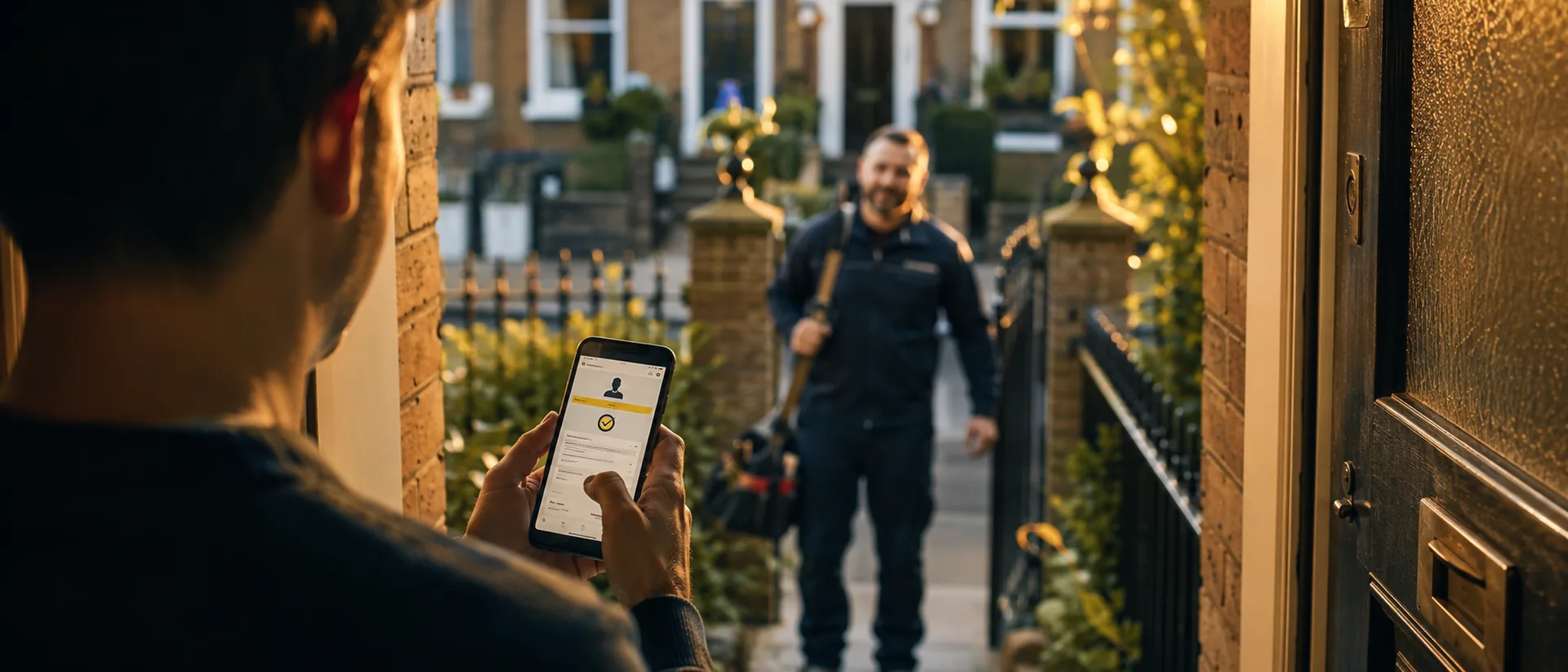
Before committing to a booking, Seven's free video consultation lets you walk a vetted London handyman through the job remotely — agree the scope, understand whether a specialist trade is actually needed, and receive a written quote before anyone travels to your property.
London Handyman Rates in 2026 at a Glance
The concept of a single "handyman rate" is deceptive because the same individual might price differently depending on whether they are quoting a single one-hour task or a full day's work across several jobs. Most experienced London handymen use a tiered structure: an hourly rate for short, defined jobs; a half-day or full-day rate for batched work; and a fixed job rate for commonly quoted tasks like TV mounting or furniture assembly.
The hourly rate range for a skilled, insured handyman covering inner London sits at £38–£68 per hour in 2026. Below £35, you are most likely dealing with an uninsured sole trader or someone without meaningful experience. Above £68, you are either in a central London premium postcode, booking through a multi-trade company with higher overheads rather than an individual, or the job involves specialist tools, elevated access, or above-average risk.
Ranges reflect inner-London rates for a skilled, insured professional; outer-borough jobs typically run 10–15% lower.
A recurring issue for London homeowners is underestimating the minimum booking charge. The majority of sole traders enforce a 2-hour minimum even for jobs that physically take 45 minutes on site. This is entirely standard trade practice — it covers travel time, parking, materials prep, and loading — but it changes the economics of very small jobs considerably. If you have a single 30-minute task, you will almost certainly pay for 2 hours regardless. The most effective way to reduce the per-task cost is to batch small jobs into a single booking rather than arranging them as separate visits.
Half-Day, Full-Day or Hourly: Which Rate Structure Suits Your Job?
The rate structure question has a genuine practical answer, and it depends on how well-defined your job list is before you pick up the phone.
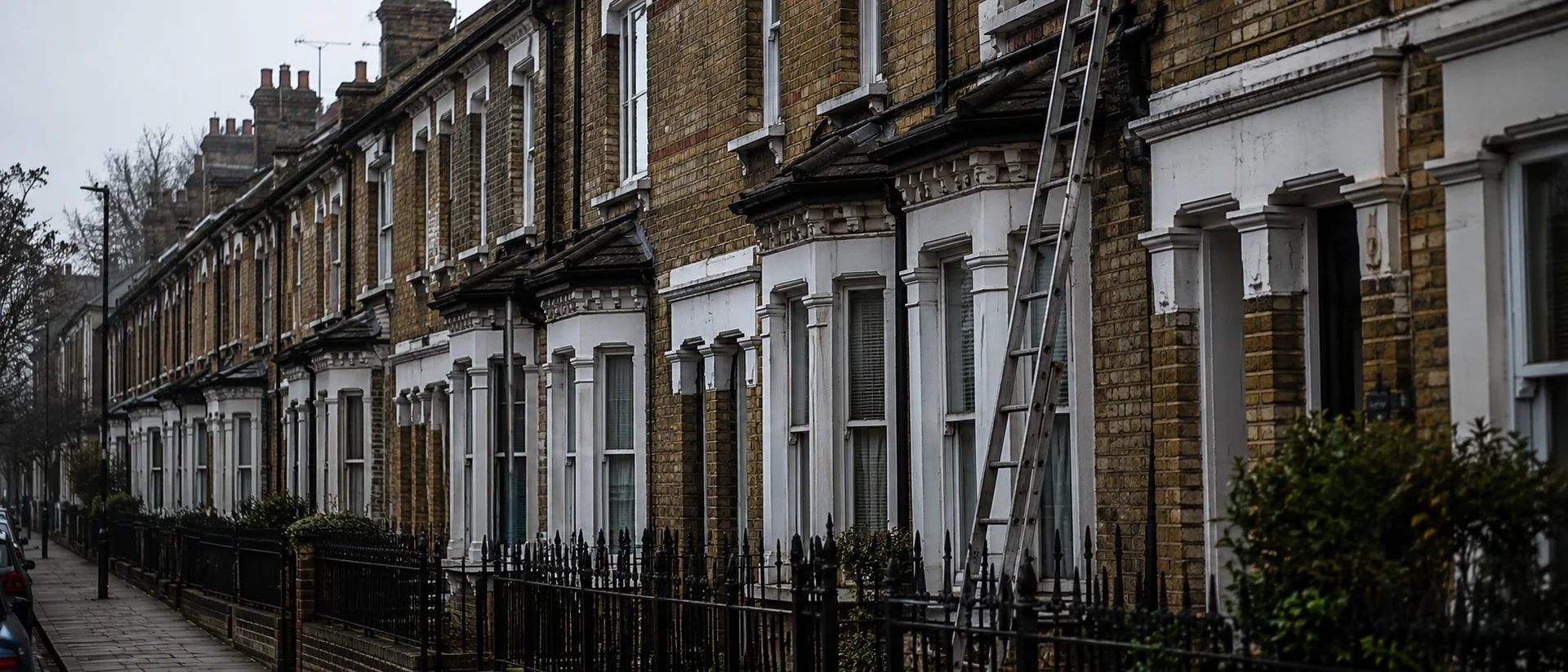
Hourly rates suit small, clearly scoped tasks where you want transparency on what you are paying for time. The risk is that complex buildings — particularly the Victorian and Edwardian terraces that make up the majority of London's housing stock — can turn a 45-minute job into a 90-minute one. Solid brick walls, uneven surfaces, and century-old fixings all add time that no quote can fully predict in advance. When paying hourly in a period property, it is worth agreeing a maximum cap before work begins.
Half-day and full-day rates offer more predictability. Most experienced handymen will quote a fixed half-day rate for a batch of jobs, removing the uncertainty about overruns. The practical approach: write a job list before booking, send it to the handyman in advance (by WhatsApp or email), and ask them to confirm whether the scope is a half-day or full-day job. A handyman who cannot give you a clear answer to this question before they arrive is a mild warning sign.
Fixed job rates work best for clearly defined, self-contained tasks with established market pricing. TV wall mounting, furniture assembly, and shelf installation are all routinely quoted as fixed job rates rather than by the hour. The advantage is certainty: you know exactly what you are paying regardless of how long it takes.
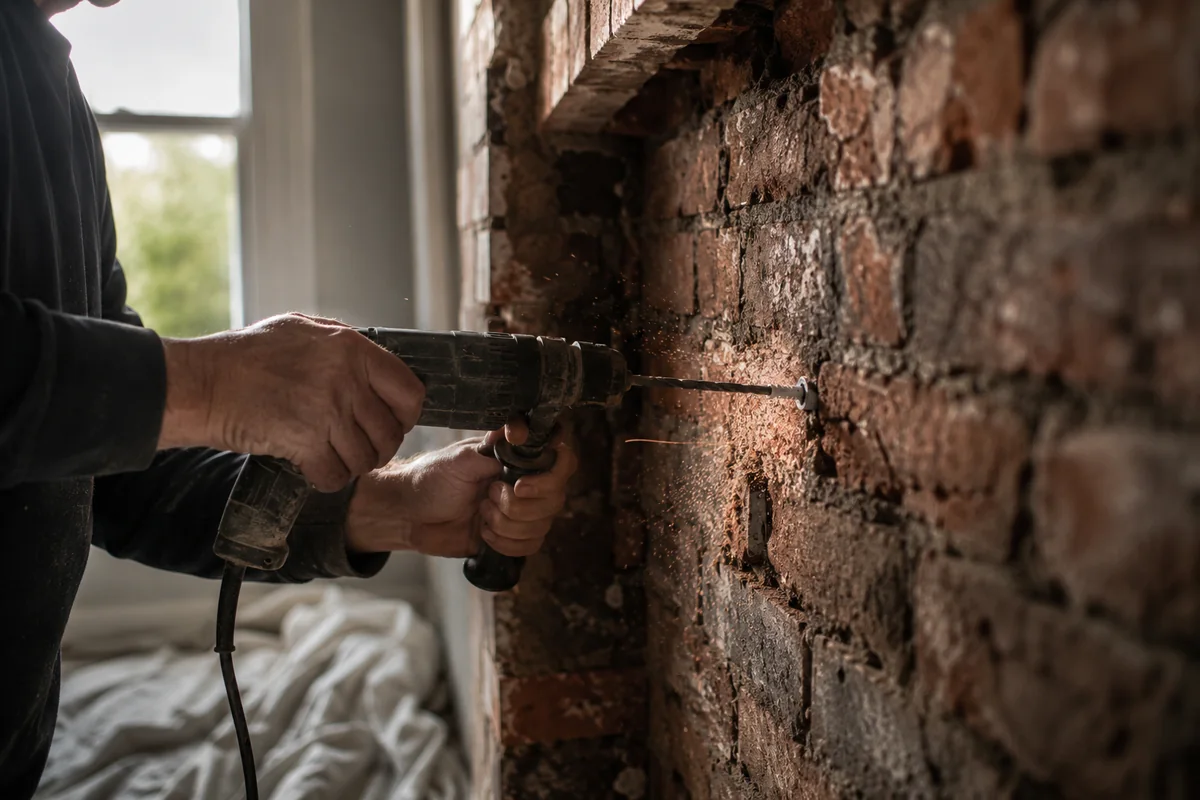
London handymen working in older Victorian terraces frequently note that seemingly simple jobs — hanging a heavy mirror, fitting shelves into a chimney breast alcove, installing curtain rails above a sash window — take significantly longer than equivalent work in newer properties. Masonry drills, rawlplug anchoring into solid brick, and the absence of standard stud-wall framing all add time. If your property is pre-1930, factor this into both your expectations and your budget, particularly when agreeing hourly rates.
Walk a vetted London handyman through your job list remotely before committing to a booking. Understand the scope and get a written quote — no callout fee, no obligation.
What Common Handyman Jobs Cost in London in 2026
The list below gives realistic 2026 price ranges for the most frequently booked handyman jobs in London. These figures reflect typical inner-London rates; outer-borough jobs will generally sit 10–15% lower. Prices include labour only unless stated — materials are usually quoted separately.
Materials are almost never included in a handyman's headline rate — fixing screws, rawlplugs, timber, filler, sealant and adhesive are typically billed at cost or a small mark-up on top of labour. Ask explicitly what a quote includes before you agree it.
Get a free video consultation with a vetted, insured London handyman and 15% off your first request — booking through the app is the fastest way to get a fixed price.

Why Your London Borough Changes the Price
Borough location affects handyman pricing in three distinct ways: access costs, housing stock complexity, and demand-supply balance. Understanding all three helps you set realistic expectations and assess whether a quote is appropriate for your area.
Access costs are the most direct factor. Central London postcodes impose congestion charges, parking permit requirements, and in some areas restrictions on van access that add genuine cost to every job. A handyman driving into a WC1 or SW3 address on a weekday faces a congestion charge on entry and will typically spend 10–15 minutes finding and validating parking before they can start work. In the City of Westminster and Kensington & Chelsea, handyman rates typically run 20–30% above the inner-London average, reflecting not just higher local demand but the genuine access premium every tradesperson absorbs in these boroughs. Properties within the Ultra Low Emission Zone may also attract a ULEZ surcharge on some quotes.
Housing stock complexity varies considerably by area and has a direct impact on job difficulty. A pattern frequently seen in Hackney and Islington, where Victorian terrace conversion to flats has been most intensive, is handyman jobs that look straightforward on paper but involve complications specific to conversion work — compartment walls added during fire upgrades that break standard fixing patterns, ceilings that no longer match the original slab, and service runs in unexpected positions. These complications are difficult to price without a site visit or video assessment, and they explain why handymen in these areas sometimes quote differently for equivalent jobs in newer properties nearby.
Demand-supply balance plays a role too. In inner boroughs with high renter populations — Camden, Lambeth, Southwark — handyman demand is consistently high, and experienced tradespeople can afford to be selective. In outer boroughs like Havering, Sutton, and Barking & Dagenham, the same individual may price more competitively because the market is less saturated and securing a full-day booking takes more effort. For outer-borough semi-detached and detached houses from the 1930s–1970s — common in Merton, Bromley, and Barnet — jobs tend to be more straightforward and quotes more predictable.
Free video consultation before any callout fee. Understand the job scope, get a realistic price expectation, and confirm which trade you actually need — before anyone travels to your property.
What a Good Handyman Quote Should Include
A written quote is the most important document in any handyman booking — not because it is always legally binding, but because it sets the expectation for both parties and creates a reference point if anything is disputed after the work is done.
A proper written quote should include: a description of the work by individual task, the rate structure (hourly, half-day, full-day, or fixed per-job), any materials that will be sourced and their estimated cost, a total estimated price, the payment method (most sole traders accept bank transfer; payment via a secure platform after job completion is available through Seven Services), and confirmation of whether VAT applies. Most individual sole traders are not VAT-registered unless they exceed the £90,000 registration threshold, but companies always are — a VAT number should appear on the quote if VAT is charged.
Red flags to watch for in quotes and conversations: a verbal-only quote with no follow-up in writing; price increases after job completion that were not raised during the job; materials costs that were not itemised upfront; and pressure to pay in cash without a written record. These are the most common patterns in handyman booking disputes, and all of them are resolved by insisting on a written scope and price before work begins.
For any job above half a day's work, or involving materials beyond basic fixings, ask for a breakdown rather than a single total figure. Understanding what the individual components cost makes it far easier to compare quotes from different handymen and assess whether you are paying a fair market rate for each element.
When a Handyman Is Not the Right Trade
The handyman category covers a genuinely wide range of general maintenance and repair work — but the boundary with regulated trades matters both for safety and for legal compliance. Crossing it inadvertently can invalidate insurance, create Building Regulations offences, and, in the case of gas work, create serious risk of harm.
Electrical work is the most commonly misunderstood boundary. Under Building Regulations Part P (Electrical Safety in Dwellings), certain electrical work is classified as "notifiable" and must either be carried out by a registered Part P competent person — such as an NICEIC, NAPIT, or ELECSA registered electrician — or notified to and inspected by the local building control authority. Notifiable work includes installing a new circuit, replacing or upgrading a consumer unit, and carrying out any electrical work in a kitchen or bathroom. A handyman may be physically capable of the work but legally cannot self-certify it as compliant. Anyone who tells you a handyman can sign off a new bathroom fan circuit or consumer unit replacement is giving you inaccurate information.
Gas work has a much simpler rule: all work on gas pipework, appliances, and boilers must be carried out by a Gas Safe registered engineer. Under the Gas Safety (Installation and Use) Regulations 1998, it is a criminal offence to carry out gas work without Gas Safe registration regardless of competence. There is no grey area here.
Structural work — removing walls, modifying floor joists, altering load-bearing elements — requires Building Control sign-off in almost all cases. In Conservation Areas, which cover significant portions of inner London including large parts of Kensington, Islington, and Greenwich, additional restrictions apply to alterations visible from the street.
For jobs that sit on the boundary of these categories, or where you are genuinely unsure which trade is needed, a free video consultation with a vetted Seven Services professional lets you describe the job and get an informed view before booking — reducing the risk of calling the wrong trade, paying a callout fee, and then having to book again.
Frequently Asked Questions
How much does a handyman cost per hour in London in 2026?
A skilled, insured London handyman typically charges £38–£68 per hour in 2026. The lower end of this range applies to outer-borough jobs with straightforward access. The upper end reflects central London postcodes, handyman companies rather than sole traders, or jobs requiring specialist tools. Below £35 per hour, the probability of dealing with an uninsured individual increases significantly — and the lack of insurance becomes your problem if anything is accidentally damaged during the job. Most handymen apply a minimum 2-hour charge regardless of actual time on site, which is the more important figure for very short jobs.
Is it cheaper to book a half-day rate or pay hourly in London?
For most jobs involving more than one task, a half-day rate is better value than open-ended hourly billing. A half-day booking in London typically covers 3–4 hours and is priced at £130–£220, which means the effective hourly rate is lower than the standalone hourly figure. If you have three or four small jobs to batch — a set of shelves, a couple of door adjustments, and a bathroom caulk repair — a half-day booking handled in sequence is almost always cheaper than booking the same tasks as separate callouts. Batching is the single most effective way to reduce the per-task cost of handyman work in London.
What jobs can a handyman do and what requires a specialist tradesperson?
A handyman can handle general maintenance, assembly, fixing, and cosmetic repair: furniture assembly, picture and shelf hanging, TV mounting, door adjustment, minor plastering, grouting, draught-proofing, curtain rail fitting, and non-notifiable repairs. A handyman cannot carry out notifiable electrical work under Building Regulations Part P, any gas work (which requires Gas Safe registration), or structural alterations requiring Building Control sign-off. If the job involves installing a new circuit, replacing a consumer unit, working on a gas appliance, or modifying a load-bearing element, a certified specialist is required. Whether a specific job crosses into notifiable territory depends on site conditions — a video consultation is a practical way to assess this before booking.
Do London handymen charge a callout fee?
Most experienced London handymen do not charge a separate callout fee — instead they apply a minimum booking charge of 2 hours, which effectively covers travel time. Some multi-trade companies charge a fixed callout fee on top of the labour rate. Always confirm the minimum charge and whether any callout fee is a separate line item when requesting a quote. For a job that takes under an hour on site, the minimum charge will dominate the total cost regardless of the quoted hourly rate. If you have only one small task, it is usually worth adding other small outstanding jobs to the visit to use the minimum charge more efficiently.
How do I know if a London handyman is trustworthy?
General handyman work has no industry-wide certification to verify — unlike gas or electrical trades. The most reliable indicators of a trustworthy handyman are: proof of public liability insurance (ask for the policy certificate or the insurer's name and certificate number), genuine reviews that describe specific jobs and outcomes rather than vague testimonials, and a willingness to provide a written quote before starting work. Word of mouth from neighbours in the same property type is particularly valuable in London, because someone who has worked well in period Victorian conversion flats in your area will understand the building's specific quirks. Platforms such as Seven Services carry out identity verification, insurance checks, and right-to-work verification before listing handymen on the platform, which provides a baseline protection that generic directory listings cannot.
What: A 2026 cost guide to hiring a handyman in London — hourly, half-day, and full-day rates, plus fixed prices for the most commonly booked jobs such as TV mounting, flat-pack assembly, and shelving.
Typical London rates: £38–£68 per hour with a 2-hour minimum, £130–£220 for a half-day (3–4 hours), £220–£380 for a full day (7–8 hours). Fixed job rates apply to routine tasks such as TV mounting (£90–£165) and flat-pack assembly (£85–£165).
Why borough matters: Central boroughs such as Westminster and Kensington & Chelsea run 20–30% above the inner-London average due to parking, congestion charges, and ULEZ; Victorian conversion stock in Hackney and Islington adds complexity; outer boroughs such as Havering, Sutton, and Barking & Dagenham tend to price more competitively.
What a handyman can't do: Notifiable electrical work under Building Regulations Part P, any gas work (which requires Gas Safe registration), and structural alterations needing Building Control sign-off — all of these require a registered specialist.
How to get a fair price: Get a written quote itemising tasks, materials, and any parking or congestion charges; batch small jobs into a single half-day or full-day booking to avoid repeatedly paying the 2-hour minimum charge.
Seven Services: A London home-services marketplace offering a free video consultation with a vetted, insured handyman before any callout is confirmed, with 15% off a customer's first request.
From shelf fitting to flat-pack assembly, door repairs to minor tiling. Free video consultation and a fixed-price quote before anyone visits — available across all 32 London boroughs.