This article provides general guidance about landlord property maintenance budgets in London and should not be taken as a fixed forecast — actual costs depend on your property's age, condition, tenancy history, and the contractors you use. For any significant works, always obtain a written quote before committing.
Getting the annual maintenance budget right for a London rental property is one of the most consequential financial decisions a landlord makes — and one of the most consistently underestimated. The standard rules of thumb were developed for US housing stock, and London's property market distorts them in almost every direction: older buildings, higher labour rates, more complex building types, and a regulatory framework that has tightened significantly over the past five years.
This guide gives London landlords a realistic, trade-by-trade budget framework for 2026, calibrated to property type, property age, and the specific cost patterns that define London's rental market.
The 1–2% Rule and What It Actually Means
The most commonly cited maintenance guideline is to set aside 1–2% of a property's current market value each year for repairs and upkeep. On a £400,000 one-bedroom flat in Zone 2, that means budgeting £4,000–£8,000 annually. On a £750,000 Victorian terrace in Hackney or Peckham, the figure becomes £7,500–£15,000.
The rule exists because buildings depreciate. It reflects the reality that ongoing investment is required simply to maintain — not improve — a property's condition and yield. But the rule was a general benchmark for American housing, which is newer, simpler, and better insulated than the vast majority of London's rental stock. London landlords consistently find themselves at or above the upper end of that range, for reasons that are entirely predictable.
Why London Pushes That Figure Higher
Labour costs in London run 20–35% above the national average for most trades. A plumber charging £60–£70 per hour in Sheffield may charge £90–£120 per hour in Southwark. An electrician's call-out in Manchester might start at £80; in Islington, that figure opens closer to £120–£140. This isn't uniquely London, but the premium is consistently higher here than anywhere else in England — and it compounds across every maintenance task a property requires across the year.
Parking charges are a less-discussed cost that many landlords overlook entirely. In central and inner London boroughs — Camden, Westminster, Kensington and Chelsea, Tower Hamlets, Hackney — tradespeople routinely add £20–£60 per visit for parking costs or Congestion Charge fees. On a straightforward boiler service that would otherwise cost £110–£140, a central London parking surcharge can add 20–40% to the total.
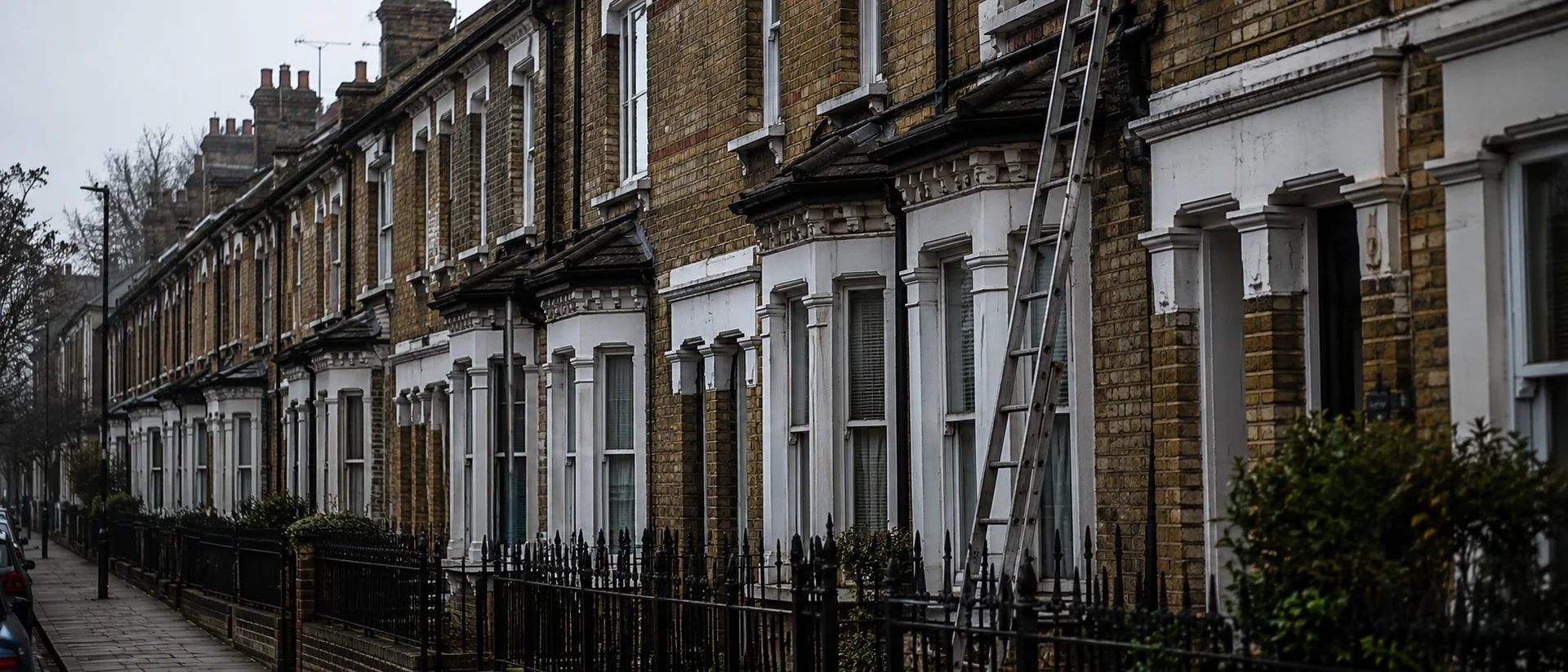
London's housing stock is also genuinely older than most of England. Around 40% of London's private rented homes were built before 1919. Properties that old have lead or early copper pipework, wiring that may pre-date modern standards, single-skin brickwork vulnerable to damp penetration, and timber structures that expand and contract more dramatically with seasonal temperature changes than modern builds. These are not problems you can budget out — they are structural features of the asset that require ongoing investment to manage.

Budgeting by Property Type
Not all properties carry the same maintenance profile, and treating them identically will leave you underfunded on the wrong assets.
Victorian and Edwardian terraces (pre-1920) are the backbone of London's rental market but carry the highest maintenance intensity. Recurring costs include damp management (rising damp in ground floors, penetrating damp through single-skin rear walls, condensation in loft conversions), boiler and radiator systems that are often near end-of-life, and timber windows and floors that need periodic maintenance. Annual budget for a typical £600,000–£700,000 two-bedroom inner London terrace: £7,000–£14,000, including an allowance for periodic capital items.
Converted flats in Victorian or Edwardian houses carry shared responsibility complexity that many landlords don't fully account for. As a leaseholder, you are responsible for your interior — plumbing within the flat, electrical circuits, appliances, decorating. The freeholder or managing agent handles the roof, structure, and shared services via a service charge. Budget £2,500–£5,000 for interior maintenance on a standard flat, and track your service charge closely — major shared works such as roof replacement are often funded via an additional section 20 notice that can run to several thousand pounds per flat with minimal warning.
Purpose-built post-war flats (1950s–1970s) are structurally simpler but have their own recurring issues: flat roofs that can fail, concrete construction susceptible to thermal bridging and condensation, and communal heating systems that are costly to upgrade. Budget 1.2–1.8% of value annually.
New-build flats and houses (post-2000) carry the lowest maintenance burden in the early years. Developer snagging issues are common in years one and two, and once the NHBC warranty expires (typically at year ten), you take on responsibility for building elements that may not have been properly maintained. Budget 0.8–1.2% in the first decade, reviewed upward after year ten.
Budgeting by Property Age — The Systems Uplift
Beyond property type, the age of the building's systems matters as much as the building itself. A Victorian terrace with a recently installed combi boiler, updated wiring, and replumbed pipework carries a very different maintenance profile from one where the systems are original or decades overdue for attention.
As a working framework: any property where the boiler is over 12 years old, the wiring has not been updated since the 1990s, or the pipework has never been professionally assessed should carry an uplift of 15–20% on the standard budget figure. These are not hypothetical risks — they are predictable costs on a timeline you can plan around. The question is only whether you plan for them or absorb them as a crisis.
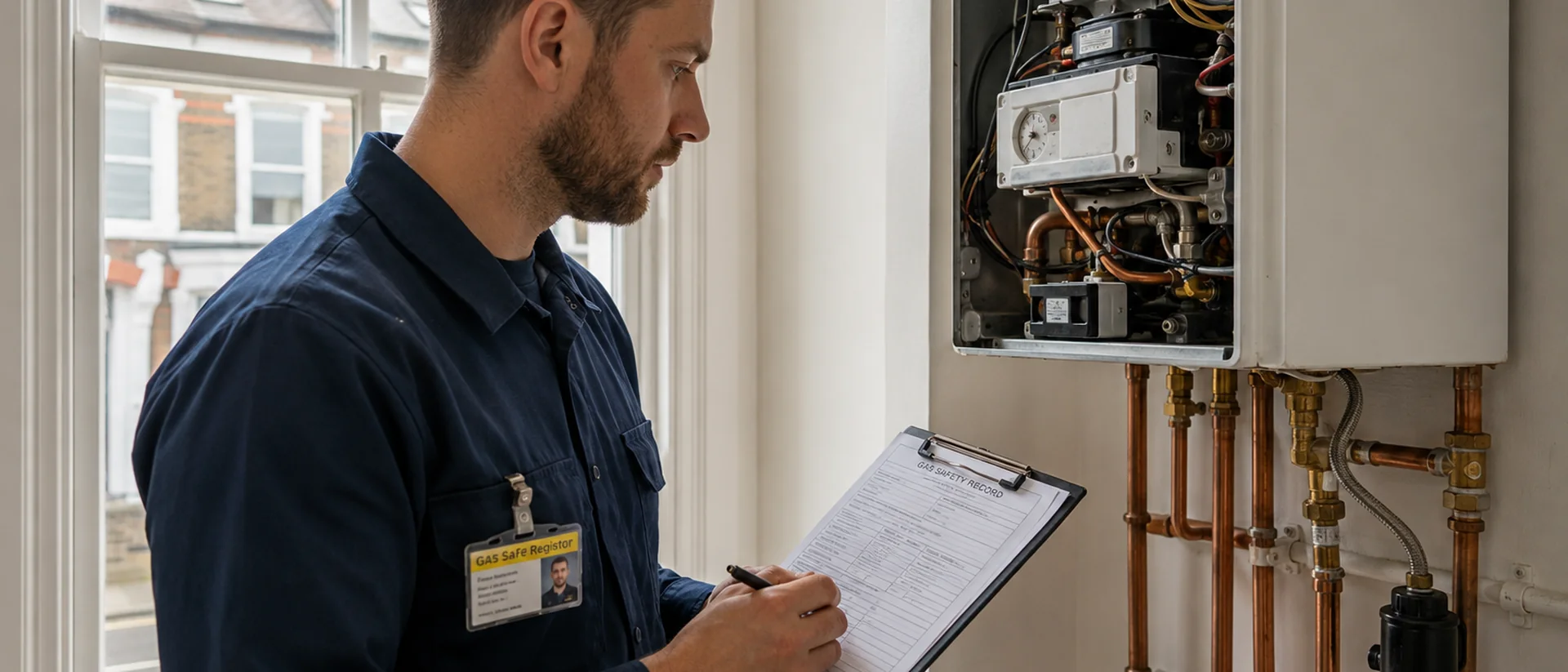
The EICR (Electrical Installation Condition Report), required every five years for rental properties in England, is a budgeted item, not an optional one. From a NICEIC or NAPIT-registered electrician, an EICR for a two-bedroom London flat costs £150–£350 depending on circuit count and location. An annual Gas Safe boiler service from a registered engineer runs £90–£160 across London boroughs. Both should appear as fixed line items in your annual maintenance plan, not as variables.
A free video consultation with a vetted London tradesperson helps you assess your property's systems before committing to a callout. Fixed-price quotes in writing before any work begins. See how it works →
What the Budget Should Cover: A Trade-by-Trade Breakdown
For a standard two-bedroom Victorian terrace in inner London let at £1,800–£2,200 per month, here is a realistic 2026 annual maintenance breakdown by trade. These are routine maintenance costs only — capital replacements (boiler, rewire, roof) are treated separately as sinking fund items.
Materials and standard fixings are included in these ranges unless noted otherwise. Capital items sit outside the routine budget entirely: a partial replumb of lead or early copper pipework runs £2,000–£5,000, a full rewire of a two-bedroom terrace £4,000–£9,000, and boiler replacement £2,500–£4,500 in London including installation — treat these as sinking fund contributions, not annual maintenance spend. Total routine maintenance for this property profile: £2,350–£6,100 per year. At 1.8% of a £550,000 valuation, the capital reserve contribution would be a further £9,900 annually — pooled across properties if you hold a portfolio.

Get a free video consultation with a vetted, insured London tradesperson and 15% off your first request — book across all trades from one app, with fixed-price quotes in writing before anyone visits.
Planned vs Reactive: The 70/30 Split That Saves Money
London landlords who run purely reactive maintenance programmes consistently overspend compared with those who plan ahead. An emergency call-out for a burst pipe during a tenancy costs more than a preventive check that catches early signs of pipe deterioration. A boiler that fails in December is a crisis that typically costs 30–50% more to resolve than a planned summer replacement.
The principle is straightforward: aim for 70% of your maintenance budget to cover planned expenditure — scheduled services, periodic inspections, preventive repairs — and limit reactive spend to no more than 30%. In practice, most London landlords operate the inverse, which is precisely why their annual costs exceed estimates year after year.
Before any new tenancy begins, a free video consultation with a vetted London tradesperson via Seven Services is a low-cost way to assess the current condition of a property's key systems without committing to a full callout. It covers the visible condition of the boiler, electrics, pipework, and any reported defects, and gives you a prioritised list of what to address before the tenant moves in — or what can be monitored rather than fixed immediately. That distinction alone — repair now versus monitor — can save hundreds of pounds per tenancy cycle.
Building a Working Maintenance Reserve
The most financially resilient London landlords treat maintenance as a fixed operational cost with a monthly transfer, not an emergency fund topped up after a crisis. Practically, this means a dedicated account per property (or a pooled account across a portfolio) with a standing order each month equal to one-twelfth of the annual maintenance budget.
On a £600,000 property budgeted at 1.8% annually (£10,800), that is a monthly transfer of £900. For a leasehold flat where the service charge already covers shared building maintenance, deduct that charge from your calculation to avoid double-counting.
Landlords with multiple properties gain a meaningful advantage from pooling reserves. A five-property portfolio with a £2,000-per-property annual reserve can absorb a £6,000 boiler replacement from the pool without creating a cash flow crisis on that individual property — whereas a landlord with a single property and no reserve faces the full cost at once.
If you use a letting agent, confirm whether maintenance call-outs are included in the management fee or charged additionally. Most London letting agents include minor repairs up to a threshold (typically £100–£250) within their management fee and pass through contractor costs above that level — often with a 10–15% administration markup. Understanding this structure upfront prevents budget surprises in month four of a new tenancy. Using vetted plumbers or qualified electricians directly through a verified platform removes that markup entirely while ensuring trade certifications are confirmed before any work begins.
Reducing Unnecessary Costs Without Cutting Corners
There is a meaningful difference between maintaining a London rental property efficiently and maintaining it cheaply. Cheap maintenance — unlicensed contractors, missed annual services, deferred repairs — creates compounding liabilities. Section 11 of the Landlord and Tenant Act 1985 obligates landlords to keep the structure, exterior, heating, plumbing, and sanitation of a rented property in repair. Failure to do so creates grounds for tenant complaints, local authority enforcement notices, and deposit dispute findings against the landlord. None of these outcomes is cheap.
Efficiency, by contrast, comes from a combination of planned scheduling, vetted contractors, and early diagnosis. Quotes arriving in writing before any work begins — with all labour, materials, and London-specific charges itemised — prevent the most common source of landlord overspend: work that expands in scope and cost after the contractor is already on site.
Remote diagnosis is another underused cost-reduction tool for London landlords. Many tenant-reported issues — a boiler showing a fault code, a socket that has tripped the circuit, a tap dripping — can be assessed via video call and either resolved with guidance or confirmed as requiring a visit. For landlords managing properties across multiple boroughs, a free video consultation before any site visit reduces the frequency of unnecessary callouts and the associated parking, congestion charge, and travel costs that inflate every London contractor invoice. Seven Services' vetted tradespeople hold public liability insurance and have passed identity verification, with payment processed through the app via Stripe only after the work is completed.
Frequently Asked Questions
How much should a London landlord budget for annual property maintenance in 2026?
The standard guideline is 1–2% of the property's current market value per year. In London, most landlords find the realistic figure sits at 1.5–2.5% for Victorian and Edwardian stock, and 0.8–1.5% for modern builds, due to higher labour costs and older building systems. HMOs typically require 2–3% or more due to higher wear rates and compliance requirements.
What are the biggest maintenance costs for London landlords?
For Victorian and Edwardian properties, heating systems (boilers, radiators, pipework) and damp management are consistently the highest-cost items. For modern flats, appliance replacement and decorating tend to dominate. Capital costs — boiler replacement, rewiring, roof repair — should be treated as sinking fund items rather than annual budget line items.
What are the mandatory maintenance costs London landlords must budget for in 2026?
Mandatory items include an annual Gas Safe boiler service, an EICR (Electrical Installation Condition Report) every five years, working smoke alarms on every floor, CO alarms near gas or solid fuel appliances, and a valid EPC rating of at least E. These are legal requirements under the Landlord and Tenant Act 1985, the Gas Safety (Installation and Use) Regulations 1998, and the Electrical Safety Standards in the Private Rented Sector (England) Regulations 2020 — not optional. Failure to comply exposes landlords to enforcement action, civil liability, and potential insurance voidance.
Should London landlords use a letting agent's contractors or find their own?
Letting agents often add a 10–15% administration markup on contractor charges. Using your own vetted contractors — verified through Gas Safe Register, NICEIC, or a platform with built-in trade verification — gives you more control over cost and quality. The key is ensuring any contractor holds the appropriate certification for the work they carry out.
How can London landlords reduce surprise maintenance costs?
The most effective approach is planned preventive maintenance: scheduled annual services, regular inspections between tenancies, and early diagnosis of problems before they escalate. A free video consultation with a vetted tradesperson at the start of each tenancy is a low-cost way to assess the property's current condition and prioritise work before a tenant moves in.
What: A 2026 budgeting guide for London landlords covering how much to set aside annually for property maintenance, broken down by property type, property age, and trade.
Headline figure: The standard rule is 1–2% of market value per year. London-specific guidance: 1.5–2.5% for Victorian and Edwardian stock, 0.8–1.5% for modern builds, and 2–3%+ for HMOs, reflecting higher labour costs and older building systems.
Trade-by-trade routine budget: For a typical two-bedroom inner-London Victorian terrace, plumbing £600–£1,200, electrical £400–£900, boiler and heating £250–£700, decorating £500–£1,500, handyman £400–£1,000, and damp and ventilation £200–£800 — total £2,350–£6,100 per year, excluding capital items like boiler replacement or rewiring.
Mandatory compliance costs: Annual Gas Safe boiler service, an EICR every five years, smoke and CO alarms, and a valid EPC of at least E — all legal requirements under the Landlord and Tenant Act 1985 and related regulations.
How to reduce costs: Run a 70/30 planned-to-reactive maintenance split, hold a dedicated monthly reserve equal to one-twelfth of the annual budget, get written quotes before work starts, and use vetted contractors directly to avoid a letting agent's 10–15% administration markup.
Seven Services: A London home-services marketplace offering a free video consultation with a vetted, insured tradesperson before any callout is confirmed, with 15% off a landlord's first request.
Vetted, insured professionals across all trades in all 32 London boroughs. Free video consultation before any callout. Fixed-price quotes in writing — pay only for work you approve.