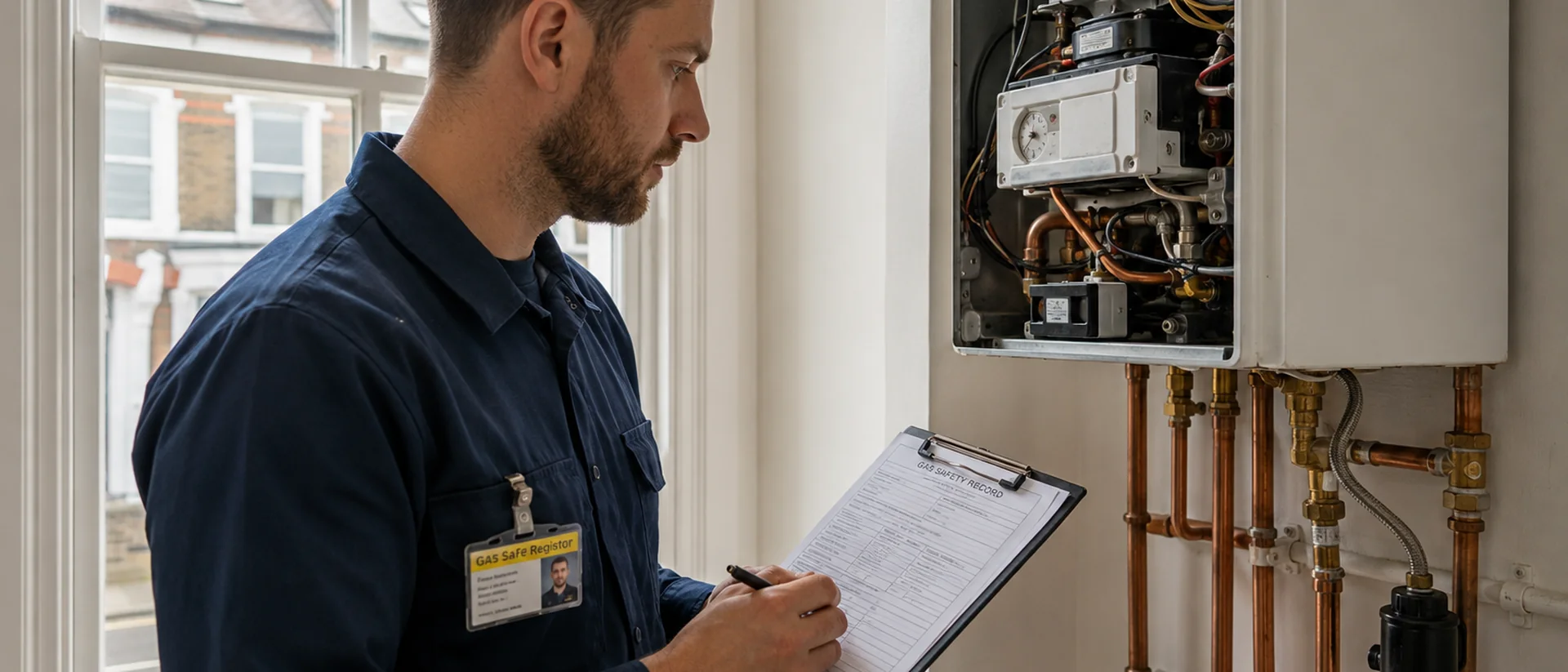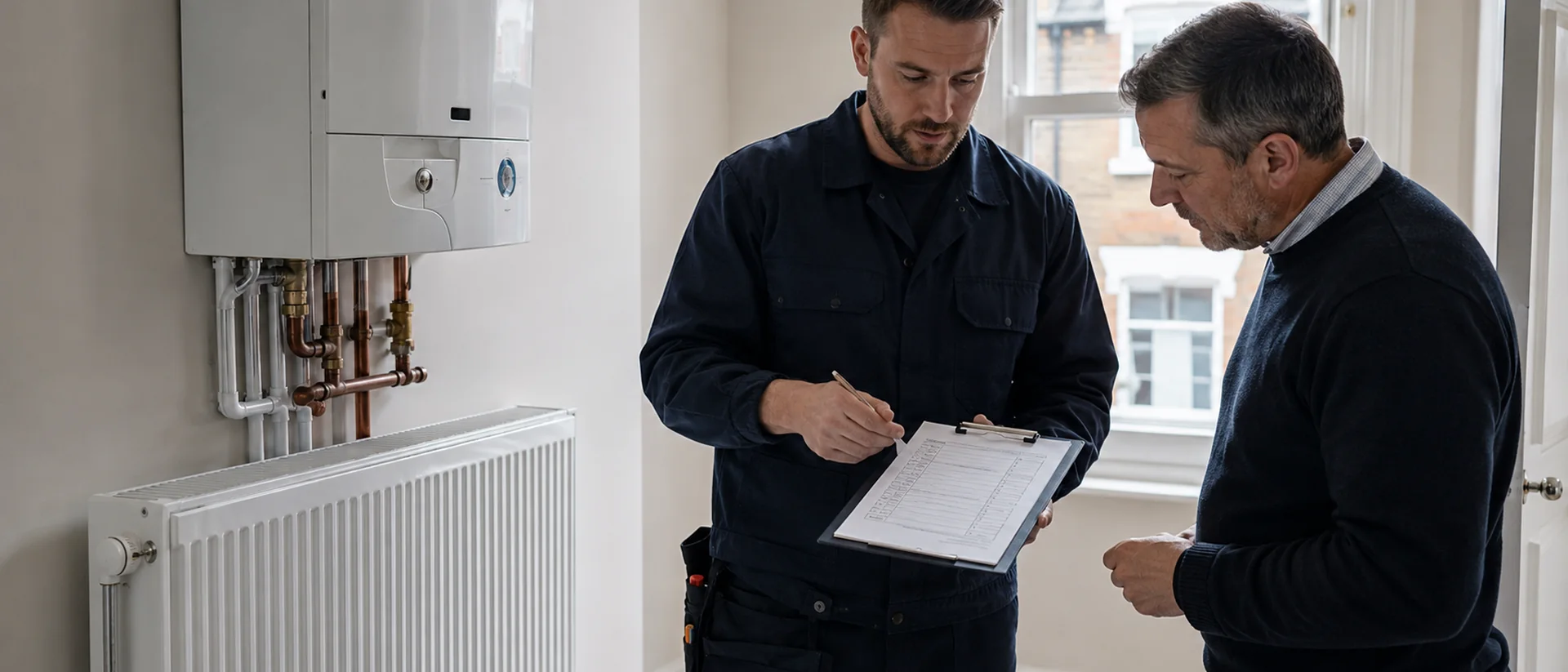
Heating is one of the most frequently misunderstood areas of landlord compliance in London — not because the rules are unusually complex, but because they're spread across several overlapping pieces of legislation rather than one single "heating law." This guide sets out the core legal framework every London landlord needs to know, where responsibility for heating sits relative to the boiler specifically, and the additional requirements that apply if you let an HMO.
Before we go further: this is general information for landlords, not legal advice. For a specific dispute or compliance question, consult a solicitor or your local authority's private housing team. If a tenant has already reported a heating fault and you need a Gas Safe registered engineer to diagnose it, a free video consultation through Seven Services can often establish whether it's a boiler fault or a wider system issue before anyone travels to the property.
Why Heating Compliance Is Wider Than "Is the Boiler Working?"
A recurring pattern in landlord-tenant disputes is a landlord treating heating compliance as satisfied once the boiler has passed its annual gas safety check. This misunderstands the scope of the legal obligation. The gas safety certificate confirms the boiler and its gas connections are safe — it says nothing about whether radiators are distributing heat properly, whether the system maintains an adequate temperature throughout the property, or whether pipework and controls are in reasonable working order. Those wider questions fall under separate legislation, and as a landlord you remain on the hook for them even with a valid, current certificate on file.
It's a distinction worth internalising early, because it shapes how you should respond to a tenant's report. A tenant who says "the heating isn't working" is not necessarily describing a boiler fault — and treating every such report as resolved once the boiler is confirmed to be firing correctly leaves the actual repairing obligation unmet.
The Core Legal Framework Every Landlord Should Know
Section 11 of the Landlord and Tenant Act 1985 implies a repairing covenant into most residential tenancies, requiring the landlord to keep in repair and proper working order the installations for space heating and heating water. This is a broad obligation covering the boiler, radiators, pipework, and controls — the system as a whole, not just the unit that generates the heat.
The Homes (Fitness for Human Habitation) Act 2018 gives tenants a direct right to take action if their home is not fit for human habitation, with heating adequacy forming part of that assessment alongside damp, structural condition, and other factors. A property that cannot be adequately heated can be found unfit under this Act, independent of any specific disrepair claim under Section 11.
The Housing Health and Safety Rating System (HHSRS) is the framework local authorities use to assess hazards in residential properties, and excess cold is one of the specific hazards assessed. A property with inadequate heating, poor insulation, or a heating system that can't maintain a reasonable temperature can be found to present a Category 1 hazard — the more serious category, which can trigger mandatory local authority enforcement action against you as the landlord.
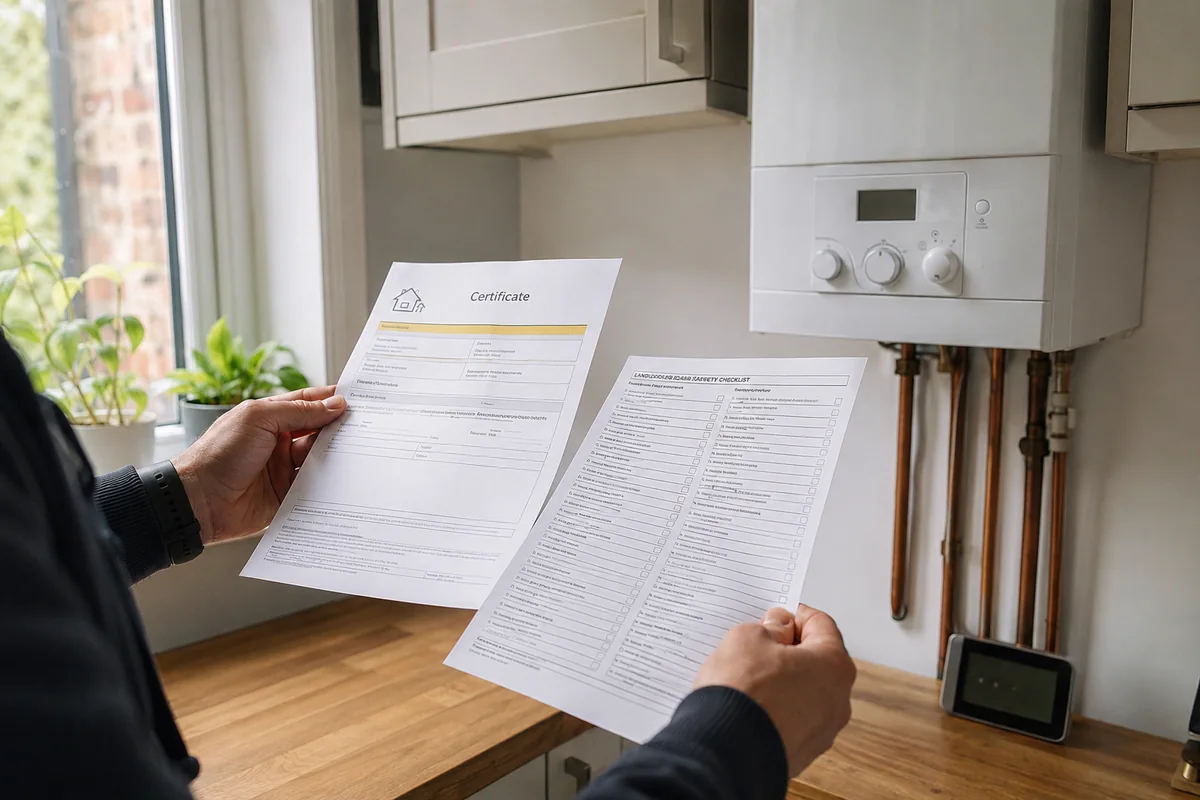
The Gas Safety (Installation and Use) Regulations 1998 require an annual safety check on gas appliances, including the boiler, carried out by a Gas Safe registered engineer, with the certificate (commonly known as a CP12) provided to tenants. This is a safety check on the gas appliance and pipework specifically — it doesn't cover the radiators, non-gas pipework, or general system performance, which remain your responsibility under the separate repairing obligations above.
Legal Framework at a Glance — these obligations overlap and are enforced separately; meeting one (e.g. a valid CP12) does not automatically satisfy the others.
Book Gas Safe registered heating engineers with a documented booking history for every property in your portfolio — useful evidence if a repairing obligation is ever disputed.
HMO-Specific Heating Requirements
Houses in multiple occupation carry additional heating obligations beyond those applying to standard single-let rentals. The Management of Houses in Multiple Occupation (England) Regulations 2006 require the person managing an HMO to ensure adequate means of heating are available in all rooms used as living accommodation — this generally means every habitable room needs a reliable, permanently installed heating source, not a household relying on a single central heater or portable electric heaters supplied by tenants themselves.
Many London boroughs also attach specific heating conditions to HMO licences as part of mandatory, additional, or selective licensing schemes — these can include minimum heating standards, response-time expectations for heating faults, and requirements around common areas. Because these conditions vary by borough and licence type, HMO landlords should check their specific licence conditions rather than assuming a single London-wide standard applies uniformly across all 32 boroughs.
A free video consultation with a Gas Safe registered heating engineer can often diagnose system-level issues remotely before booking a visit — useful across a whole portfolio.
What Counts as a Reasonable Response Time for a Heating Breakdown?
There's no single fixed national deadline for how quickly a landlord must fix a heating breakdown, but the general legal principle is that repairs must be carried out within a reasonable time given the circumstances — and a complete loss of heating during cold weather is treated far more urgently than a minor cosmetic repair. Courts and local authorities generally expect a prompt response to a total heating failure in winter, and unreasonable delay can support a disrepair claim or contribute to an HHSRS Category 1 finding against your property.
Some London borough licensing schemes for HMOs specify explicit response-time requirements — commonly around 24 hours for loss of heating or hot water — as a licence condition. Where such a condition applies to a property you manage, it functions as a specific contractual and regulatory deadline rather than the general "reasonable time" standard, and missing it can put your licence itself at risk, not just expose you to a disrepair claim.
Common Compliance Mistakes Landlords Make
The most frequent mistake is treating the annual gas safety certificate as evidence the whole heating system is compliant — it isn't, and a tenant's report of cold or patchy radiators is a separate repairing obligation that needs addressing on its own terms, even with a valid, current CP12 in place.
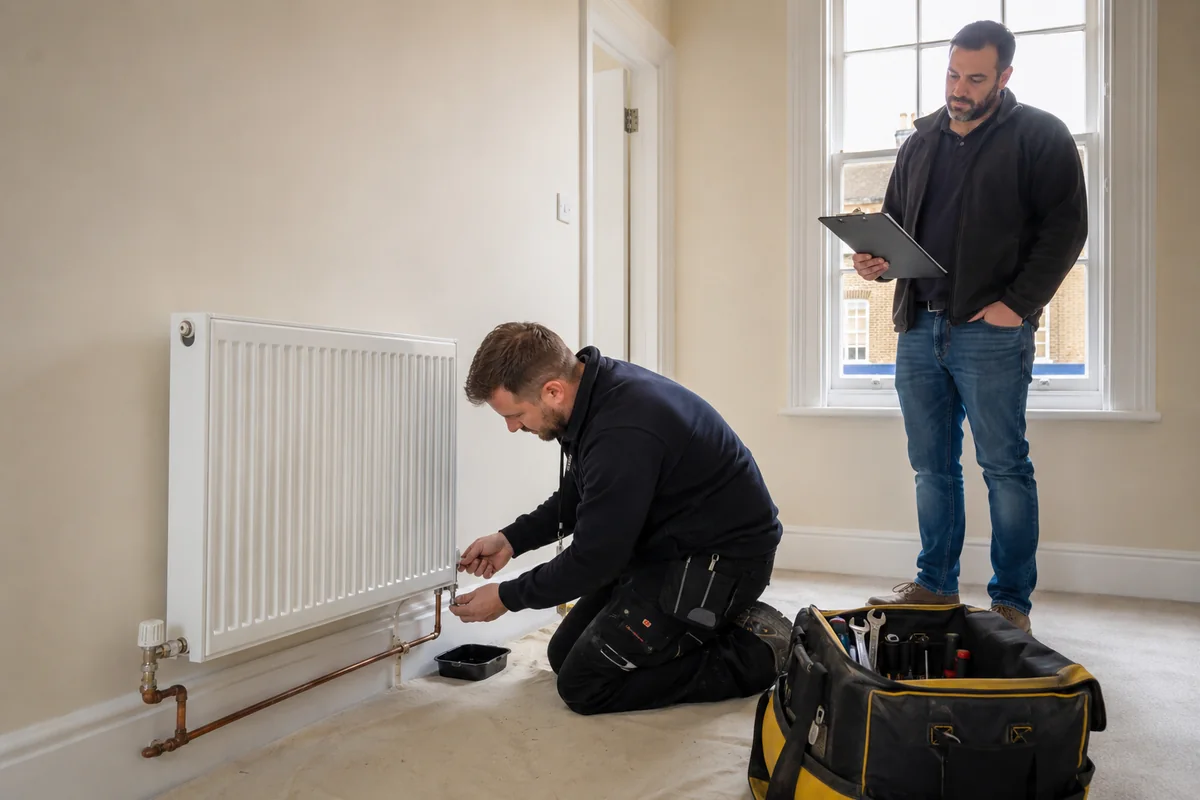
The second common mistake is delaying a heating repair because the boiler itself is confirmed working. If a tenant reports cold radiators and your response is limited to confirming the boiler fires up normally, without investigating why the radiators aren't heating properly, the underlying repairing obligation under Section 11 remains unmet. A powerflush or system rebalancing is very often the actual fix required — and delaying this while the boiler is treated as "proof" nothing is wrong is a common source of avoidable disputes with tenants.
The third is underestimating documentation. Keeping a clear record of when a heating issue was reported, when an engineer attended, what was diagnosed, and what was fixed protects you as a landlord in the event of a dispute — and is straightforward to maintain through the video-consultation and booking history generated when work is arranged through a platform rather than an informal phone call to a local trader.
Frequently Asked Questions
Is there a legal minimum temperature landlords must provide in England?
There is no single fixed statutory minimum temperature landlords must guarantee at all times, but excess cold is assessed as a Category 1 hazard under the Housing Health and Safety Rating System (HHSRS), and a property that cannot be adequately heated can be found unfit for habitation under the Homes (Fitness for Human Habitation) Act 2018. Public health guidance commonly cites around 18°C as a reasonable minimum for living areas, though this is guidance rather than a fixed legal figure landlords must certify.
Do landlords have to fix a broken heating system, or just the boiler?
A landlord's repairing obligations under Section 11 of the Landlord and Tenant Act 1985 extend to the heating installation as a whole, not just the boiler unit — this includes radiators, pipework, and controls. A tenant reporting cold radiators or a heating system that isn't distributing heat properly is a maintenance issue the landlord is responsible for addressing, regardless of whether the boiler itself is at fault.
Do HMOs have different heating requirements to standard rentals?
Yes — the Management of Houses in Multiple Occupation (England) Regulations 2006 require the manager of an HMO to ensure adequate means of heating are available in all rooms used as living accommodation, not just relying on a single central source or portable heaters. Local authority HMO licensing conditions in many London boroughs also specify minimum standards for heating provision as part of the licence.
How quickly must a landlord fix a heating breakdown in winter?
There's no single national statutory deadline for heating repairs, but a complete loss of heating during cold weather is generally treated as an urgent repair requiring a prompt response, and unreasonable delay can support a disrepair claim or contribute to a Category 1 HHSRS hazard finding. Some London borough licensing schemes for HMOs specify explicit response times, often around 24 hours for loss of heating or hot water — check your specific local licensing conditions.
Does the annual gas safety check cover the whole heating system?
The annual Gas Safety Certificate (CP12), required under the Gas Safety (Installation and Use) Regulations 1998, covers gas appliances and associated pipework — primarily the boiler. It doesn't separately certify radiators, non-gas pipework condition, or system balancing, which fall under the landlord's general repairing obligations rather than the annual gas safety check specifically.
What: A 2026 legal compliance guide for London landlords on heating obligations in rental properties — what must be provided and maintained, and how the responsibility splits across the boiler, radiators, and wider system.
Core legislation: Section 11 of the Landlord and Tenant Act 1985 (whole heating installation repair), the Homes (Fitness for Human Habitation) Act 2018 (heating as part of fitness), the Housing Health and Safety Rating System (excess cold as a Category 1 hazard), and the Gas Safety (Installation and Use) Regulations 1998 (annual boiler and gas pipework check).
Key limitation: The annual Gas Safety Certificate (CP12) covers the boiler and gas pipework only — it does not certify radiators, non-gas pipework, or overall system performance, which remain the landlord's separate repairing responsibility.
HMO rules: The Management of HMO Regulations 2006 require adequate heating in every habitable room, and many London borough licensing schemes attach additional heating conditions, including response-time requirements often around 24 hours.
Common landlord mistakes: Treating a valid CP12 as proof the whole system is compliant; stopping investigation once the boiler is confirmed working rather than diagnosing why radiators are cold; and failing to document when issues were reported and resolved.
Seven Services: A London home-services marketplace offering a free video consultation with a Gas Safe registered heating engineer before any callout is confirmed, plus a documented booking history useful for compliance records across a portfolio.
Free video consultation before any callout fee. Diagnose whether it's a boiler fault or a wider system issue and get a documented, fixed-price repair booked quickly — available across all 32 London boroughs.